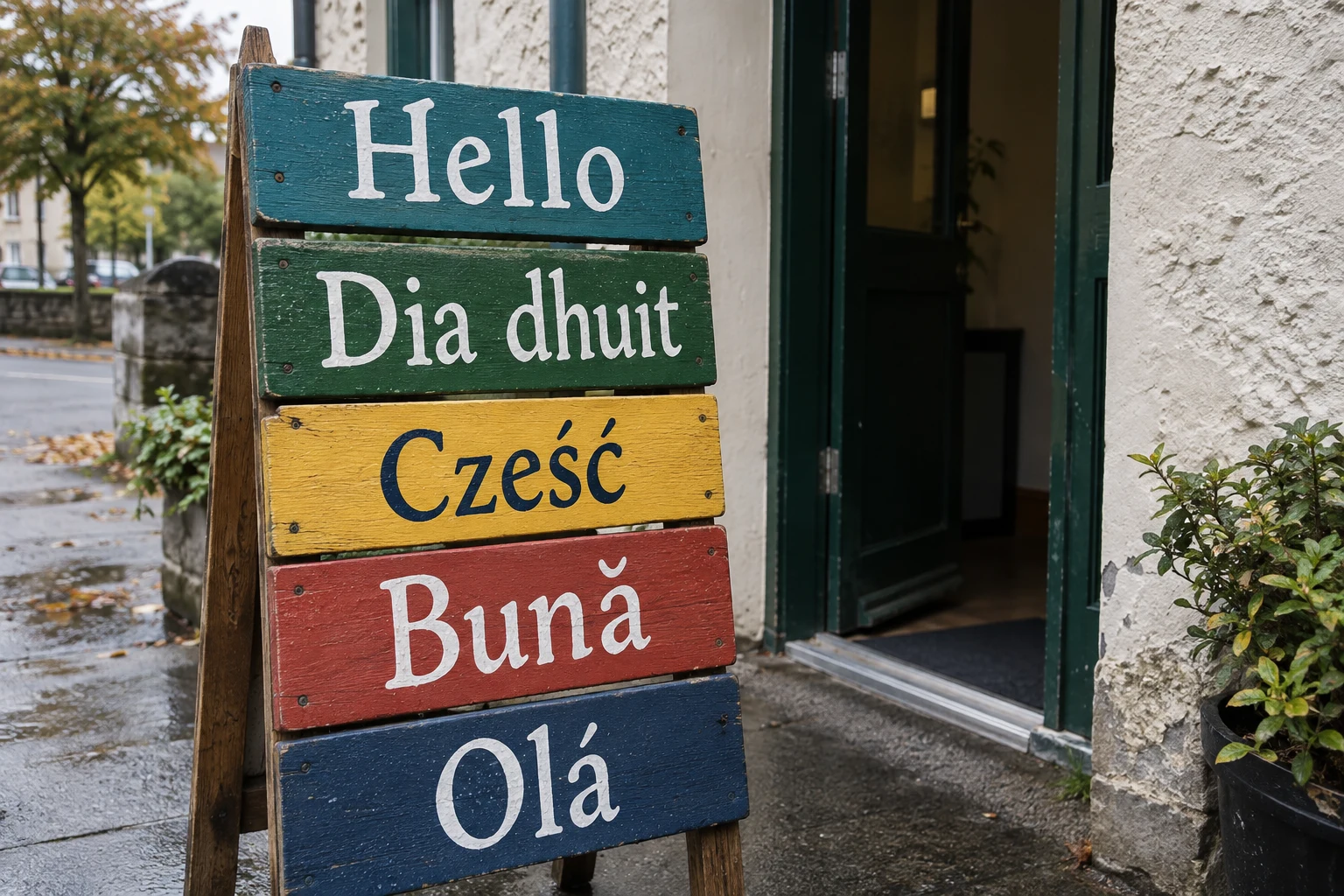
English is the main language people encounter in everyday life across Ireland. Yet a conversation about what Ireland speaks should also make room for the languages used around kitchen tables, between generations and within local communities.
Tourism Ireland’s practical guide identifies English as the island’s main spoken language. For visitors, that answers the immediate question about communicating on a trip. It does not describe every household’s linguistic life.
Official languages and home languages answer different questions
In the state of Ireland, Article 8 of the Constitution gives Irish the position of national and first official language, and recognises English as the second official language. Constitutional status is a legal description, rather than a ranking of what people speak most frequently.
Gaeilge is the Irish name for Irish. It is a distinct language, not a way of describing English spoken with an Irish accent. Our introductory guide to English, Irish and the Gaeltacht explains that distinction. Here, the focus is the wider home-language picture in the Republic; the figures below do not include Northern Ireland.
What the census found inside homes
The CSO’s Census 2022 migration and diversity results recorded 751,507 usual residents speaking a language other than English or Irish at home, up from 612,018 in 2016. Polish was the largest such language, with 123,968 speakers; Portuguese had grown to almost 44,000.
Home language also cuts across birthplace. Of those 751,507 people, 212,285 were born in Ireland. French and Polish were the most frequently reported languages in that Irish-born group, followed by Spanish. A language associated with migration can also be part of life for someone born here.
Nor does speaking another language at home imply an inability to speak English. Among the same home-language population, 57% reported speaking English very well and a further 26% well. Someone can use different languages with family, friends and colleagues without those choices contradicting one another.
What those numbers cannot tell us about 2026
These are census observations from 2022, not a live count of the languages spoken today. The CSO has confirmed 9 May 2027 for the next census. The date attached to a statistic matters: publishing an article in 2026 does not turn an older measurement into a new one.
The home-language question should not be treated as a test of citizenship, ancestry or belonging. It also cannot tell a visitor which language any individual will prefer. A national total is a useful starting point for understanding diversity, rather than a script for a particular encounter.
A useful approach for visitors and new neighbours
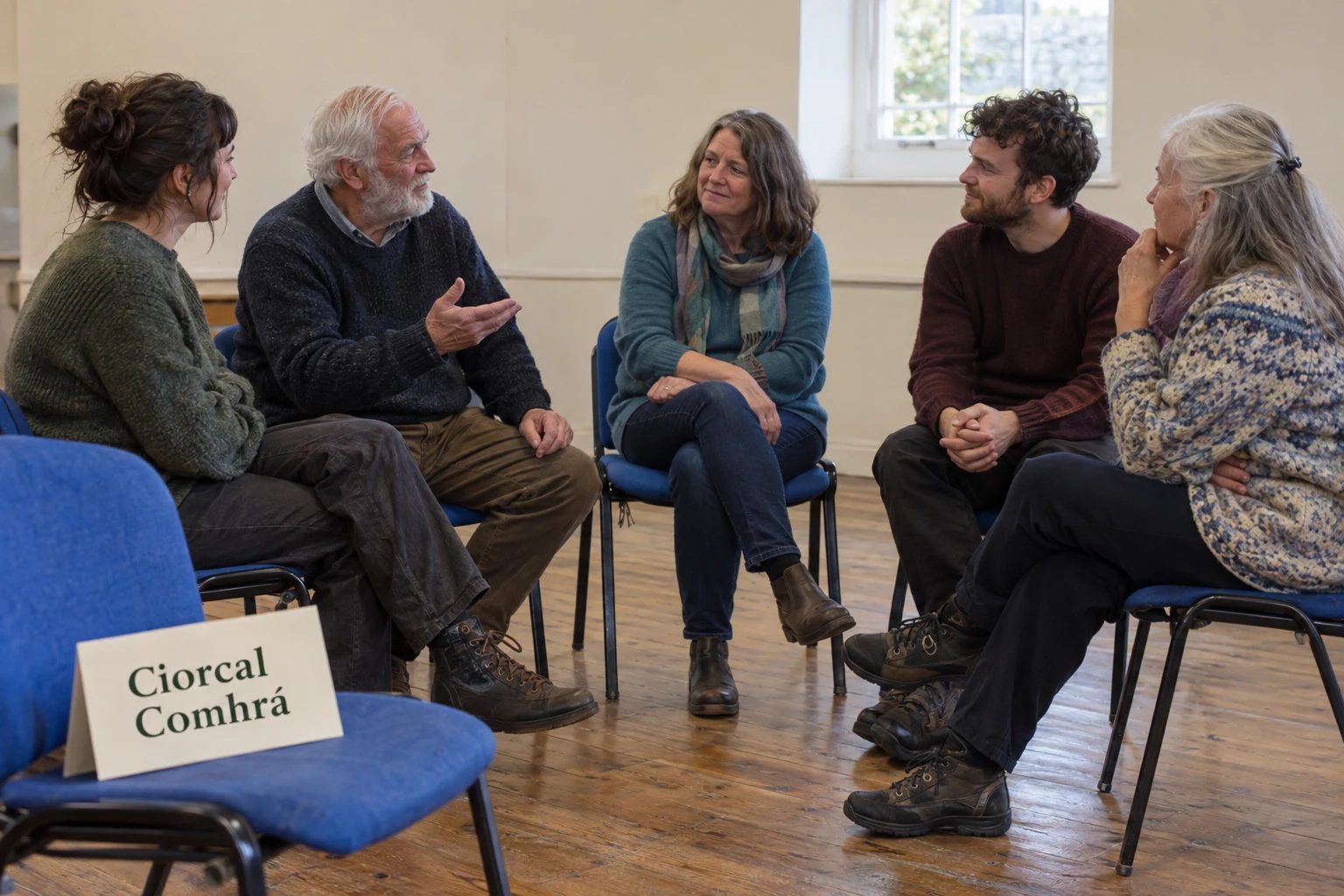
Start a conversation in the language you share, ask rather than guess, and allow someone to explain how they pronounce their name. An accent does not tell you where a person was born, while a surname cannot reveal every language they speak.
If you want to explore Irish specifically, the Gaeilge.ie language portal brings together learning organisations, dictionaries and media. Learning Irish and recognising Ireland’s other home languages can sit comfortably alongside each other: both begin with listening to the people who use them.
Join the conversation
Keep it kind, relevant and constructive. Comments are reviewed before they appear.
Be the first to share a thought.