

The European Commission opened a consultation on 3 November on making consumer products easier to repair, inviting Irish households, repair businesses and manufacturers to help shape possible EU design requirements. The exercise covers obstacles such as unavailable parts, restricted technical information and software that can prevent a repair even when the physical fault is fixable.
For people in Ireland, the potential effect is a better chance of keeping everyday products working rather than paying for replacements. But the announcement does not introduce an immediate entitlement to a cheap repair for every appliance. The products covered, the obligations and the timetable still have to be settled through an impact assessment and further regulatory work.
The Commission’s announcement of the consultation sets a deadline of 9 February 2027. It is a new opportunity to influence future product rules, alongside repair rights that already operate in Ireland.
Electronics, small appliances and some electric transport are in view
The preliminary scope includes certain audio and video equipment, wearables and computer peripherals, small household appliances and some light electric transport products. Examples include certain e-bicycles and e-scooters. These are broad families under examination, rather than a final list of models that must receive a particular repair service.
Some products already subject to their own rules or other arrangements are expected to be excluded to avoid overlapping obligations. A product appearing in a general description of the initiative should therefore not be treated as proof that every component, battery or software function will be covered.
The distinction matters for Irish buyers comparing similar-looking products. A repair requirement needs a defined product category and clear conditions. An eventual rule for one category would not automatically establish the same parts supply, support period or repair price for another.
Why design can decide whether repair is realistic
The consultation examines parts, maintenance information, software and firmware, disassembly and reassembly, and repairability information when products are sold. Taken together, those issues concern whether repair is possible in practice, rather than simply whether a business advertises a repair service.
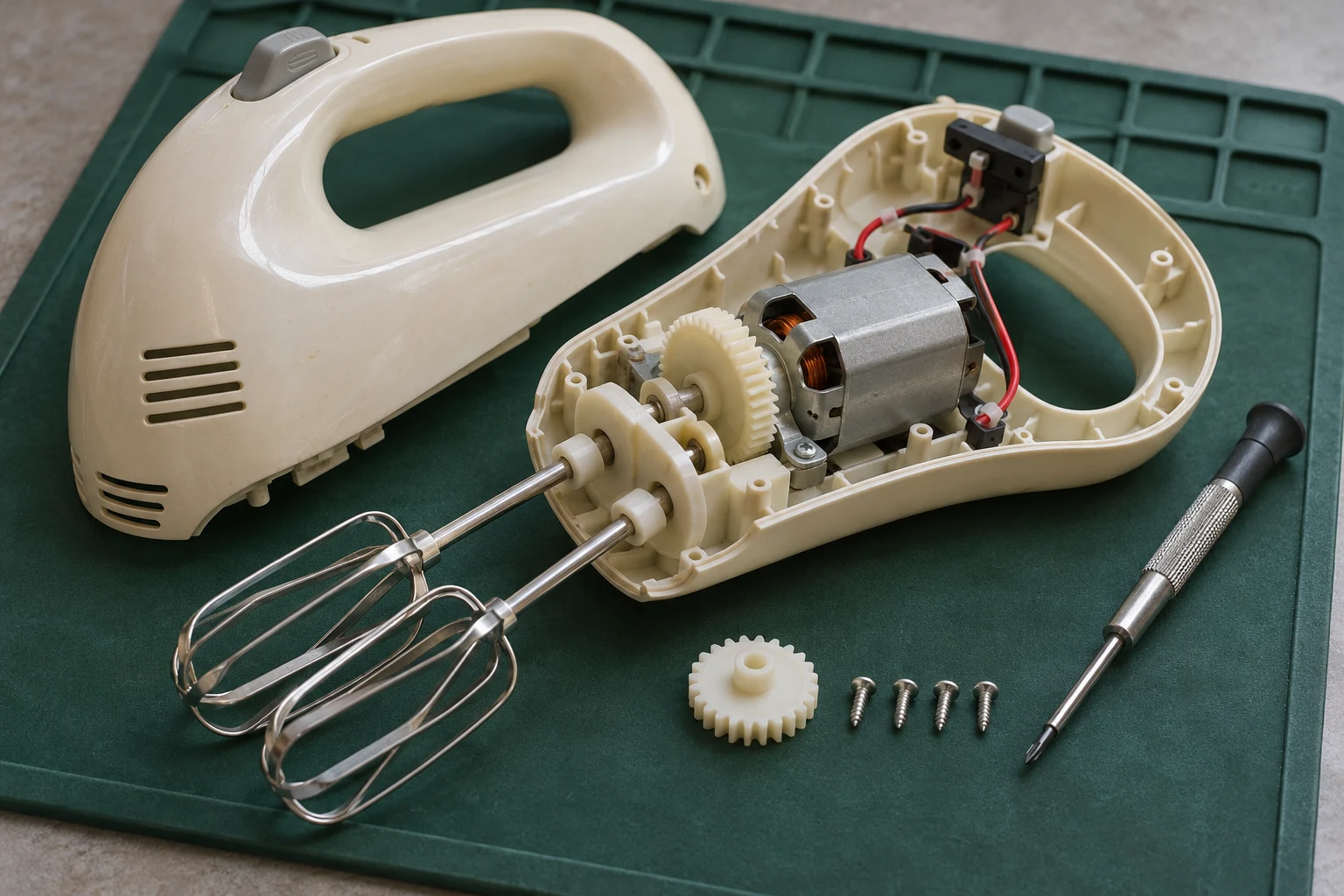
Consider a hypothetical small appliance with one worn gear. If a suitable replacement part is available but reaching it destroys the casing, the part alone does not solve the problem. If the casing opens cleanly but no compatible part can be obtained, easier access is not enough either. This is an illustrative example, not a finding about any named manufacturer.
For a connected product, the questions can extend beyond the broken component. The Commission’s supporting call for evidence discusses possible measures concerning software updates and restrictions. What an eventual measure requires will depend on its final wording; the consultation is not a universal promise of indefinite software support.
Will this make repairs cheaper in Ireland?
Lower costs are a possible outcome, not a verified price reduction. The Commission’s call for evidence says measures could reduce consumers’ long-term costs and create opportunities for repair, reuse and refurbishment. It also recognises adjustment and compliance costs for manufacturers. An impact assessment is intended to examine those effects before decisions are made.
The relevant household calculation is broader than the price of one spare part. Diagnosis, labour, collection, delivery and the time without a product can all affect whether repair is worthwhile. Better access to parts and information could remove an obstacle without making every repair economical.
For example, a readily available component may still need skilled installation. A low advertised parts price is not the total repair bill. Conversely, a repair that avoids replacing an otherwise useful product could offer value even if it is not free. These are possible outcomes to assess, rather than savings figures established by the announcement.
No Ireland-specific reduction in repair bills or increase in retail prices is confirmed in the records reviewed for this report. Readers should be wary of treating the policy’s objectives as an estimate of what their next repair will cost.
What it could mean for Irish repair businesses
Independent repairers have a direct interest in the availability of technical information, compatible parts and workable product designs. If those barriers are reduced, a business may be able to take on work that is currently impractical. That possibility does not establish a forecast for Irish job creation or the number of new repair shops.
The supporting evidence document says the assessment will consider small and medium-sized enterprises both as manufacturers and as repair businesses. It mentions possible proportionate arrangements, such as simplified obligations or longer transition periods. Those are options being considered, rather than exemptions that have already been agreed.
For an Irish business importing or selling products, the useful question is which responsibilities an eventual rule would place at each point in the supply chain. For a repairer, it is whether the information and parts can be obtained on terms that make a job feasible. Both perspectives can inform the consultation without assuming that a final compliance regime is already available.
How EU product rules would reach Ireland
The initiative sits under the Ecodesign for Sustainable Products Regulation, a framework for developing more specific requirements. The Commission’s explanation of how that framework is implemented describes rules developed for individual products or across groups with similar characteristics, supported by impact assessments and consultation.
It also explains that the rules concern products placed on the EU market whether they are manufactured inside or outside the EU. That is the concrete Irish connection: the future requirements could affect products supplied here, including imported goods, rather than only factories located in EU countries.
Common requirements could also give businesses supplying several EU markets a more consistent set of product rules. Whether that benefit outweighs particular compliance costs is among the issues for assessment. The existence of an EU framework does not settle the commercial outcome for an individual Irish manufacturer or retailer.
Ireland already has a separate manufacturer-repair route
The new consultation should be read alongside Ireland’s existing repair rules. The CCPC’s current Right to Repair guidance explains options available from 31 July 2026 for covered products affected by wear, accidental damage and other circumstances outside a normal faulty-goods claim.
The scheme applies to specified products and conditions. It is not a right to have every damaged item repaired free. The CCPC lists categories including certain major household appliances, displays, phones, tablets and products using light transport batteries. It also explains that earlier purchases can qualify where the product was repairable when first sold and parts remain available.
The Irish regulations governing that route limit the manufacturer’s obligation to goods for which, and to the extent that, the relevant repairability requirements apply. They allow refusal where repair is impossible. Where a manufacturer is outside the EU, the responsibility passes through the specified representative, importer or distributor arrangements.
The regulations also address unjustified contractual, hardware and software barriers, and refusal solely because someone else previously repaired the product. These existing provisions and any future ecodesign measure need to be considered together; the November consultation does not replace them.
A faulty purchase remains a different question
If goods do not meet the sales contract, the business that sold them remains responsible for the applicable consumer remedies. The CCPC’s guidance on faulty-goods repairs and replacements distinguishes that responsibility from manufacturer services for accidental damage, wear or misuse.
That distinction affects payment. A statutory repair for qualifying faulty goods must be free, whereas a manufacturer repair under the separate route can carry a reasonable charge. An expired commercial warranty does not, by itself, remove statutory consumer rights. The facts and the applicable conditions still determine the remedy.
The Department of Enterprise’s explanation of the Right to Repair Directive likewise says it complements existing consumer law. It identifies repairmystuff.ie as the basis for Ireland’s national repair platform, with further development for compliance. A directory helps find services; it does not determine entitlement or guarantee a particular repair outcome.
What happens next, and when?
The official Have Your Say initiative record shows both the consultation and call for evidence open, while feedback on a draft act is still marked as upcoming. It identifies the intended instrument as a delegated regulation.
There is a timing difference within the published material. The portal lists Commission adoption as planned for the second quarter of 2027; the attached call-for-evidence document gives the second half of 2027 as its indicative timetable and says timing can change. Neither should be read as a confirmed date when new obligations will start applying to products sold in Ireland.
The public can contribute in any official EU language, including Irish. The Commission says the consultation is initially available in English, with translations to follow. Its stated closing time is midnight Brussels time on 9 February, which corresponds to 11pm in Ireland that evening.
Useful evidence could describe an actual repair barrier, identify the product category and explain the effect of parts availability, information, software or design. Businesses can also describe implementation costs and practical alternatives. Contributions belong through the Commission’s official process; The Press is not collecting readers’ personal repair records.
For Irish consumers and businesses, the immediate development is an open route to influence the next set of rules. The outcomes to watch are the final scope, the impact assessment, any adopted requirements and their application dates. Those will establish how far the initiative changes the repair choices available here.

Join the conversation
Keep it kind, relevant and constructive. Comments are reviewed before they appear.
Be the first to share a thought.