

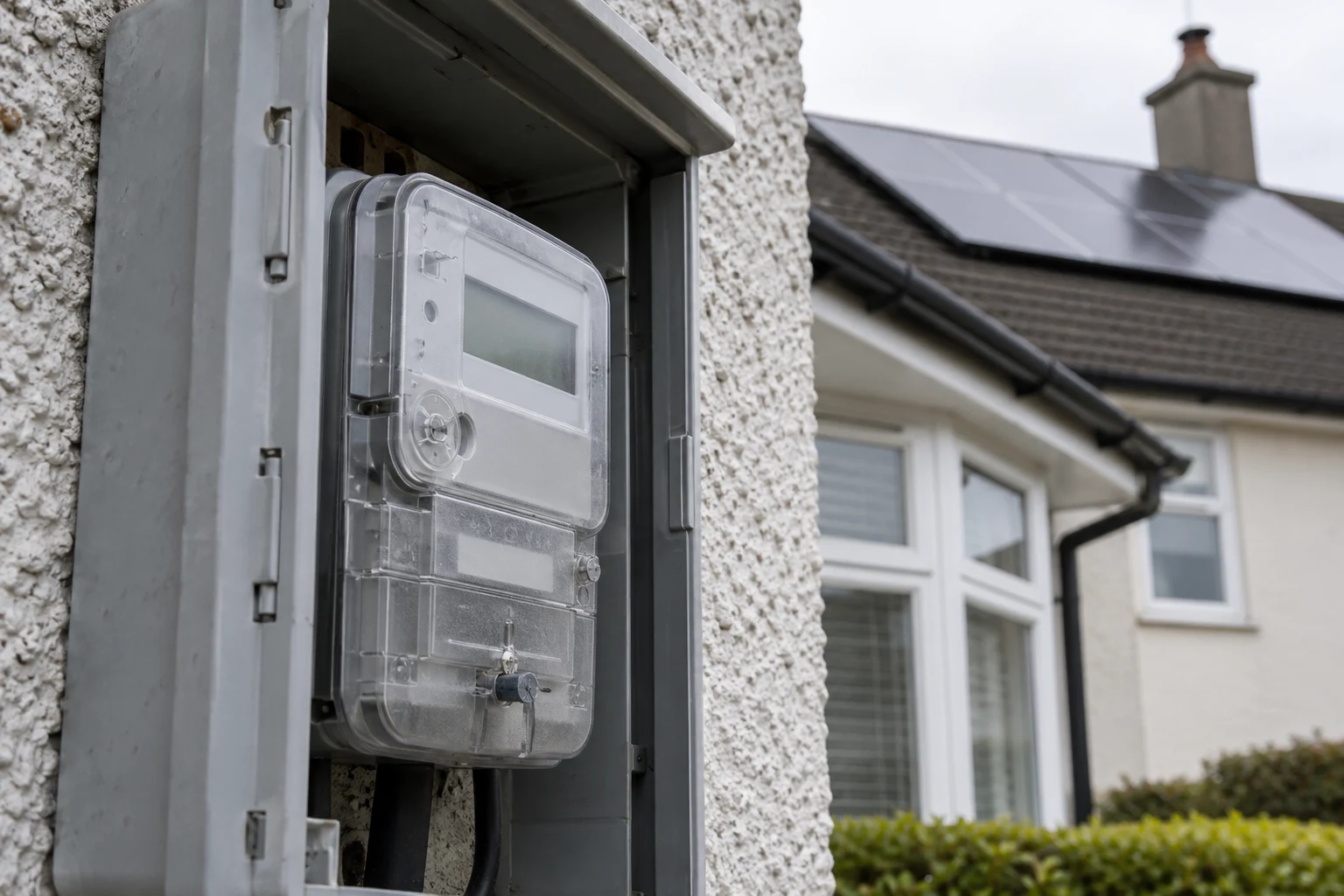
A solar inverter can report a productive month while an export payment looks unexpectedly small. The figures may be measuring different things: electricity generated, electricity used at home and electricity exported to the grid.
We compared the regulator’s consumer guidance with a supplier’s calculation explanation. The result is a three-number bill check: paid export volume, the applicable rate and the exact period covered. It is not a forecast of a household’s savings or investment return.
Follow the information chain
The CRU’s microgeneration guidance explains that the registered installer submits the appropriate NC6 or NC7 information to ESB Networks. Once processed, ESB Networks informs the supplier about the system.
For metered exports, the supplier pays for units sent to the grid. Electricity generated and used directly in the home is not an exported unit. The regulator says billing information should show the period, the exported kWh being paid for and the rate per kWh. Payment may appear as a credit on the consumption bill or on a separate statement.
An inverter’s total-generation screen is therefore not, on its own, evidence of an underpayment.
A transparent worked example
Bord Gáis Energy’s calculation page, checked on 22 October 2026, quotes 18.5 cent per kWh for its residential Microgen Export Plan. This is an attributed example from one supplier, not a market-wide rate or recommendation.
At that rate, a hypothetical 240 exported kWh produces 240 multiplied by €0.185, or €44.40. The same household could have generated considerably more electricity while consuming part of it locally. Multiplying the full generation figure by the export rate would overstate the expected export payment.
Before comparing statements, align their start and end dates. A calendar-month app total and a bill covering different days are not directly comparable.
Check the data basis as well as the arithmetic
The supplier explains that ESB Networks supplies export data. Where metered data is unavailable for a period, deemed export data may be supplied; some meters that cannot be exchanged for a smart meter also use deemed quantities. That can explain a difference between a meter reading and a payment volume, but it still needs a clear explanation for the account concerned.
Make a reconciliation note with the bill period, volume, metered or deemed basis, rate and resulting credit. Ask the supplier to identify which entry differs from your records. Avoid changing equipment or opening electrical enclosures to investigate a billing issue.
For unresolved service issues, the CRU says to complain first to the relevant supplier or ESB Networks. Its complaint-resolution route follows that company process. Keep the written response and the original figures together.
Join the conversation
Keep it kind, relevant and constructive. Comments are reviewed before they appear.
Be the first to share a thought.