

A seller saying “your refund is being processed” and a bank opening a chargeback case are different events. Neither should be recorded as money received until the account shows what has actually happened.
We used the Competition and Consumer Protection Commission’s current guidance to build a dispute record that separates the seller conversation from the card-provider process. It applies to card disputes generally and does not promise that a particular claim will succeed.
Identify the problem first
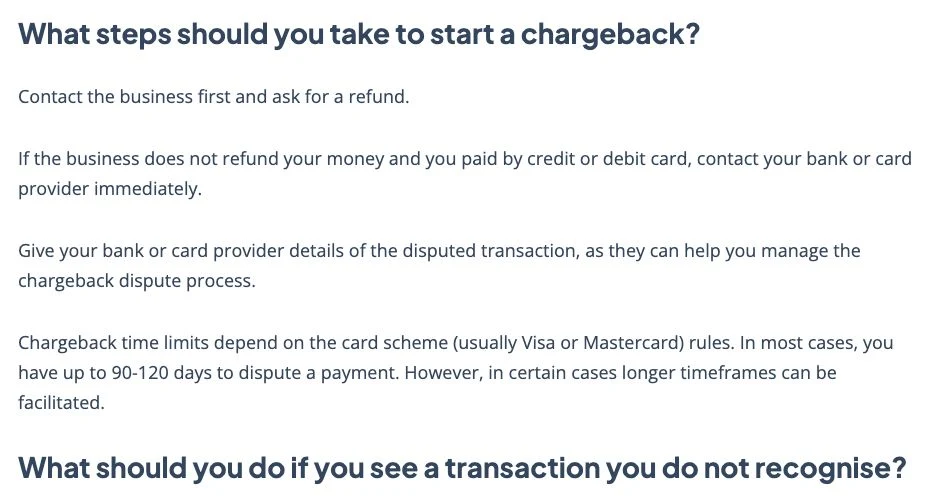
The CCPC’s chargeback guidance describes chargeback as a process through which a card provider may reverse a transaction. Possible grounds include an unauthorised transaction, duplicate processing, or goods or services not supplied.
For a purchase dispute, contact the business first to request a refund. If it does not refund the money, contact the bank or card provider promptly with the transaction details. Do not assume that a long exchange with a retailer has opened a bank case.
An unrecognised transaction is different: the CCPC says contact the bank or card company straight away because it could be fraud. Do not wait for a supposed merchant to respond or share security codes with someone claiming to investigate it.
Do not turn a typical time range into a universal deadline
The CCPC says chargeback time limits depend on the card scheme and describes 90–120 days in most cases, with longer periods possible in some circumstances. That is not a universal countdown with one start date for every dispute.
Ask the bank which rule and deadline apply to the actual transaction and issue. Make the enquiry promptly; a general article cannot establish the relevant date or preserve a claim on someone’s behalf.
A four-part evidence record
First record the transaction: date, amount, merchant description and payment reference, keeping full card details private. Second record what was promised, including delivery or service dates and the order confirmation. Third keep the seller conversation and any refund reference. Fourth record the bank’s case number, evidence request and response date.
For a hypothetical €80 undelivered order, “€80 refund requested”, “€80 bank dispute opened” and “€80 credited” are three statuses for the same amount. They are not three separate recoveries. If money arrives while a case is open, tell the bank so the record can be reconciled.
Keep copies of documents sent and a note of whether a credit is provisional or final according to the bank’s explanation. If dissatisfied with its handling, use the provider’s formal complaints process. Reporting a trader to the CCPC is a separate enforcement-information route; the regulator says it does not engage with businesses to resolve individual cases.
Join the conversation
Keep it kind, relevant and constructive. Comments are reviewed before they appear.
Be the first to share a thought.