

The first small-claims question is not which form is quickest. It is who the legal parties are and where they are based. An Irish website address, an Irish delivery destination and an Irish registered business are not interchangeable evidence.
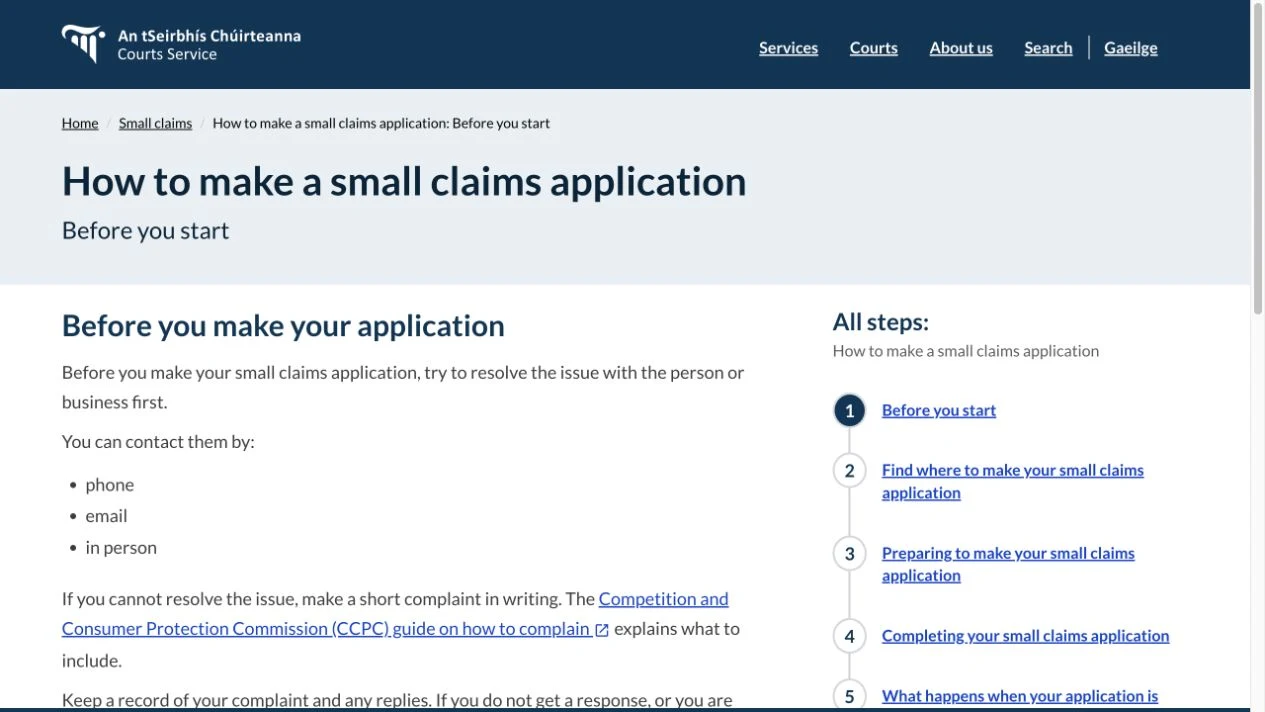
This comparison brings together the Courts Service’s domestic application instructions and the CCPC’s European procedure guidance. It is a starting-point checklist for general consumer disputes, not a determination that a particular case qualifies.
Domestic: parties in the Republic
The Courts Service’s preparation instructions say both claimant and respondent must be based in the Republic of Ireland for the domestic process. The claim must be €2,000 or less, and the amount concerns the product, service, damage or deposit. Time spent, distress and the application fee cannot simply be added to that amount.
The correct legal identity matters. For a company, collect its company name, trading name, address and CRO number. For a sole trader, the individual’s name and business address are relevant. A shop brand on a receipt may not itself identify the legal respondent.
European: cross-border is a separate test
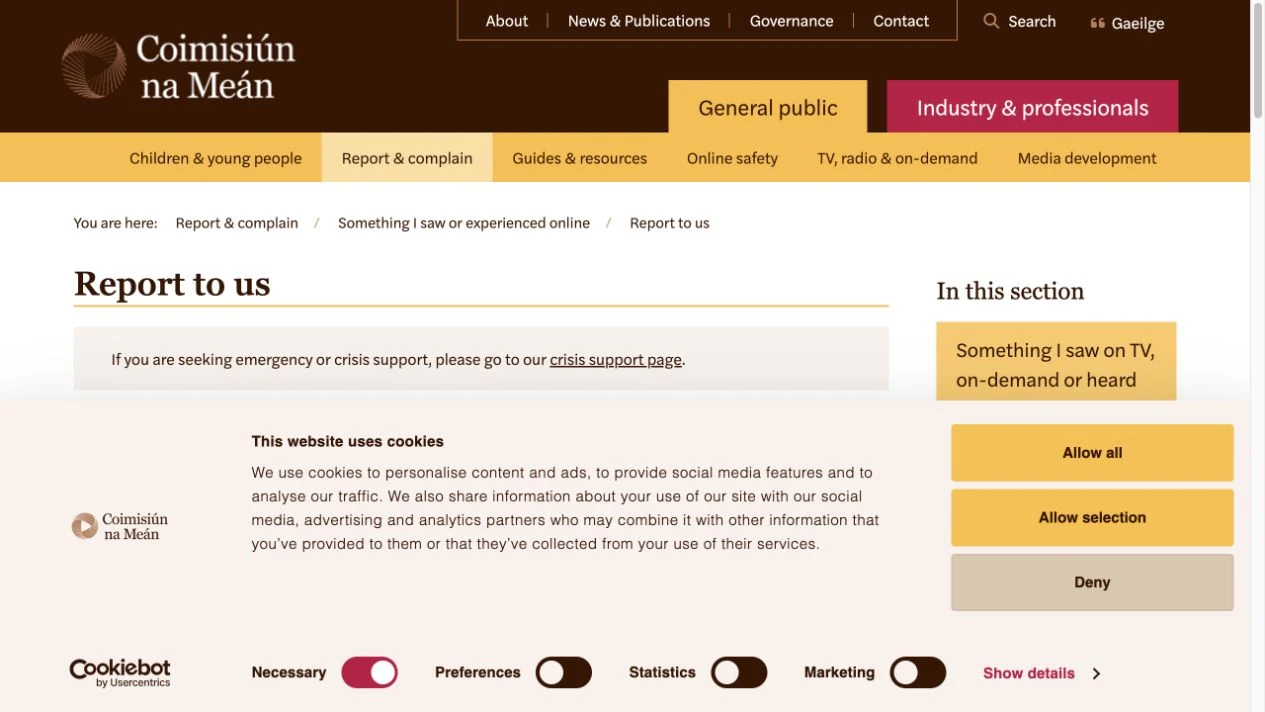
The CCPC’s European small-claims guidance describes a route for cross-border disputes involving parties in separate EU countries, excluding Denmark. Its scope and €5,000 ceiling differ from the domestic process; a larger ceiling does not make it a general substitute for domestic claims.
For someone applying through Ireland, the CCPC directs the completed European application to the local District Court office and says it cannot be submitted online. Do not follow domestic online instructions just because both processes use the words “small claims”. A UK seller is not brought within this EU route merely by selling to Ireland.
Compare the cost with the amount sought
The domestic completion and payment guide sets out the €25 fee and the online or court-office routes. The CCPC also lists a €25 European application fee, with possible additional translation or other costs. A fee is not a guarantee of recovery or the full possible cost of a contested cross-border case.
For illustration, a €180 product claim and a €25 filing fee are two separate entries in a household record. The domestic claim does not become €205 simply because the fee was paid. This is arithmetic showing the distinction, not a recommendation to litigate over that amount.
Build one record before selecting a form
Use five headings: legal parties and countries; transaction and problem; amount sought and its calculation; complaint chronology; and evidence. Keep receipts and correspondence linked to the relevant event, rather than uploading an unexplained bundle.
Try resolving the matter with the business first and retain the written complaint and response. Check the procedure’s subject-matter exclusions and ask the court office about an uncertain route. Filing an application begins a process; it does not establish liability or ensure that a later judgment will be paid.
Join the conversation
Keep it kind, relevant and constructive. Comments are reviewed before they appear.
Be the first to share a thought.