

A date on an unopened pack is not the only instruction that matters once it reaches the kitchen. The label may also specify a storage temperature and a shorter period after opening. Reading just the largest printed date can miss both.
This guide compares FSAI and safefood explanations and turns them into a three-check household method. It does not certify an individual food as safe, replace a recall notice or claim that The Press tested any product.
Check one: what kind of date is it?
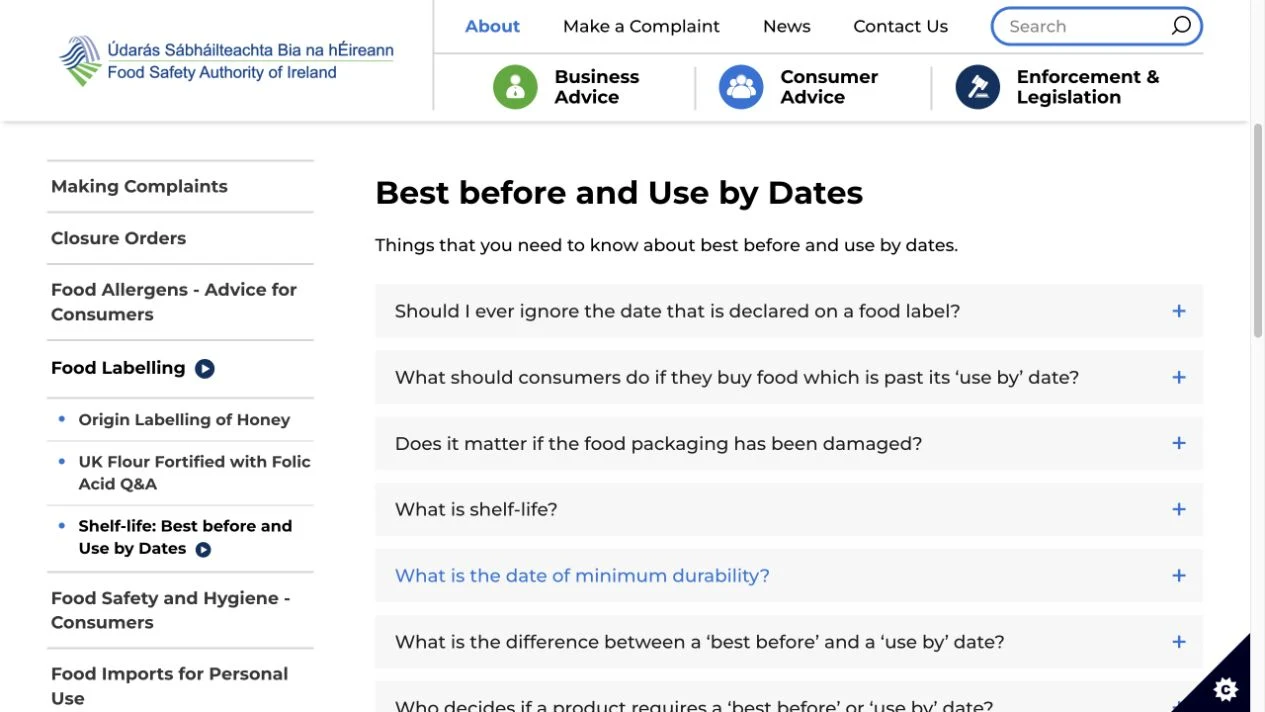
The FSAI’s shelf-life guidance distinguishes use-by dates, which concern safety for highly perishable food, from best-before dates, which concern retained quality under the stated conditions. Food beyond its use-by date should be discarded rather than assessed by whether it smells acceptable.
A best-before date is not an automatic instruction to discard every unopened product immediately afterwards. Equally, it is not a promise that damaged or incorrectly stored food is safe. Read the actual words beside the date instead of treating all date stamps as interchangeable.
Check two: were the storage conditions met?
Safefood’s household date advice explains that the date depends on correct storage and, for the unopened-pack date, a sealed package. Instructions such as keeping food chilled or storing it in a cool, dry place are part of that assessment.
A future use-by date cannot undo time spent at an unsafe temperature. FSAI also advises against using food in damaged packaging, including compromised cans or jar seals, even when within its shelf-life. Seek official food-safety advice where handling or storage is uncertain; do not use tasting as a safety test.
Check three: what changed when it was opened?
Look for the label’s after-opening instruction and record when the pack was opened. That instruction does not extend a use-by date. Use the applicable earlier limit and storage requirement; do not substitute a general rule for the manufacturer’s specific instruction.
Our practical record has three entries: original date and wording; opening date; and the label’s after-opening/storage instruction. A small removable note on a storage container can preserve this information if the outer packaging will be discarded. Keep allergen and preparation information too where needed.
Use the distinction to plan, not to take risks
Before shopping, check which foods need using first and buy quantities that fit the household’s plans. Put the shortest relevant use period into the plan instead of assuming every recently bought item will last equally long.
Stock-control phrases such as display-until are not substitutes for use-by or best-before information. If an item was sold past its use-by date, do not consume it; contact the retailer or use the FSAI complaint route. A product-specific recall remains separate from all these date checks: a pack can be recalled while still inside its printed date.
Join the conversation
Keep it kind, relevant and constructive. Comments are reviewed before they appear.
Be the first to share a thought.