

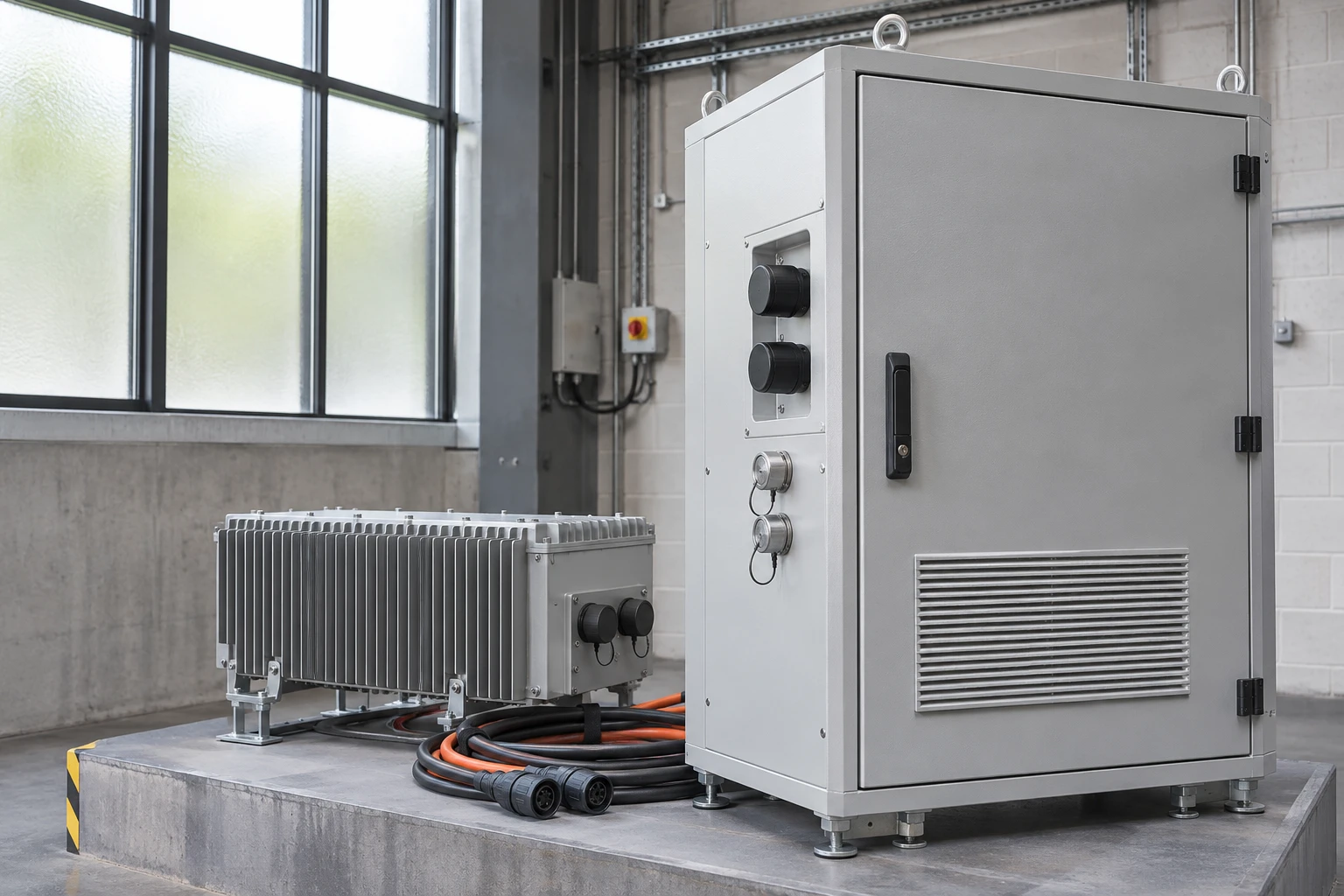
NovaUCD and PTSB opened applications on Monday, 2 November, for an Energy Futures Accelerator aimed at Irish climate-tech and renewable-energy businesses. Up to ten teams will be selected for a January–June 2027 programme, with applications closing on 3 December and selection interviews scheduled for 16 and 17 December.
The university’s dated announcement identifies the new application window as the development announced today. The partners say the six-month initiative will combine business-development support with energy-sector research expertise. No participating companies or resulting investment deals are announced in that release.
For founders, the immediate opportunity is to seek a place on a structured development programme. Its eventual economic value will depend on what participants build, validate and sell. An application opening, a place on an accelerator and a commercially proven product are three different milestones; today’s announcement establishes the first.
A small cohort, with selection before Christmas
The published programme record says a panel drawn from NovaUCD, PTSB and the venture-capital community will assess applications. Approximately 20 teams are expected to reach proposal presentations in Dublin, with up to ten selected. A final showcase is planned for June 2027.
The assessment headings cover relevance, innovation, potential impact, market opportunity, progress, team capability and programme fit. Applicants need an identifiable energy-transition connection, although energy need not be their only market. The public page gives 3 December as the closing date without specifying a closing hour.
Those criteria make the distinction between a broad environmental ambition and a developed commercial proposition important. A useful proposal needs to connect a problem, a proposed solution and a potential purchaser. Describing something as sustainable does not, by itself, explain who would pay for it, what it would replace or what evidence would persuade a customer to adopt it.
A hypothetical software business, for example, could identify the particular operational decision its tool improves and the person responsible for buying it. A hardware business could distinguish a laboratory result from performance in the conditions a customer actually faces. These are illustrative ways to test a commercial case, rather than extra eligibility rules or promises of selection.
What the partners say they will provide
NovaUCD’s announcement lists commercial mentoring, founder training, fundraising guidance, researcher-led masterclasses and access to its workspace and network. Rinn Energy researchers are to contribute specialist expertise. PTSB’s stated role draws on its financial and business-advisory capabilities, while NovaUCD contributes its start-up development experience.
The distinction between advice and finance matters. Help preparing an investor presentation is not a committed investment. Access to a network is not a purchase order, and a showcase is not evidence that a customer has accepted a product. The release presents support intended to improve commercial prospects; those prospects still have to be demonstrated.
For a young company, the most useful output may be a narrower and better-tested business proposition rather than a larger collection of promotional claims. A team could finish a mentoring exercise knowing that its initial buyer was wrong, that installation costs dominate the economics or that a proposed pilot needs a different partner. Learning that early can shape the next development decision.
The programme should therefore be judged over time through specific outcomes: technical milestones completed, assumptions tested, genuine customer commitments and any subsequent investment on disclosed terms. None of those outcomes can be inferred from the fact that applications are now open.
The research connection extends beyond one campus
University College Cork’s June account of Rinn Energy describes a research centre co-directed by UCC’s Professor Jimmy Murphy and UCD’s Professor Lisa Ryan. It brings together ten institutions and disciplines including engineering, economics, policy and social sciences, with work spanning renewable supply, grids and energy use in transport, industry and communities.
That is background to the expertise named in today’s accelerator announcement, rather than a new research-funding award made to the future cohort. A company joining a programme does not automatically acquire a research contract, rights to university intellectual property or access to every institution’s equipment.
The wider mix of disciplines also helps explain why energy innovation cannot be judged solely by whether a device works. A technically credible solution may still face questions about installation, maintenance, user behaviour, purchasing processes or the evidence needed for deployment. Conversely, a service that helps an existing technology work better may address a meaningful problem without inventing a new source of generation.
Any collaboration needs a defined task. Before relying on a proposed research relationship, a business would need clarity about the question being tested, the resources available, ownership of results and how findings could be used. These are practical questions arising from the structure of such collaborations, not terms The Press has independently established for this programme.
Why an energy-sector customer may need more than a demonstration
There is a useful comparison in ESB’s October explanation of its emerging-technology work. ESB says it assesses technologies for readiness, cost, scalability and relevance to Ireland’s system. Where it sees a suitable fit, work can progress through feasibility studies, partnerships and physical trials towards deployment. Its 2026 overview covers areas including storage, grid technologies, lower-carbon generation and electrification.
That is a separate utility account, not an endorsement of this accelerator or a promise that ESB will buy from its participants. It nevertheless illustrates the gap between an interesting prototype and a solution an energy operator can use.
Consider a hypothetical storage-related product. A demonstration might answer whether it can perform a particular function. A prospective customer could also need to understand operating limits, maintenance arrangements, integration with other equipment and the cost of using it over time. Evidence answering one question cannot simply be substituted for evidence answering the others.
The same distinction applies to software. A model that performs well on a test dataset still needs a credible explanation of the information it requires, how it fits an existing workflow and what happens when its output is wrong. Commercial preparation is valuable when it makes those assumptions visible and testable.
Evidence of environmental benefit also needs a clear basis. In a hypothetical pilot, a projected saving should be distinguished from a measured result, with the comparison period and alternative technology explained. A percentage without a baseline can obscure more than it reveals. That does not decide whether a company should be selected; it identifies the information a later claim would need.
For readers outside the start-up sector, this is why the announcement should not be read as an immediate change to household energy bills, electricity supply or infrastructure delivery. The programme concerns company development. Any wider public benefit would follow from solutions being validated and adopted.
Separate research grants have separate rules and dates
The Sustainable Energy Authority of Ireland’s national research-funding page describes a different mechanism: support for energy research, development and demonstration. Its objectives include addressing barriers to market uptake and developing competitive energy-related products and systems. The page marks the 2026 call closed, following a 30 June deadline, with award notification scheduled for the fourth quarter.
That distinction is useful for anyone comparing opportunities. An accelerator’s mentoring offer and a research grant’s project budget serve different functions. Neither label tells an applicant that the other scheme’s conditions have been met, and an earlier closed call should not be mistaken for a current application route.
The Department of Enterprise’s directory of offshore-wind research and innovation supports separately maps programmes offered by public agencies and European initiatives. It points businesses towards the National Enterprise Hub for help navigating supports and notes that Enterprise Ireland considers relevant innovation support case by case.
The directory is a starting point for finding the responsible provider, rather than confirmation that every listed scheme is open or suitable for a particular company. A sound comparison would separate the work to be done, the costs involved, the applicant requirements and the relevant deadline before combining assumptions about different programmes.
Questions still worth settling before committing
The public accelerator page checked by The Press does not set out a participation fee, equity requirement or guaranteed cash award. It also does not provide a full session timetable or explain how much attendance will be required in Dublin. Those are points to clarify with NovaUCD, rather than fill with assumptions that the programme is free, remote or investment-backed.
Its application link leads to a university-created form whose first page asks about the company, registration, team location and staffing, alongside contact details. The Press inspected that page without entering information or submitting an application. Later form sections were not reviewed, so this report does not claim to reproduce the complete application or contractual terms.
For a founder outside Dublin, attendance requirements could materially affect the time and travel involved. For any team, the ownership and confidentiality arrangements for a proposed pilot or research task may matter as much as the headline list of supports. These questions can be resolved through the organiser’s contact route before a company decides what it can commit.
The next dated steps are the 3 December application deadline and the planned December selection interviews. What is verified now is a new call for Irish businesses to compete for a small accelerator cohort. Claims about jobs, emissions reductions, investment or commercial success will require evidence from the programme’s subsequent work.
Join the conversation
Keep it kind, relevant and constructive. Comments are reviewed before they appear.
Be the first to share a thought.