

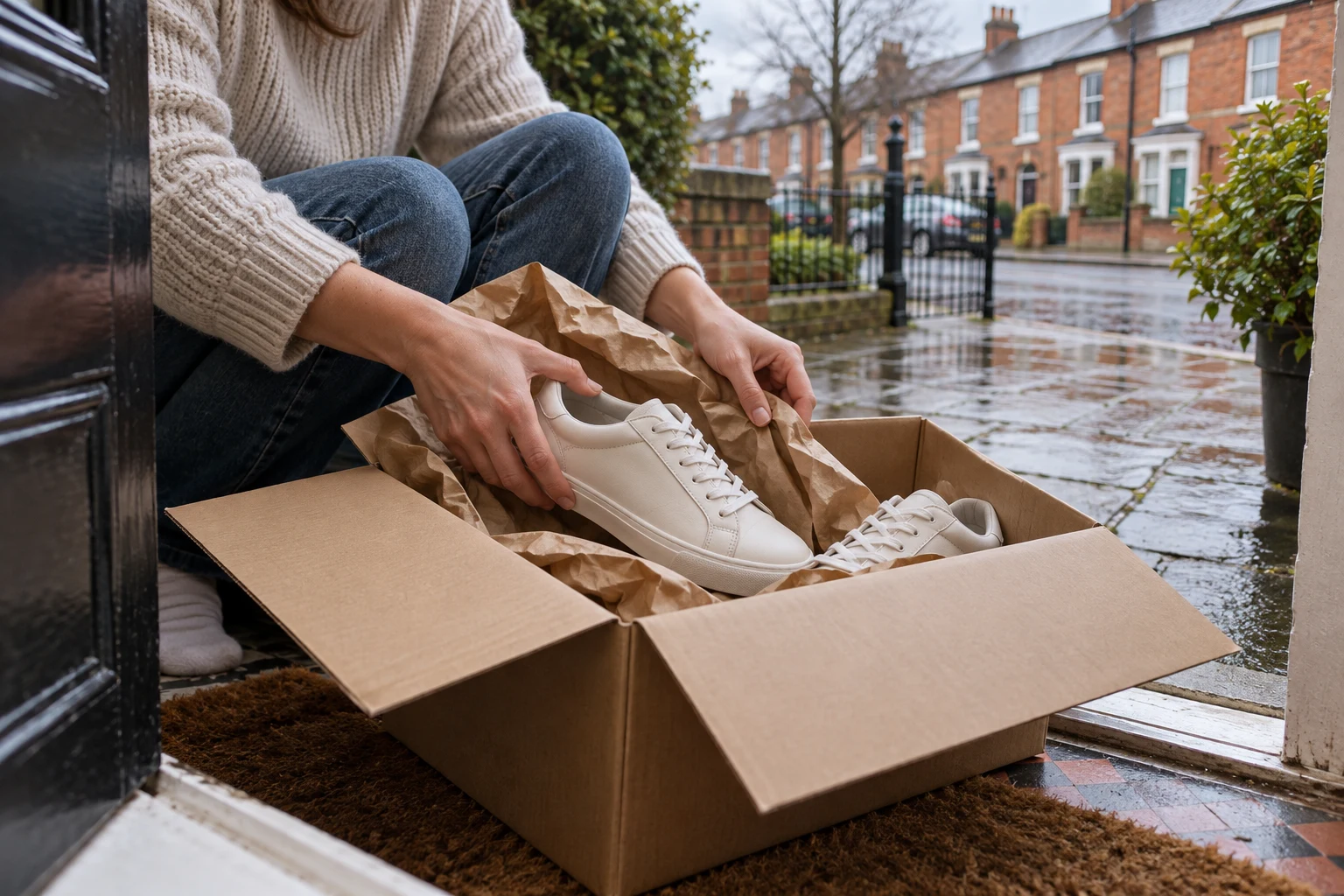
An online return has an information journey as well as a parcel journey. The trader needs to know that the consumer is cancelling; the goods then need to get back through the correct route. A label downloaded from an account is not a reliable substitute for keeping evidence of both steps.
That distinction is useful when ordering clothes or household goods ahead of the Christmas shopping period. It also helps separate a change of mind from a complaint about something faulty.
Two steps rather than one long return window
The CCPC’s online-shopping guidance describes a 14 day cooling-off period for most online goods purchases, starting when the goods are received. Tell the trader within that period that you wish to cancel. A further 14 days is allowed to return the goods after cancellation.
Do not read this as permission to wait 28 days before contacting the seller. The first action is notification; the second is return. Put them on separate lines in a diary or order record, with a copy of the message and the parcel receipt attached to the correct line.
Work out what kind of return it is
The EU’s consumer returns guidance explains that cooling-off rights concern purchases from traders and have exceptions. Custom-made goods, certain unsealed hygiene products and date-specific travel or leisure bookings can fall outside the ordinary cancellation right. A private seller is also a different situation.
A product that is faulty is not simply an unwanted item. Describe the fault when contacting the seller instead of selecting a generic change-of-mind reason just because it is the first option on a form. A shop’s voluntary extended return policy can add convenience, but its conditions should not be confused with statutory rights.
Compare the whole cost of sending it back
For a change-of-mind return, check the advance information about who pays return postage. The CCPC explains that return costs may fall on the consumer; faulty-goods return costs follow different rules. Original standard delivery charges and any premium delivery upgrade also need to be distinguished when checking a refund.
Our comparison method is to make three columns in the order record: amount paid for the goods; delivery selected at checkout; and cost of the return. Do not assume that a single refund figure should equal all three added together. Ask the trader to explain any deduction against the relevant contract terms and cancellation rules.
Keep the identifier with the evidence
Before sealing the parcel, photograph the contents and retain the order reference. Follow the seller’s genuine return instructions and keep tracking or proof of postage. Avoid placing unnecessary personal information on the outside of the package.
For multiple orders, match each return to its own order number and cancellation message. One parcel containing several orders can otherwise leave a gap between the physical return and the account credit.
If the trader does not resolve the issue, use its written complaint route. The useful question is specific: did it receive the cancellation, the goods, or both, and what part of the refund calculation is disputed? This record makes that question answerable without claiming that every online purchase has an unconditional right of return.
Join the conversation
Keep it kind, relevant and constructive. Comments are reviewed before they appear.
Be the first to share a thought.