

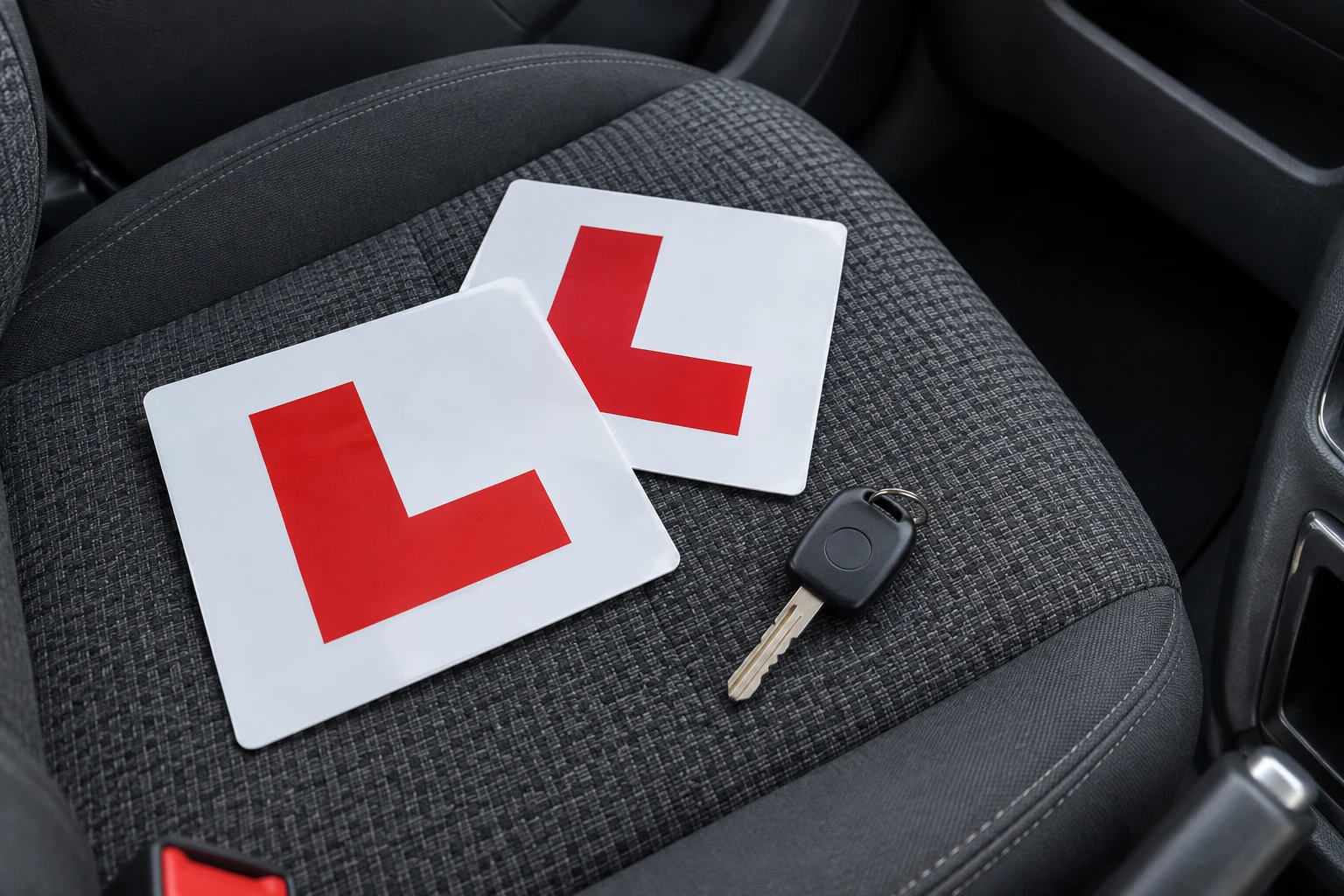
New learner-permit renewal rules take effect in the Republic of Ireland on **Sunday, 1 November 2026**. For the categories covered by the multiple-permit changes, applying for a driving test will no longer be enough to obtain a third or fourth learner permit: the applicant must have taken a test in the relevant category within the previous two years.
The change does **not** automatically cancel an existing valid permit on 1 November. The RSA and National Driver Licence Service say holders retain the life of their current permit, subject to its existing conditions. The important checks are the permit’s expiry date, the category, the time already spent on permits and the record of tests actually taken.
The Department of Transport’s 30 October commencement reminder confirms the start date. The regulations were signed in November 2025; this is their scheduled implementation, rather than a rule first announced this week. This guide explains the official public information without deciding an individual applicant’s eligibility.
Which learner categories are covered?
The RSA’s multiple learner permits guidance identifies cars in category B, tractors and work vehicles in category W, motorcycles in categories A, A1 and A2, and mopeds in category AM. Learners on a second or subsequent permit should examine the rules before their next renewal.
Do not assume that every category uses an identical renewal route. The RSA separately says the change concerning permits expired for two years or more applies across all learner-permit categories. Someone with bus, truck or trailer entitlements should check the category-specific official requirements rather than transfer a car example to another entitlement.
These are Republic of Ireland licensing arrangements. They should not be applied to a Northern Ireland provisional licence or to another jurisdiction’s test-booking system. Check the authority responsible for the actual permit before relying on a general description of “Irish learner-driver rules”.
Count permits, not just the word “renewal”
A first permit is followed by a second permit when it is renewed. Obtaining the third permit and renewing a permit for the third time are therefore different descriptions. Confusing the two can put a learner at the wrong stage of the official guidance.
The RSA FAQ specifically says a first-permit holder can apply for a second without sitting a driving test. That differs from applying for a third or fourth permit; the new attendance requirement should not be described as a test before every renewal.
The RSA describes the usual third-permit stage as following four years on permits. It says a test must have been undertaken in the relevant category within the previous two years, and describes that permit as valid for two years unless medically restricted. It describes the fourth-permit stage as following six years, again requiring a test within the previous two years, with a one-year permit.
Check the actual dates and history held by NDLS. Do not reconstruct an entitlement solely by counting old cards or assuming that every previous permit had the same duration. The RSA’s own explanation distinguishes medically restricted periods, while the regulations also address the periods for which permits are granted.
Is booking a test enough?
From 1 November, no: the new third- and fourth-permit requirement concerns having **taken** a driving test, not merely applying or paying to join a waiting list. The NDLS questions and answers specifically address people who applied before the commencement date but have not received an appointment.
This distinction matters when looking at an account or confirmation email. An application receipt establishes that an application was made; it does not establish that a test was conducted. Check the actual test history and the dates against the renewal guidance.
The regulations and official guidance describe a test in the relevant vehicle category. A test associated with a different entitlement should not be assumed to meet the requirement for the permit being renewed. Ask NDLS to clarify an uncertain category history before treating a booking or earlier test as sufficient evidence.
Does everyone have to stop driving on 1 November?
No. Both RSA and NDLS say a person with an existing valid learner permit retains its validity. The new commencement date is not, by itself, an expiry date printed onto every permit.
However, continued validity is different from qualifying for a further permit when the current one expires. A learner may have time remaining in which to train and take a test but still need to meet the new rules at the next application. Check that future step before the expiry date arrives.
Existing learner conditions continue to matter. The RSA notes that a learner car driver must be accompanied by a qualified driver and cannot drive on motorways. Having held a permit for several years does not turn it into a full licence. Follow the rules for the category and the conditions on the current entitlement.
What happens after the fourth permit or seven years?
The RSA’s general explanation says learners reaching the end of the fourth permit, or the seven-year limit, must restart the learning-to-drive process if they need further learner permission. Existing holders still have the life of their current permit in which to take a test.
The underlying 2025 amendment regulations describe an application after seven years or more in the specified categories as an application for a first learner permit. This is why repeated unsuccessful tests do not create an unlimited right to keep obtaining further permits.
Where permits have been issued for shorter medical periods or a history is otherwise unusual, obtain an explanation of the recorded periods from NDLS. The general four-permit description should not be used to issue a personal eligibility verdict from a card count alone.
What does restarting involve?
The Department’s commencement notice describes the car-learning process as a theory test, a learner permit, 12 Essential Driver Training sessions and a practical driving test. The RSA’s restart guidance also addresses Initial Basic Training for the motorcycle categories where it applies.
NDLS says a permit issued after restarting is treated as a first learner permit and describes a six-month holding requirement before the driving test. The RSA provides further detail about training and restarting. Check the instructions for the relevant category and application history when arranging the sequence, rather than assume that a previous permit allows an immediate new test.
The RSA also says a previous reduced-EDT concession cannot be used a second time when restarting, and that the required IBT modules must be completed again in the circumstances described in its FAQ. Previous lessons or an unexpired training certificate should not be assumed to bypass the restart instructions without checking the official guidance.
What if the permit has already expired?
The RSA says that, from 1 November, a learner permit expired for two years or more cannot be renewed through the ordinary renewal route; the holder must start the learning process again. It identifies this expiry change as applying to all learner-permit categories.
That is a separate question from whether a person is seeking a third or fourth permit. A learner should therefore check both the length of any gap and the multiple-permit history. Meeting one condition does not establish that every other requirement is met.
The new regulations reduce the previous five-year period to two years. If an older page or saved checklist still refers to five years, check its date and whether it describes the arrangements before 1 November. Use the current RSA and NDLS instructions for the application being made.
Do cancellations or illness count as having taken a test?
NDLS explains that a test which did not go ahead because of a documentation issue does not meet the requirement of having taken one. It also says the new law does not give the RSA discretion to make exceptions where a learner cancelled because of illness.
The RSA says it will prioritise replacement appointments when it cancels a test, but cannot guarantee a new appointment before a permit expires. A cancellation should therefore be followed up through the official account or support route; it should not be treated as proof that a test has been completed.
The removal of an illness concession from the test requirement is distinct from any medical restriction on the duration of a permit. The regulations’ explanatory note identifies removal of the former concession. Questions about a particular medical or licensing record belong with the responsible authority, rather than assumptions about an automatic exemption.
What should you check before contacting NDLS?
Have the category and expiry date available, establish which permit you currently hold, and locate the dates of any tests actually conducted in that category. Check whether the application question concerns a further permit, a long-expired permit or restarting after the permitted period.
If a driving-test application is marked “paused”, the RSA says to use MyRoadSafety and select “Check Application Status”, then update the details and confirm readiness for an invitation. A paused application and an attended test are separate matters. Resolve the account status while also checking the permit timeline.
For questions about the permit record, the RSA and NDLS publish the contact number **0818 700800**, alongside their official online contact routes. Use those channels for personal information; The Press does not collect licence numbers, medical details or applications. Ask for clarification where the dates or category history are uncertain, and keep the answer with the relevant records.


Join the conversation
Keep it kind, relevant and constructive. Comments are reviewed before they appear.
Be the first to share a thought.