

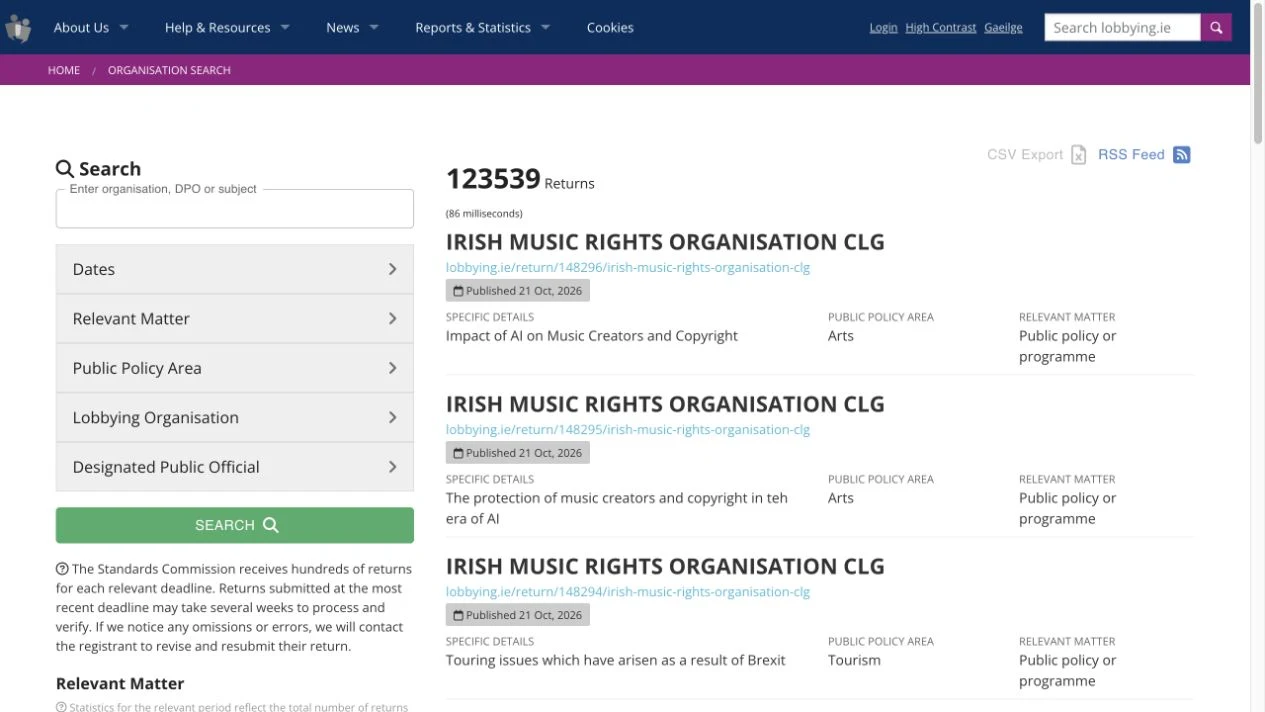
A lobbying return is a disclosure about an activity. It is not proof that the person lobbied agreed, that the requested policy was adopted or that anything improper occurred. Those distinctions should remain visible whenever register data is quoted.
We checked the public search interface and compared it with the regulator’s filing instructions. The resulting method is designed for readers, community researchers and local publications investigating a subject fairly.
Registrants and returns count different things
The Standards Commission’s register explanation distinguishes registration details from returns describing lobbying activity. One organisation can make multiple returns. Counting results is therefore not automatically counting organisations, meetings or successful requests.
The public returns search provides filters including dates, relevant matter, public-policy area, lobbying organisation and designated public official. Record the filters and search date so another researcher can reproduce the same starting point. Search results can change as returns are added or revised.
Read what the filing is meant to describe
The official instructions for submitting a return ask for the period, specific matter, intended results, people involved, method of communication and officials lobbied. They also explain that multiple communications about one subject can appear in a single return.
That means a return count is not a reliable meeting count. A nil return is another distinct category: it records no lobbying communication for the period, rather than a lobbying event with no description. Read the filing itself before extracting a number.
Separate three dates
Keep the relevant reporting period, publication date and any date of activity stated within the return on separate lines. A return published today may concern an earlier period. The regulator explains that relevant periods run for four months, ending in April, August and December, with filing deadlines afterwards.
For an original comparison example, imagine an organisation has three returns and another has one return describing several communications. The first has more returns in that selection. The available information alone does not establish that it had more meetings or greater influence.
Build a fair research note
Use six fields: stable return link; organisation and any disclosed client; reporting period; stated matter and intended result; officials and communication method; and what remains unverified. Quote or paraphrase the disclosed aim as an aim, not an accomplished outcome.
Check an actual decision against the decision-maker’s separate published record before connecting the two. A shared policy subject or close date can justify further research, but it does not establish causation. Avoid rankings of influence based solely on result counts.
Keep the source wording and your interpretation in separate notes. This approach makes a register-based article more useful to other Irish websites because a reader can follow the evidence, repeat the search and see the limits of the conclusion.

Join the conversation
Keep it kind, relevant and constructive. Comments are reviewed before they appear.
Be the first to share a thought.