

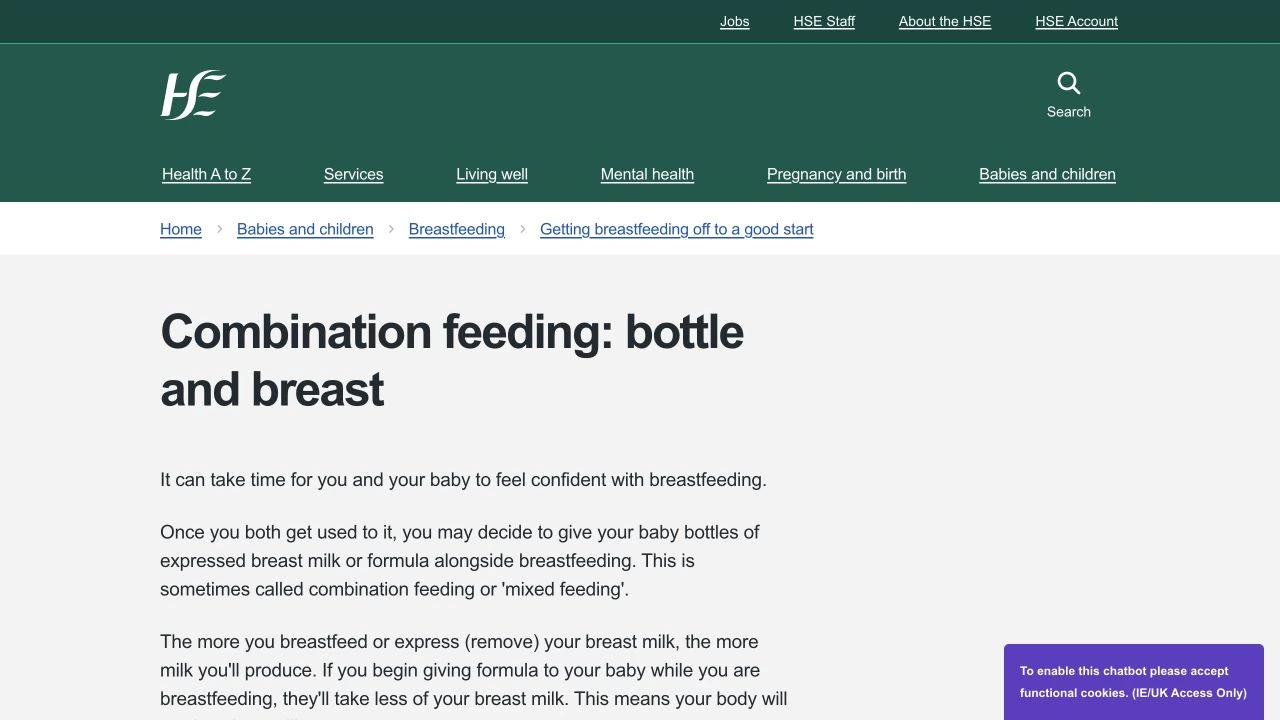
A bottle can contain expressed breast milk or infant formula, so introducing one does not describe a single feeding plan. For a family already breastfeeding, the useful first step is to identify which HSE guidance applies to the milk, the equipment and the way the baby is fed.
This guide brings those Irish public-health pages together. It does not set an individual feeding schedule, milk volume or treatment plan. A midwife, public health nurse or lactation professional can help with decisions about a particular baby.
Begin with the right feeding question
The HSE’s combination-feeding guidance covers breastfeeding alongside bottles of expressed milk or formula. It explains that breastfeeding and expressing affect milk supply, and that replacing breastfeeds with formula can reduce the amount of breast milk produced. Discuss a change with your feeding-support professional if maintaining supply is a concern.
The HSE says a breastfed baby may take time to become used to a bottle. Its suggestions include trying the first bottles when the baby is calm rather than very hungry; another carer may be able to help with those first attempts. A bottle at night does not guarantee a full night’s sleep.
Expressed milk and formula need different preparation guidance
For expressed breast milk, the HSE’s bottle-feeding page for expressed milk recommends a teat with a slow milk flow. It also emphasises following the baby’s cues rather than expecting the same amount at every feed. Expressing questions and milk-supply concerns belong with the breastfeeding support team, rather than a universal pumping timetable copied from another family.
If using formula, follow the separate HSE instructions for preparing baby formula. They address the preparation process and its safety requirements. Do not treat instructions for handling expressed milk as a substitute for formula preparation, or make up a powder-to-water ratio from a general article. Read the complete official instructions before starting.
Prepare the equipment as well as the feed
The HSE’s equipment guidance says bottles must be sterilised until the baby is at least a year old. Cleaning and sterilising are separate steps: it describes washing the components before sterilising them, following the equipment manufacturer’s instructions. A dishwasher does not sterilise feeding equipment.
Check that everyone who will give a bottle knows the same preparation method. Keep the official guidance accessible to the other carer instead of relying on an abbreviated message that leaves out a safety step.
Follow the baby’s pace
The HSE’s guide to giving a bottle explains paced feeding: support the baby upright, hold the bottle horizontally and allow pauses, adjusting it so the teat contains milk while the baby feeds. Follow the baby’s signs that they need a pause or have had enough; do not force them to finish.
Always hold the baby and the bottle. The HSE warns against leaving a baby to feed alone or propping the bottle against a pillow because of choking risk. Its guidance also says never to microwave a bottle: uneven heating can create hot patches that scald the baby’s mouth. The official page includes the full technique and a demonstration video, which are more useful than a rushed description passed between carers.
Where to get help in Ireland
For poor weight gain, supply concerns, feeding problems or transition after premature birth or a hospital stay, the HSE directs parents to a public health nurse or lactation nurse or midwife. General bottle tips cannot resolve those individual concerns.
For breastfeeding questions, the HSE’s lactation-consultant service offers live chat Monday to Friday, 10am to 3pm, and an email option. The page says the service is available in Ireland. It provides a direct route to personal advice; send any information it needs through the HSE service itself, rather than to The Press.
Join the conversation
Keep it kind, relevant and constructive. Comments are reviewed before they appear.
Be the first to share a thought.