

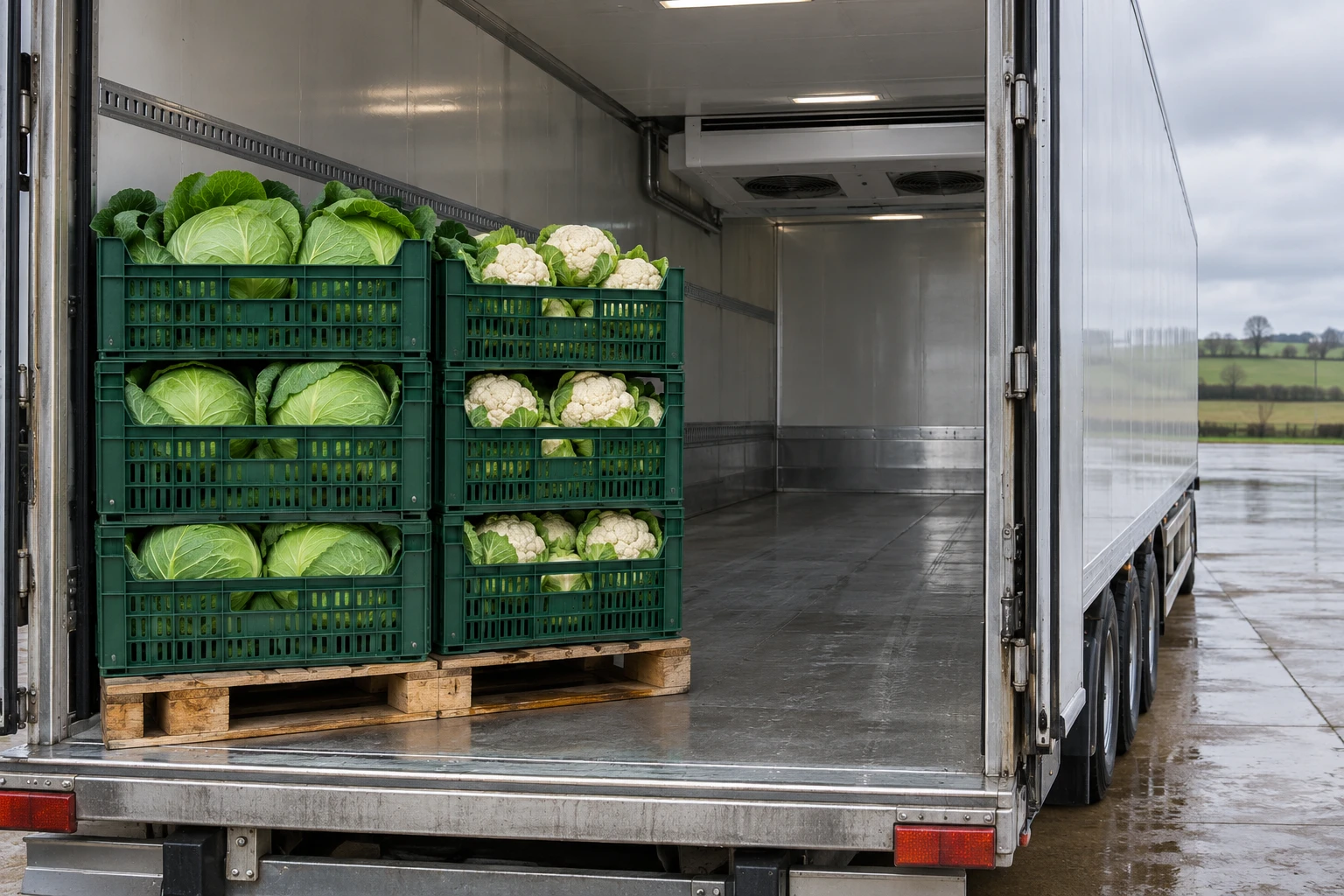
A draft EU–UK agreement aimed at removing many food and farming trade checks has been circulated to European governments, the BBC reported on Tuesday, 3 November, raising the prospect of less paperwork for Irish exporters and smoother food movements into Northern Ireland.
The development concerns a reported negotiating text, rather than an agreement already changing border procedures. Irish businesses should distinguish progress towards a deal from the point when new rules actually take effect. No immediate reduction in Irish supermarket prices can be established from the draft report.
In its report on the draft food agreement, the BBC says the text is due for consideration by EU ambassadors on Wednesday. The Press has read the official negotiating mandate and published preparation guidance, but has not independently inspected the unpublished draft. Its reported circulation is attributed to the broadcaster.
Why Ireland has a direct stake
Food trade across the Irish Sea is substantial in both directions. In its 2025 overseas-trade statistics, the UK’s Department for Environment, Food and Rural Affairs lists Ireland as the largest country destination for UK food, feed and drink exports, worth about £4.6 billion, or 17.9% of that total.
The same publication records about £5.8 billion in UK food, feed and drink imports dispatched from Ireland. Those figures describe 2025 trade, not new sales generated by this week’s negotiations. They are UK-wide statistics and should not be mistaken for Great Britain-only flows or a forecast of savings.
Their significance is the exposure they demonstrate. Irish food producers selling to British customers, businesses importing British ingredients or finished products, and hauliers handling those consignments all have an interest in how the proposed arrangements work. Consumers could also be affected through supply chains, although trade values alone cannot tell us how a particular shopping basket would change.
What the proposed food deal would do
The negotiations concern a sanitary and phytosanitary agreement, usually shortened to SPS. This covers rules protecting food safety and animal and plant health. It is a specific part of the trading relationship, rather than a replacement for every arrangement governing goods, services, taxation or people’s movement.
The Council’s original negotiating announcement of 13 November 2025 set out the intended exchange: aligning Great Britain’s SPS standards with the EU’s would remove the need for most certificates and checks on animals, plants and related products moving between them.
For a food business, that could reduce repeated consignment administration and uncertainty about whether a delivery will be held for a health-related check. The benefit would depend on the final coverage, exceptions and operating instructions. It would not mean that products cease to have to meet food-safety standards.
The distinction between a rule and a border procedure is central. If both sides apply compatible requirements, routine proof at the border may be reduced. Businesses would still need to comply with the underlying standards applying to what they produce, buy and sell.
Northern Ireland: fewer food checks, separate customs questions
Northern Ireland has a particular interest because the Windsor Framework already governs its relationship with EU goods rules and movements from Great Britain. The Council’s mandate explicitly envisages SPS benefits extending to GB–Northern Ireland movements while preserving Northern Ireland’s access to both the EU single market and the UK internal market.
The UK’s published business-preparation guidance, updated on 30 July, describes the intended removal of export health certificates, phytosanitary certificates and routine SPS checks for relevant goods entering Northern Ireland from Great Britain once an agreement takes effect.
That guidance also allows for simplified certification for very limited categories of movement, such as live animals. Its wording therefore does not support an unrestricted claim that absolutely every food-related process would disappear.
Nor does it say all customs administration would end. The guidance expressly says digital systems for customs declarations would not change. For a Northern Ireland business, removing a food-health certificate and removing a customs declaration are different questions. Headlines about an end to food checks should not be read as confirmation that the entire Irish Sea trading framework has been abolished.
What Irish exporters would need to watch
For businesses in the Republic selling food into Great Britain, the relevant prospective benefit is a simpler route into that market for products covered by the agreement. Defra’s preparation guidance describes the intended removal of routine SPS border checks for dairy, fish, eggs, meat, plants and plant products entering Great Britain from the EU.
Product coverage still matters. The same guidance says some goods that are not exempt would need EU digital systems such as TRACES NT, while biosecurity-compliance processes would remain for certain goods introduced into or moved within Great Britain.
A hypothetical small producer shipping several different foods illustrates why businesses need product-level instructions. One consignment may include goods subject to different requirements. A broad announcement about simpler food trade would not, by itself, tell that producer which records to change or when to stop using a particular certificate.
The immediate practical issue is therefore preparation: identifying the products and routes involved, checking suppliers’ plans and waiting for authoritative implementation instructions before changing an established process. Reported progress is useful commercial information, but it is not a substitute for the rules applying to a shipment on its dispatch date.
Would groceries become cheaper in Ireland?
The draft report does not establish a price cut for Irish households. A reduction in certification, inspection or handling costs could ease one part of a supplier’s costs if the agreement is implemented as intended. Whether that affects shelf prices would depend on the products, contracts and businesses concerned.
It would be misleading to convert a possible saving on a consignment into an assumed discount on every item in a shop. A shipment-level administrative cost and a household’s retail bill measure different things. The quantity carried and the way costs are distributed would matter before any such calculation could be meaningful.
The same caution applies to availability. Easier trade could make some products or routes more attractive to suppliers, but that does not demonstrate that a particular Irish retailer will stock a new line or restore an old one. Those decisions would require confirmation from the business involved.
For consumers, the useful signal is that officials are working towards removing a source of trade friction in a market closely connected to Ireland. The evidence available at this stage supports that prospect, rather than a quantified saving, guaranteed delivery improvement or immediate change at the checkout.
Shared standards are part of the bargain
The proposed simplification depends on regulatory alignment. Defra’s guidance describes a wide scope, including food hygiene and consumer information, additives, contaminants, organics, animal health and welfare, plant health and pesticide-residue limits. That is broader than simply replacing a form at a port.
For Irish businesses already operating within EU requirements, the relevant question is how a more closely aligned British market would affect their trading conditions. For British suppliers, adjustments to applicable standards may accompany the prospect of easier access. Final exceptions and transition arrangements will matter alongside the headline reduction in checks.
There is also a distinction between support for closer trade and support for a particular legal model. In its own statement published on 2 November, the British Chambers of Commerce called for a fundamental reassessment of UK–EU relations and comparative examination of different options.
The organisation says its survey covered more than 1,000 firms and identified continuing barriers. That is evidence of the British business group’s position and research, not an Irish business survey or proof that the reported draft resolves every concern.
Political reaction underlines the remaining differences
Reaction in Northern Ireland has already focused on whether a sector-specific food agreement goes far enough. ITV’s report on Tuesday’s responses records DUP leader Gavin Robinson criticising the UK government’s approach and arguing that Northern Ireland would still face separate trading arrangements in other areas.
It also reports UUP MLA Steve Aiken cautiously welcoming the prospect of an SPS agreement while questioning its limits. These are political assessments of the anticipated agreement. They should be distinguished from an adopted text establishing its final legal effects.
The debate points to a real boundary in the negotiations: reducing food-related friction is not necessarily the same as settling wider disagreements about the post-Brexit settlement. An assessment of the final agreement will need to examine both what it changes and which obligations remain.
The timetable still needs confirmation
There is an important timing caveat in the official material. Defra’s July guidance states an intention for an agreement to take effect in mid-2027, while expressly making exact timing subject to negotiations. That is a published planning assumption, not a start date established by Tuesday’s draft report.
The Council’s negotiating announcement likewise says an agreement would need its endorsement before entering into force. A circulated draft, political agreement, formal approval and operational implementation are separate steps. Businesses need clarity on the final text and the effective date, not just confirmation that talks have advanced.
For people in Ireland, the next developments to watch are official confirmation of agreed terms, the coverage of Irish export routes and GB–Northern Ireland movements, and practical instructions on certificates, systems and exceptions. Until those steps are established, this is a potentially significant improvement in food-trade arrangements under negotiation, with concrete Irish relevance but no verified immediate change to household prices or existing border obligations.
Join the conversation
Keep it kind, relevant and constructive. Comments are reviewed before they appear.
Be the first to share a thought.