

The European Health Insurance Card is free to obtain, but that does not mean every medical bill abroad will be zero. It also does not replace travel insurance. Treating those as three separate questions makes pre-travel checks clearer.
We compared the HSE’s Irish application instructions with the European Commission’s explanation of coverage. This is a general route map, not an assessment of anyone’s entitlement or medical needs.
Start at the official application page
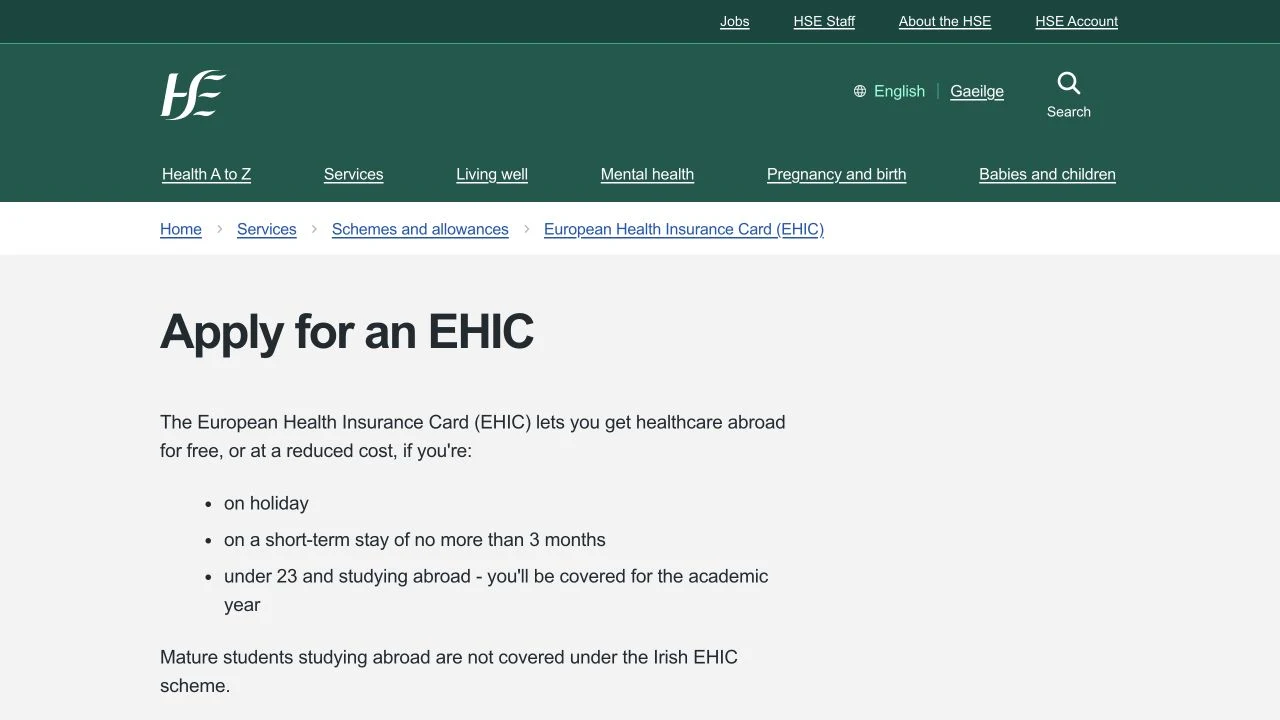
The HSE’s Apply for an EHIC page links to the online application and explains post or email alternatives. It says online is the quickest route. Follow that official link rather than assuming a paid intermediary is necessary.
The HSE sets out different routes for people living in Ireland, frontier workers and some people living or studying elsewhere. Read the category that matches the circumstances; Irish citizenship alone is not a complete explanation of which country should issue a card.
Each family member needs their own EHIC. The HSE says a parent or guardian must apply for a child under 18. For a family’s private checklist, record each traveller’s name, whether their card is available and its expiry date. Do not publish card numbers or send identification documents to an unofficial information page.
Check treatment terms separately
The European Commission’s EHIC explanation says the card gives access to medically necessary, state-provided healthcare during a temporary stay, on the same conditions and at the same cost as people insured in that country. That cost may be free, but is not guaranteed to be.
The Commission says EHIC does not cover private healthcare, return flights home or lost or stolen property. It does not cover a journey made expressly to obtain medical treatment. A provider’s location abroad does not, by itself, show that it is part of the state system.
Use the official country information for the destination, including any specific arrangements outside the standard EU/EEA and Switzerland route. Do not substitute a generic map of “Europe” for the relevant rules.
Urgency has an official route
For travel within ten days, the HSE tells applicants to apply online and select its urgent-travel option. It says it will issue a Provisional Replacement Certificate valid for three months. This is a defined process, not a promise that a physical card will arrive before every departure.
Keep the card or certificate check separate from the travel-insurance policy check, including its emergency contact and exclusions. If the issuing-country or application category is unclear, use the HSE contact route before submitting. A general guide should not decide that personal eligibility question.
Join the conversation
Keep it kind, relevant and constructive. Comments are reviewed before they appear.
Be the first to share a thought.