

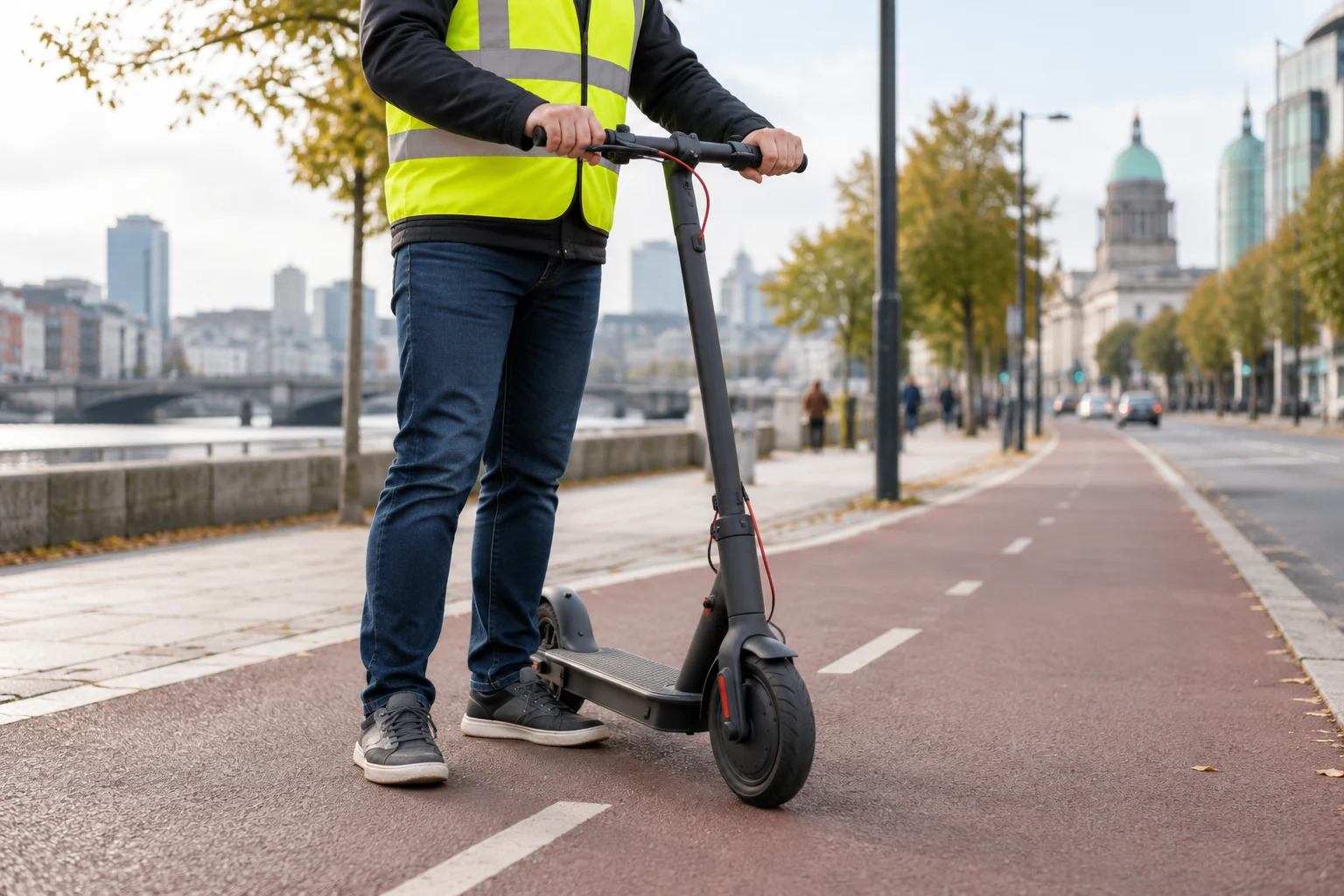
A guide written when e-scooters first became legal on Irish roads can now give the wrong answer about the rider’s minimum age and protective equipment. Two 2026 amendments changed the position, with different commencement dates.
We checked the amending regulations against the RSA’s current guidance. The result is a three-part purchase-and-use record: rider, vehicle and journey. A scooter offered for sale is not, by that fact alone, approved for public-road use.
Rider: the minimum age is 18
The October age amendment substitutes 18 years for 16 years in the principal regulations. It came into operation on 2 October 2026. An older page describing the original 16-year threshold does not establish the rule now.
The separate helmet and high-visibility amendment took effect on 4 September 2026. It requires a securely fastened helmet and high-visibility clothing covering at least the front and back of the torso, with the standards specified in the instrument. These are requirements, rather than just optional recommendations for e-scooter users.
Vehicle: check the specification, not the marketing label
The RSA’s current e-scooter guide sets out limits including a maximum continuous rated output of 400 watts, maximum design speed of 20 km/h and maximum weight of 25 kg including batteries. It also describes required equipment and the manufacturer’s plate.
Record the actual model, rated power, design speed, weight and supplied conformity information before purchase. A selectable low-speed mode should not be assumed to cure a vehicle that fails the applicable design requirements. Ask the seller for documentation instead of relying on a product title saying “road legal”.
Journey: the route and behaviour still matter
The RSA says e-scooters must not be used on footpaths, pedestrianised areas or motorways. Seats, passengers and carrying goods are prohibited, as are holding or using a mobile phone while driving. The vehicle must remain roadworthy, with the required lights, reflectors, brakes and audible warning equipment.
Plan the complete route, including where riding would need to stop. A cycle lane near the destination does not make every connecting footpath available for riding. Check the transport operator’s rules separately before assuming the scooter can be taken aboard a bus or train.
A three-part record for a household purchase
Keep the rider-age and protective-equipment check; the model’s technical documents; and a route plan consistent with permitted use. Save the source dates alongside the purchase date so a later reader can see which version was consulted.
This record does not certify compliance or replace enforcement decisions. It helps avoid a preventable mistake: using an accurate historical summary of the 2024 launch as if no law had changed since.
Join the conversation
Keep it kind, relevant and constructive. Comments are reviewed before they appear.
Be the first to share a thought.