

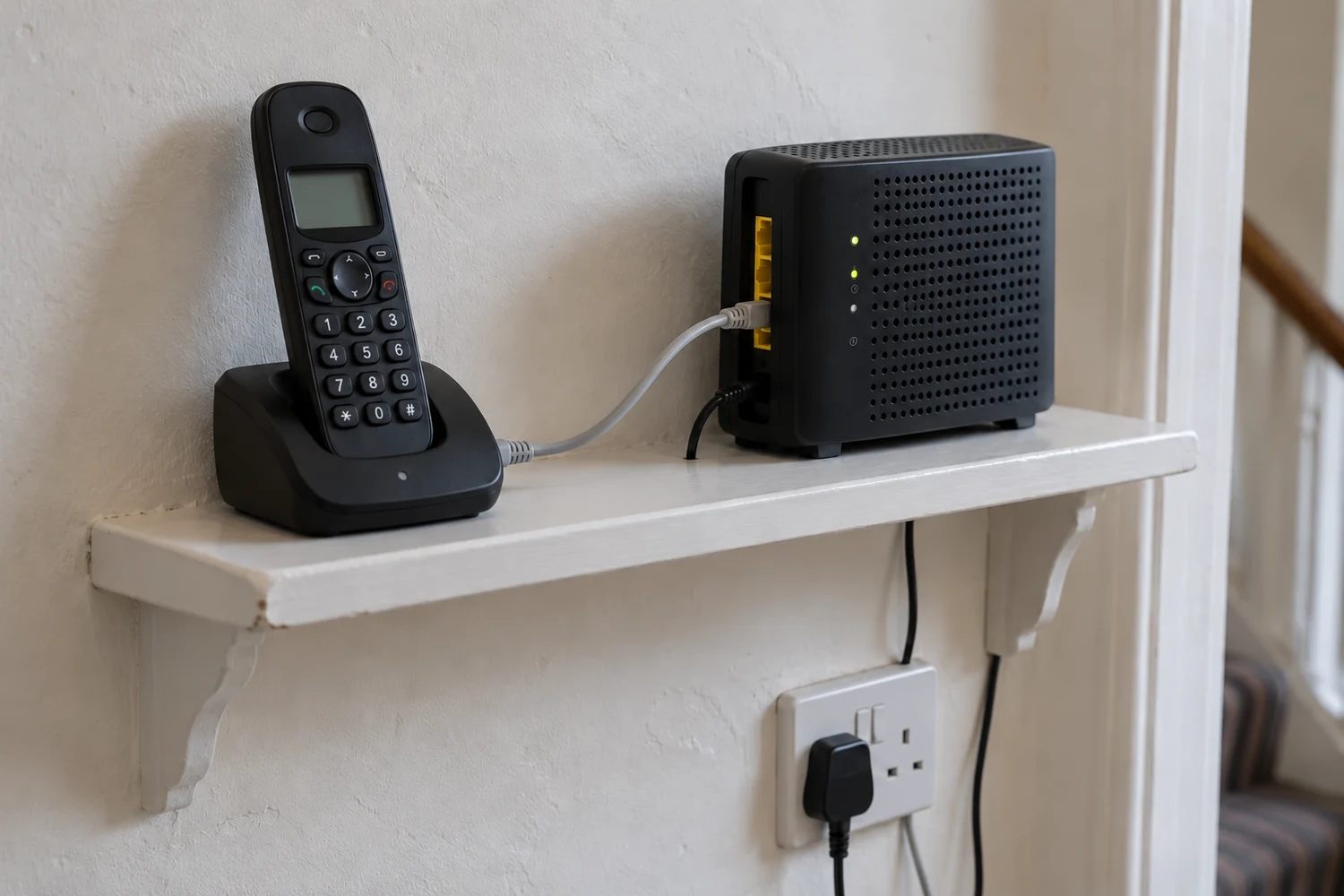
A home-phone and broadband bundle can simplify a household bill, but its introductory monthly price does not tell you what the service will cost over the contract. A useful comparison starts with what you actually need, the term you are accepting and the charges after any discount ends.
ComReg’s guide to comparing plans, dated 16 January 2026, points consumers towards its free Compare service for mobile, broadband, home phone and bundles. It is a starting point for a shortlist, followed by a check of each provider’s actual offer.
Start with the service you use
Take your current bill and identify the broadband charge, home-phone charge, call costs and any other bundled services. Check when the minimum term ends. A household that rarely makes landline calls needs a different comparison from one making regular international calls or relying on an existing home number.
For each proposed package, write down the call allowance, destinations covered, any time restrictions and charges outside the allowance. Check whether keeping a telephone service is optional. Do not treat an unused extra as a saving merely because it appears in a bundle.
ComReg’s explanation of its comparison service says it covers a broad range of offers, but not every provider. The information is updated periodically, so confirm availability and final terms with the provider rather than assuming a comparison result is a live quotation.
Compare costs over the same period
Put competing offers on a common timeline. Record each discounted month, the price after the discount, any stated annual increases, installation or activation charges, equipment charges and any unavoidable usage costs. Add these together across the minimum term, then consider what happens after it ends.
Comparing only the first bill can hide the difference between a short promotion and a longer commitment. Equally, dividing a total by the number of months is useful for comparison but does not change when the real bills fall due. Keep the actual payment schedule alongside the total.
Before agreeing, obtain the Contract Summary described by ComReg. It should set out service characteristics, activation and recurring or usage costs, the minimum term, renewal and termination terms, and accessibility features. For fixed broadband it should also state minimum, normally available, maximum and advertised download and upload speeds. An advertised maximum alone is an incomplete basis for choosing.
Check the switch as well as the price
ComReg’s phone and broadband switching booklet explains the provider-led switching process and the checks to make before moving. Ask the new provider to confirm the installation and switch dates, any equipment needed and the arrangements for retaining your number. Keeping an existing number is free, but you need to request it; it is not automatic.
If an alarm or telecare device uses the telephone connection, check compatibility with its supplier before changing service. A move to voice calls over broadband also calls for a clear explanation of what happens during a power cut. Do not assume that every device will work in the same way after a switch.
Check what must be returned to the old provider and by when. If changing only one element of a bundle, ask what will happen to the remaining services and their prices. Leaving within a minimum term can involve an early termination charge; a seemingly cheaper offer needs to be weighed against that actual cost.
Keep the paperwork before committing
Save the Contract Summary and the offer you accepted in a form you can retrieve. Confirm any price-rise wording, installation appointment and number-transfer request in writing where possible. The end of a minimum term does not normally stop the service automatically, while accepting a new deal may start another term.
This approach does not identify one universally best provider. It gives you a comparable set of costs and service requirements, so that a promotion can be assessed against the household’s real needs rather than its headline alone.

Join the conversation
Keep it kind, relevant and constructive. Comments are reviewed before they appear.
Be the first to share a thought.