

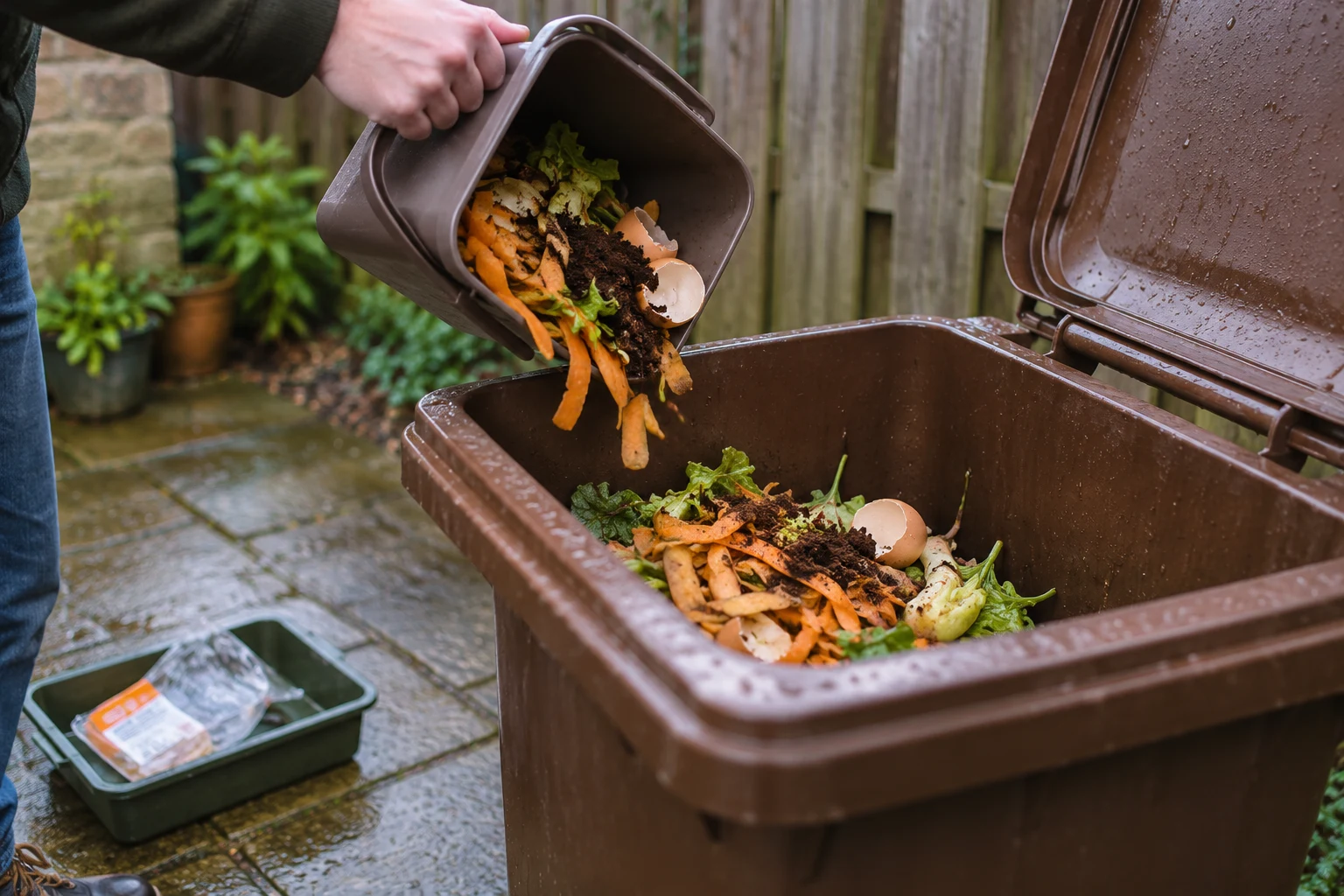
An empty takeaway bowl and the food left inside it do not automatically have the same disposal route. Sorting them as one object is an easy way to put ordinary packaging into a food-waste collection.
We used Ireland’s national waste guidance to build a two-stage household check: identify the food, then assess the wrapper separately. It also helps distinguish recycling food waste from preventing it in the first place.
Food is the first decision
MyWaste’s brown-bin guide says all households with a kerbside collection are entitled to a brown-bin service for food and garden waste. Ask your collector about the service rather than assuming it is unavailable because of where you live.
The guide includes raw and cooked food, vegetable peelings, bread, dairy, meat, fish, eggshells, coffee grounds and tea bags. It also lists kitchen roll or tissue and light garden material. Separating leftovers into a small kitchen caddy can make the trip to the outdoor bin easier.
This collection route is not the same as a promise that every listed material is suitable for every home compost heap. Keep the collector’s brown-bin instructions distinct from any home-composting method.
Packaging needs its own answer
MyWaste lists compostable cups, bowls and cutlery only where certified to EN13432. A green colour, a paper-like appearance or the word “biodegradable” is not evidence that an item meets that stated certification requirement.
Check the certification and your collector’s current instructions. Where the label is unclear, ask before adding it. Empty ordinary plastic packaging away from the food stream; do not assume that a bag becomes suitable because it holds food scraps.
The same two questions can be applied at a shared kitchen: “What is inside?” and “What is the container made and certified for?” A short label beside the caddy can prompt both without reproducing a confusing list of brand names.
Use a short tally to prevent repeat waste
For one week, a household can keep a simple proposed tally: avoidable edible leftovers, unavoidable preparation scraps, and packaging kept out of the caddy. This is a suggested observation method, not a survey we have conducted or a claim about typical Irish household waste.
The distinction makes the next action clearer. Repeated uneaten portions suggest adjusting quantities or storage plans. Peelings may already be correctly separated. Packaging mistakes require a clearer sorting instruction rather than a different recipe.
Keep the tally practical and brief. It should help decide what to buy or serve next time, while the brown bin remains the collection route for food waste that still arises.
Join the conversation
Keep it kind, relevant and constructive. Comments are reviewed before they appear.
Be the first to share a thought.