

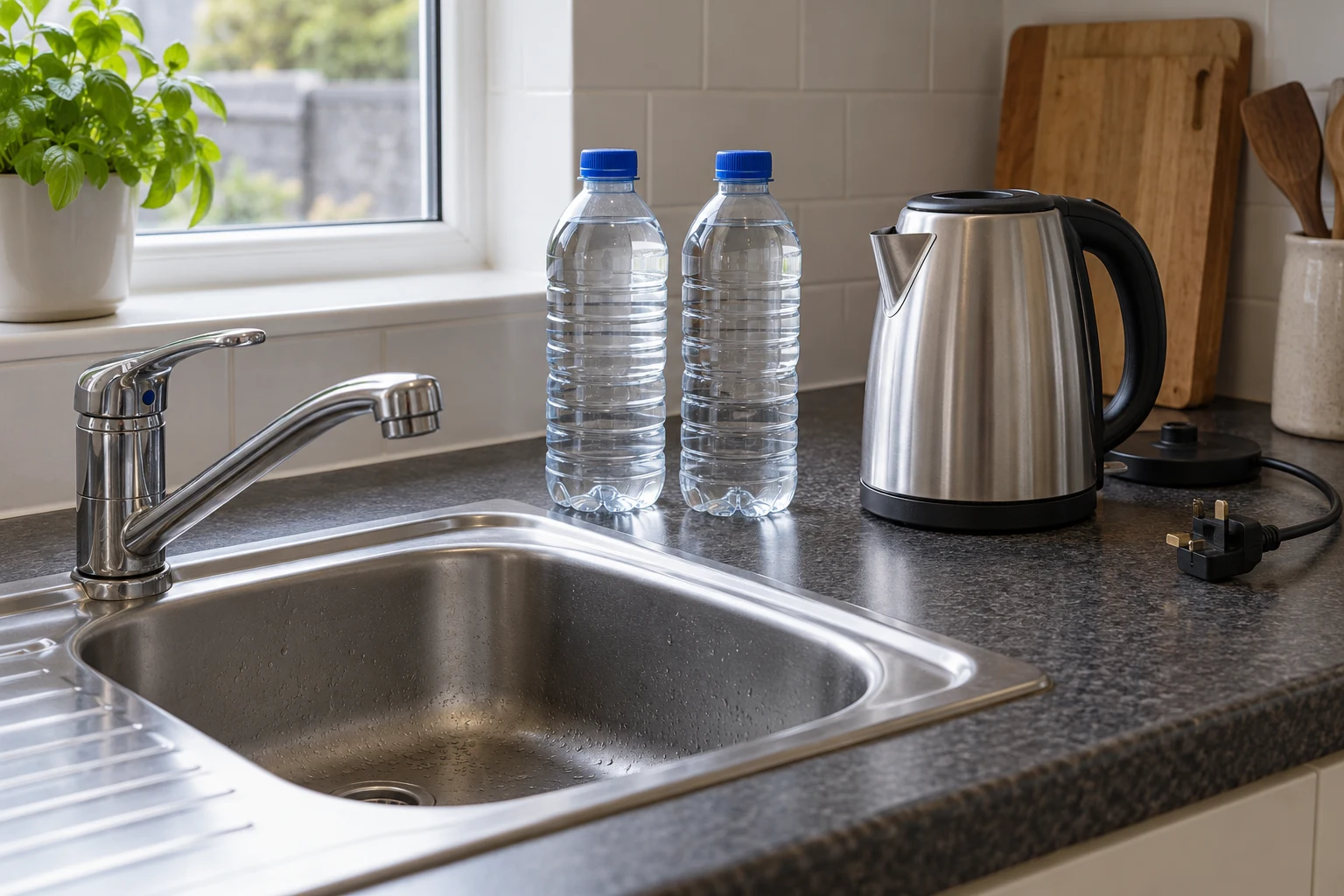
The phrase “water warning” is not specific enough to choose a safe response. A Boil Water Notice and a Do Not Consume Notice require different actions. A stricter instruction not to use water for any purpose is different again.
We compared Uisce Éireann’s published guidance and built a notice record that keeps the supply, instruction and lifting decision together. This is general public information, not a statement that any particular area currently has an unsafe supply.
Boil Water Notice
Uisce Éireann’s Boil Water Notice guidance says water should be brought to a vigorous boil for one minute and allowed to cool before the uses covered by the notice. These include drinking, brushing teeth, making ice and preparing uncooked food. Existing ice should be discarded.
An ordinary water filter is not a substitute for the notice’s instructions. The guidance distinguishes consumption from uses such as flushing a toilet or bathing, with precautions against swallowing water. Read the actual local notice for any additional restrictions.
Do Not Consume is a different instruction
The Do Not Consume guidance says boiling will not make the water safe to consume. Use an alternative safe source for drinking, teeth cleaning, ice, uncooked food and pets’ drinking water. Do not transfer a boil-water response to this notice merely because the kitchen has a kettle.
The same official page describes a “Do not use for any purpose” notice. That prohibits all uses, including bathing, showering and toilet flushing. It is stricter than a standard Do Not Consume notice. Follow the wording issued for the affected supply.
The operator also says water from a public tanker must be boiled and cooled before drinking or food preparation. “Alternative source” does not automatically mean that every supplied container is ready to drink without checking instructions.
A five-field notice record
First save the official notice and its issue time. Second identify the named supply and affected area; a county name alone may be too broad. Third copy the notice type exactly. Fourth list the permitted alternative source or collection arrangements in that notice. Fifth save the official lifting notice when it is issued.
Use Uisce Éireann’s water-quality service and current local updates to check the affected supply. Do not infer that a notice has ended because the water looks clear or because a neighbour has resumed normal use.
Infant feeding, individual health conditions and food-business operations can require additional specific guidance. Use the official linked instructions and the appropriate health or environmental-health contact for those circumstances. Do not improvise a treatment method from a general household checklist.
Join the conversation
Keep it kind, relevant and constructive. Comments are reviewed before they appear.
Be the first to share a thought.