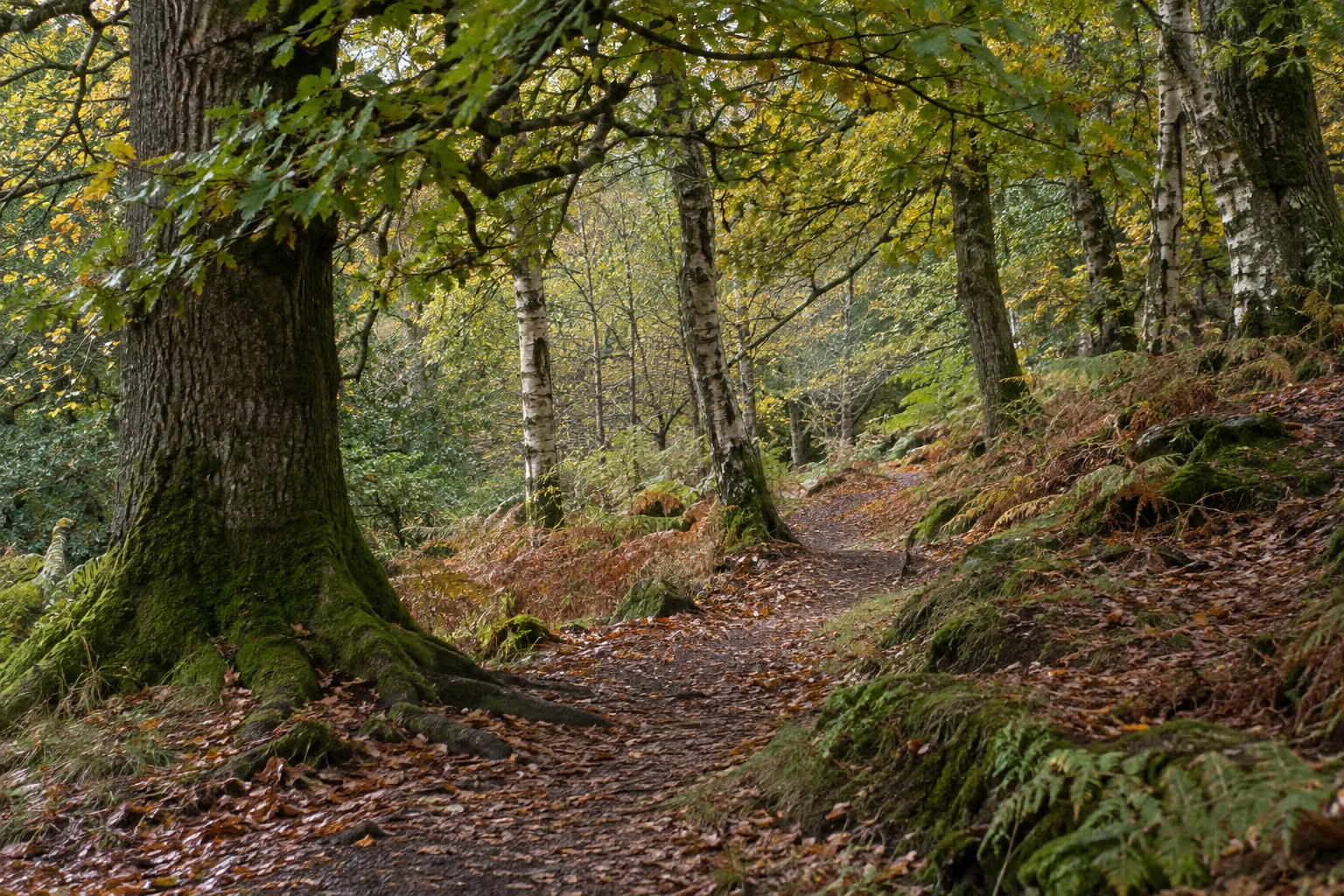
Wicklow residents are being asked to report sightings of red squirrels, grey squirrels and pine martens for the 2026 All-Ireland Squirrel and Pine Marten Survey. The county council’s announcement, dated 8 October, says reports can be submitted throughout the year. [1]
That gives an ordinary autumn walk a useful follow-up: if an animal is seen, keep enough detail to describe the encounter accurately. A memorable sighting and a usable survey record are related, but they are not quite the same thing.
Record the encounter before details fade
The National Biodiversity Data Centre’s form asks for the sighting date, county, location name and spatial reference, alongside the species and observation details. Its map can generate a spatial reference. Recorder name and email fields are also present. [3]
Make a short note at the time: where you were, when you saw the animal and what helped you identify it. Record the sighting date, rather than automatically using the day you later fill in the form. Distinguish what you saw from what someone else told you.
An existing photograph can help, but the survey information asks for one only if available. It also invites comments on how frequently animals are seen and any change in that frequency; researchers may follow up to verify a report. [2]
Colour alone is not enough
The survey’s identification guide describes red squirrels with fur that can be red-brown, chestnut or grey-brown, a white belly and often noticeable ear tufts. Grey squirrels may also have chestnut colouring, while their grey tails have a white fringe. Pine martens have dark brown fur and a cream or yellow throat patch. [2]
Those descriptions are a reason to pause over an uncertain identification. Use the linked guide and your actual observations. If the view was brief, explain the uncertainty rather than turning an impression into a confident claim.
Observation is different from management
The council says the national survey complements a grey-squirrel management feasibility study for the Dublin/Wicklow region. [1] A request for sightings does not ask residents to undertake management work themselves.
For an autumn outing, keep the task small: watch quietly from an accessible route, avoid chasing or handling animals, and leave nests and resting places alone. The useful contribution is the record, not a closer encounter arranged for a photograph.
Check the record-sharing notice
The form states that saving a record makes it freely available under a Creative Commons Attribution 4.0 licence and links to information on data collection and validation. [3] Read that notice before submitting, particularly when recording from private land or uploading a photograph.
For a family walk, an adult can help organise the details and review the submission. There is no need to produce a sighting on demand: a walk without one remains a walk, and a survey entry should describe something actually observed.
Sources were checked on 13 October 2026.

Join the conversation
Keep it kind, relevant and constructive. Comments are reviewed before they appear.
Be the first to share a thought.