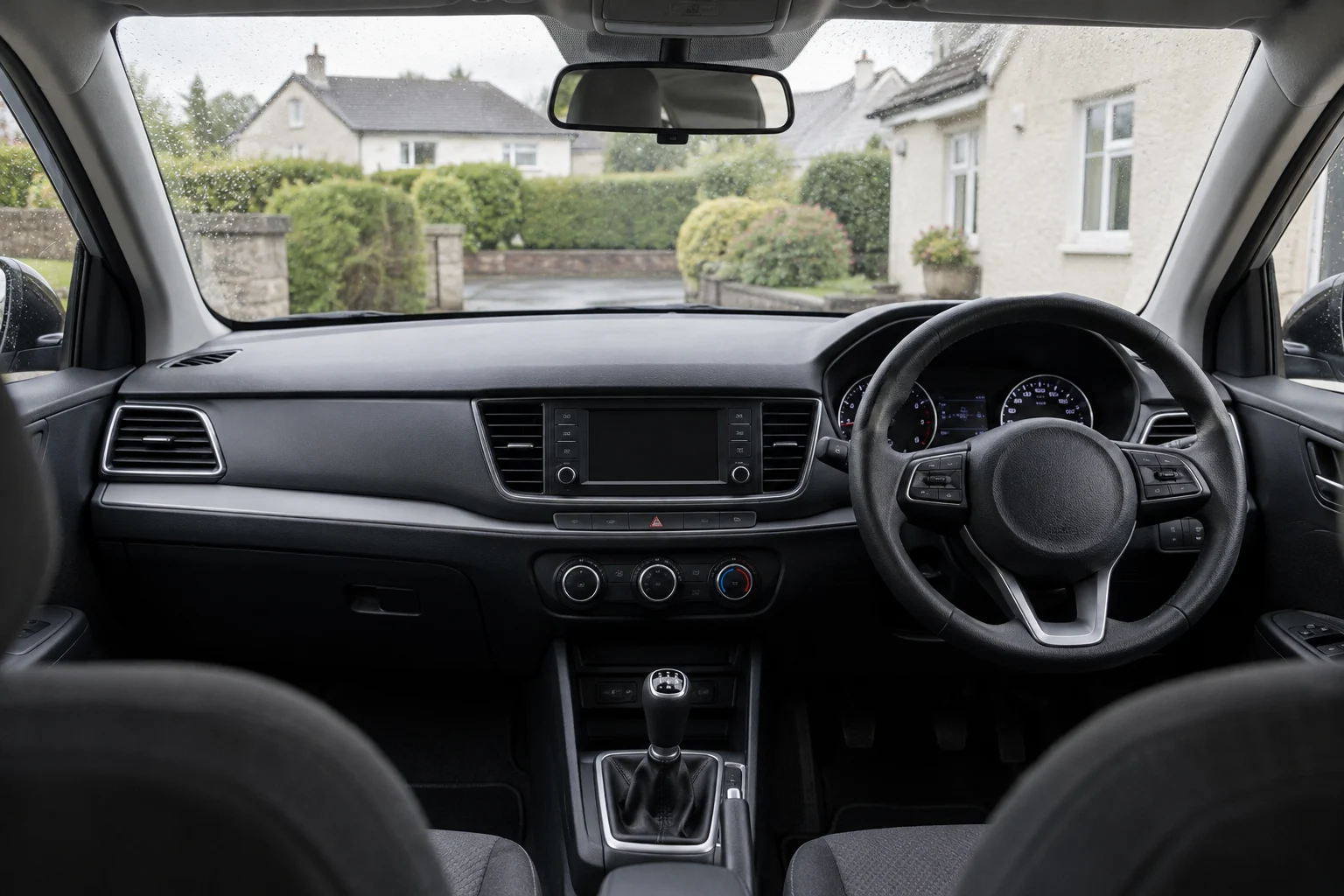
Ireland drives on the left, and the steering wheel in cars supplied for its market is usually on the right. Those two facts fit together, but they answer different questions: one is the rule for using the road; the other is how a vehicle is arranged for that rule.
The Road Safety Authority states the current position plainly: traffic in Ireland drives on the left. [1] The historical trail goes much further back than mass car ownership.
A road rule from before motor cars
Section XXX of an Act for amending the Irish Road Acts, passed in 1809, set out a keep-left requirement taking effect from 1 January 1810. It referred to people riding horses and driving animals, wagons, carts, coaches and other carriages. It also directed those passing travellers moving in the same direction to go to their right where practicable. [2]
The act had its own scope and exceptions, including provisions concerning Dublin, so it should not be read as a complete description of every local rule at that date. Its value here is more specific: an Irish keep-left requirement was written into legislation before the modern car existed.
Ireland was then within the United Kingdom. The document provides evidence of a shared legal history, rather than a story in which independent Ireland chose a road side when cars arrived. The convention continued into the modern road system. It is unnecessary to rely on a colourful theory about swords or ancient warriors to establish that basic chronology.
Why the steering wheel is on the right
On a normal two-way road, a vehicle travelling in the left lane has the road's centre to its right. Positioning the driver on that side puts them closer to the centre line and the oncoming traffic. This is a practical explanation of the layout: it relates the driver's view to the lane being used.
It does not mean the steering wheel determines which side you may drive on. A car with its wheel on the left must still follow Ireland's keep-left rule. Nor does sitting closer to the centre guarantee that overtaking is safe; sight lines, road markings, speed and other traffic still matter.
Imagine the same layout on a road where vehicles keep right. The centre line is now to the driver's left, which helps explain the opposite arrangement common in cars built for those markets. Road side and steering position are connected design choices, not interchangeable terms.
Left-hand-drive cars can be used in Ireland
The RSA says a left-hand-drive car may be imported and driven here if it complies with the applicable vehicle regulations. Its guidance also discusses headlamp adjustment and roadworthiness, and directs questions about moving the steering wheel to the manufacturer or authorised distributor. [3]
That is useful if you are bringing a vehicle from abroad. Check the particular car's requirements with the appropriate authority and manufacturer before using it. A familiar dashboard layout does not establish that its lighting, registration or other requirements have been dealt with.
Why a country does not simply swap sides
Changing traffic direction would be a coordinated system change. Junction layouts, signs, driver habits, vehicles and public transport operations would all need consideration. That is an explanation of the practical complexity, not a claim that an Irish government has published a particular cost estimate or announced a change.
For a visitor accustomed to keeping right, preparation is more useful than debating the historical choice. Read the RSA's road-user guidance before the trip, familiarise yourself with a hired vehicle while stationary, and plan a manageable first journey. The road rule remains the same regardless of where the wheel is fitted.
The historical act and current RSA guidance were checked on 11 October 2026. This explainer does not report a proposal to change Ireland's traffic direction.


Join the conversation
Keep it kind, relevant and constructive. Comments are reviewed before they appear.
Be the first to share a thought.