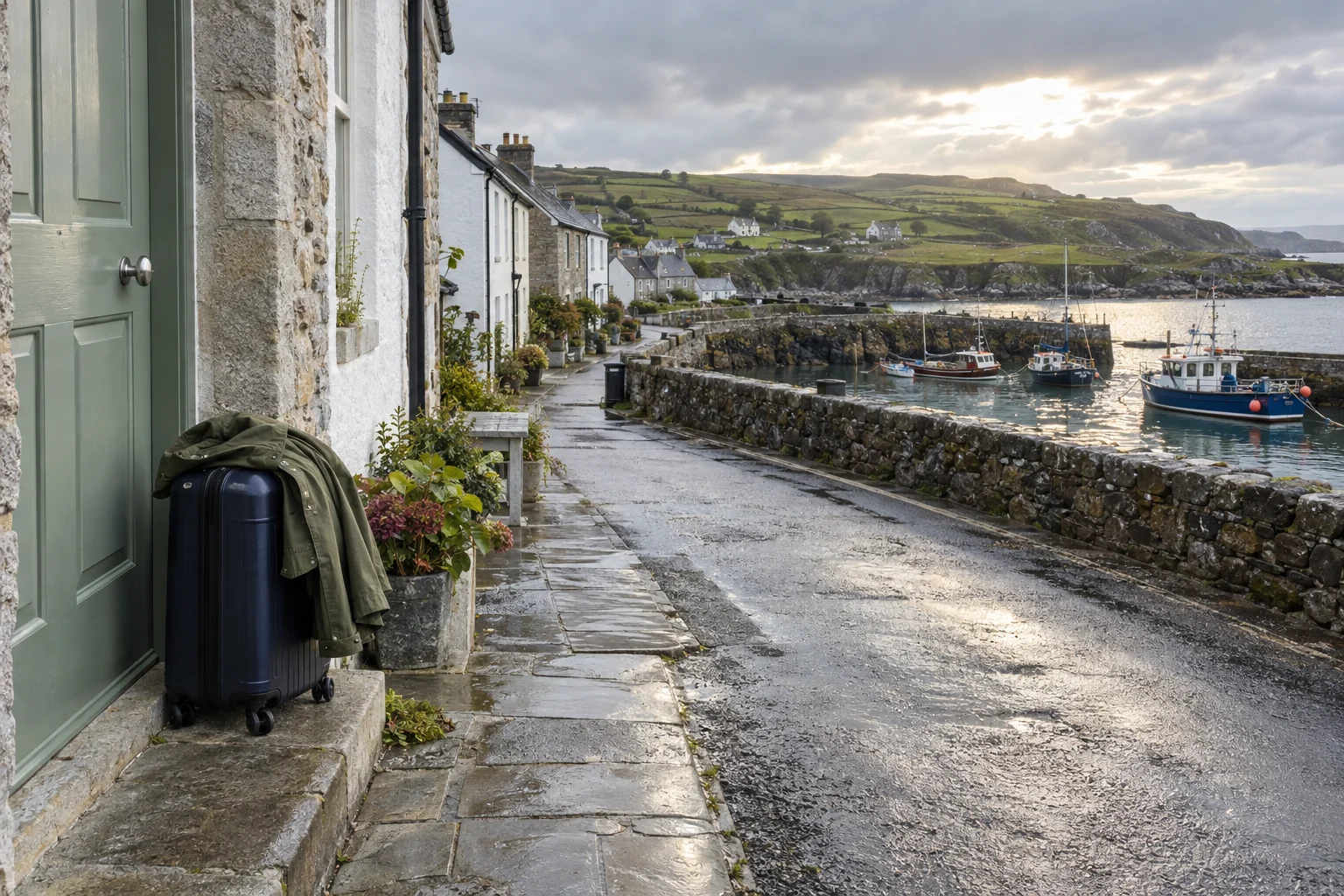
A good first trip to Ireland starts with a few decisions that are easy to overlook: which entry rules apply to your route, how you will reach your accommodation, and whether the places on your shortlist fit comfortably into the time available. Sorting those out before departure leaves more room for the part you came for.
This guide focuses on practical preparation. Where a trip includes Northern Ireland, check the separate arrangements rather than assuming that one set of bookings, permissions or payment habits covers everything.
Check your documents against the whole journey
Ireland is outside the Schengen area. [13] A visit that combines Ireland with mainland European destinations therefore needs separate entry checks. Immigration Service Delivery’s Travel Path directs visitors to requirements based on nationality or travel document and relevant exemptions. [1]
Do not assume a UK visa or a UK Electronic Travel Authorisation automatically gives permission to visit Ireland. The Irish Short-Stay Visa Waiver Programme applies only in specified circumstances, and a UK ETA cannot be used to qualify for that programme. [2]
Before paying for non-refundable travel, check the official guidance for your own documents and route, including any transit stop. Confirm the carrier’s document requirements too. This article cannot determine an individual traveller’s eligibility.
A Belfast day trip deserves its own entry check
Northern Ireland is part of the UK. Depending on your circumstances, UK travel may require a visa or an ETA. GOV.UK provides the official checker and application route. [3]
British and Irish citizens do not need an ETA. Other exemptions include people with a UK visa or permission to live, work or study in the UK; qualifying residents of Ireland travelling from Ireland have a separate exemption with documentary conditions. [4] Being a visitor staying in a Dublin hotel is not the same as being an eligible resident of Ireland.
Check before arranging the trip, even if you plan to arrive by road. Do not use the absence of a routine stop on a route as evidence that your documents are sufficient.
Pack for euro payments, or sterling as well
The Republic of Ireland uses the euro; Northern Ireland uses pound sterling. Tourism Ireland says Visa and Mastercard are widely used, while American Express may not be accepted everywhere. [5]
Check your card provider’s overseas fees and keep a backup payment option separate from your main wallet. Read the amount and currency on a terminal before agreeing to a payment. A small cash reserve can be useful without carrying your whole travel budget in notes.
Plan the first transfer and the last service home
Transport for Ireland provides journey-planning and live-departure information, and highlights Local Link services for rural travel. [6] Start with the exact address of your accommodation, rather than the nearest city name.
Look up the journey for your arrival day and approximate time, then check the operator’s timetable and ticket conditions. Allow room for baggage collection and delays. For a rural excursion, establish the return journey before leaving: a bus that takes you out in the morning does not establish that there is a convenient evening service back.
If step-free access, luggage space or assistance is important, ask the operator before booking. Save the accommodation address and arrival instructions offline, and check what happens if you arrive after reception closes.
Driving on the left is only part of the adjustment
Traffic drives on the left across the island. Road distances and speed limits use kilometres in the Republic and miles in Northern Ireland. [7] Follow the posted signs and make sure you know which unit your vehicle displays.
Before hiring a car, confirm the licence documents the rental company requires, the transmission type, deposit, insurance terms and whether cross-border travel is permitted. Leave time to become comfortable with the vehicle before a demanding route. Build a route around manageable journeys and stops rather than treating the shortest map estimate as a promise.
Dublin’s M50 toll point is barrier-free, so driving through it does not mean there is nothing to pay. eFlow tells rental customers to confirm who handles the toll; if payment is your responsibility, the deadline is 8pm on the following day. Keep the receipt. [8]
A waterproof layer is useful; a warning needs a decision
Pack removable layers, a waterproof outer layer and comfortable footwear. Tourism Ireland recommends layers for changing conditions. [5] Keep something dry accessible rather than buried at the bottom of your luggage.
Before a coastal walk, long drive or outdoor booking, read the forecast and any warning for the place and time involved. Met Éireann explains that yellow warnings can still mean localised danger; orange signals dangerous or disruptive conditions, and red indicates extremely dangerous conditions. [9]
Do not treat a warning colour as a sightseeing challenge. Follow local access restrictions and operator advice, and keep an indoor alternative available. Check again on the day rather than relying on a forecast saved before your flight.
Bring the right charger and check your phone plan
Ireland uses three-pronged plugs with a 230V, 50Hz electricity supply. [5] Check your appliance’s input rating as well as the plug shape: a travel plug adapter does not make an incompatible appliance suitable for the local voltage.
Confirm your provider’s roaming allowance and charges for every jurisdiction on your route. Download useful maps and booking details before leaving, and keep a way to charge your phone during a long transfer.
Everyday courtesy is more useful than a list of stereotypes
On public transport, let people get off before boarding, keep bags off seats and use headphones. TFI also prohibits smoking and vaping on its services. [10]
At a restaurant, read the bill before adding anything extra. The Workplace Relations Commission distinguishes a voluntary tip from a mandatory service charge, and says businesses must display their distribution policy. [11] Ask if a charge is unclear rather than assuming a fixed percentage applies to every situation.
Ask before photographing someone closely or entering a space that appears private. If a conversation or place interests you, allow time for it instead of rushing to the next checklist stop.
Keep a small set of details within easy reach
Save your accommodation address, transport bookings, insurer’s assistance contact and emergency contacts in one accessible place, with a backup copy. Check your insurance arrangements before departure.
For a life-threatening medical emergency in Ireland, the HSE directs people to call 112 or 999. Its out-of-hours GP service is for urgent GP needs when a surgery is closed and operates by appointment, not as a walk-in service. [12]
Finish your preparation with three practical answers: how you will reach your first bed, how you will get back from your most remote outing, and which plan you will change if conditions turn. Those answers are often more useful than adding another destination to the itinerary.
Sources were checked on 14 October 2026.

Join the conversation
Keep it kind, relevant and constructive. Comments are reviewed before they appear.
Be the first to share a thought.