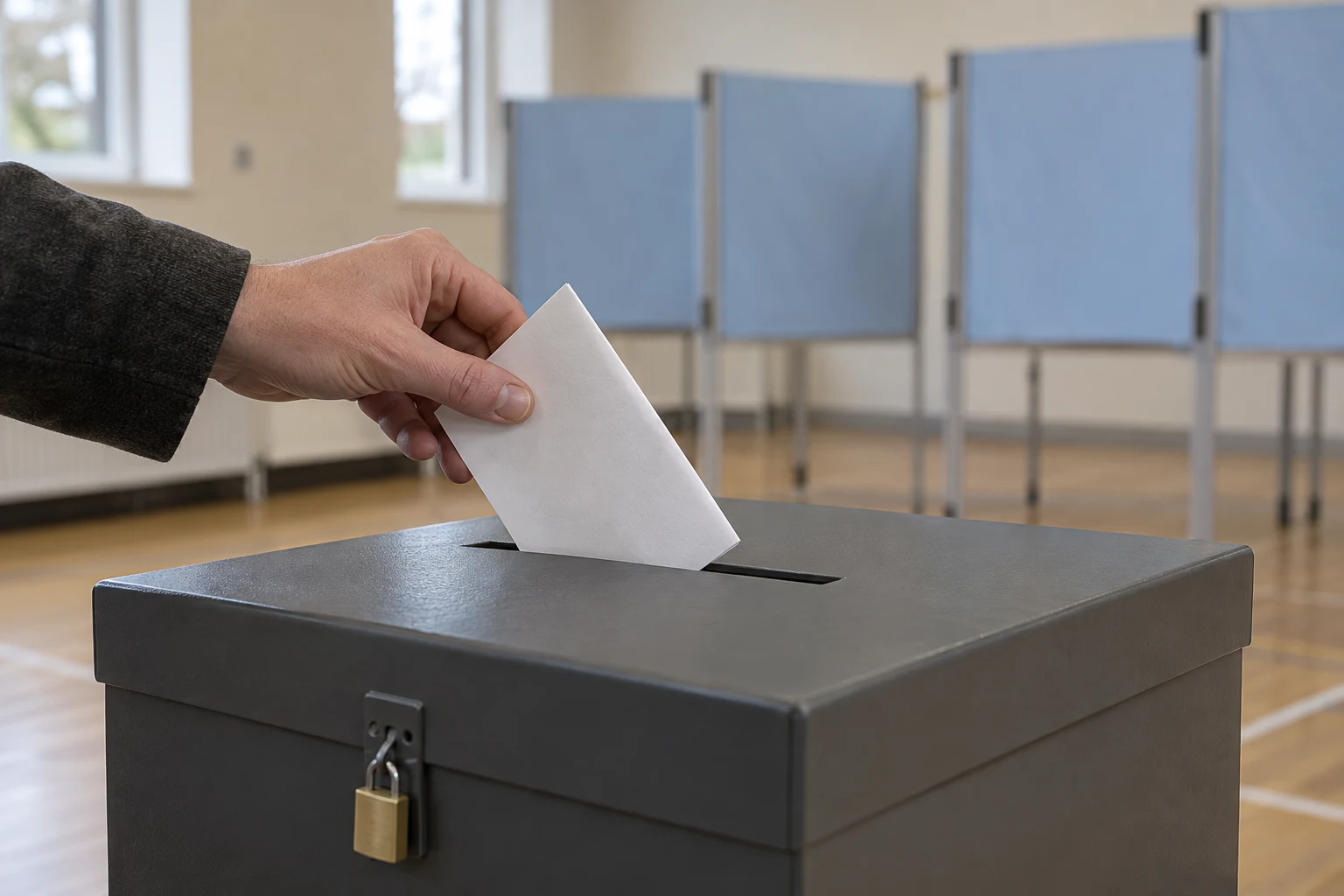
Registering to vote and marking a ballot are two separate checks. Your name and address need to be correct on the electoral register, you must be entitled to vote in the particular poll, and the ballot paper needs to express a valid choice under that poll’s instructions.
This guide checks official information on 16 October 2026. It explains registration and the meaning of a spoiled or invalid vote; it does not announce an election, advocate a political choice or recommend invalidating a ballot.
Check eligibility for the particular election
The Electoral Commission’s eligibility guide explains that registration alone does not give everyone a vote in every type of poll. General elections are open to registered Irish and British citizens resident in Ireland who meet the age requirement. Local elections are not limited to Irish citizens.
European elections have rules for Irish and other EU citizens, including an additional declaration for some first-time EU-citizen registrations. Presidential elections and referendums have Irish-citizenship requirements. Check the full rules for the poll concerned rather than assuming a previous local vote establishes eligibility for a national one. The general voting age is 18.
Start with the official registration portals
CheckTheRegister.ie lets people check an entry, apply to register or update details. Its current notice explains a phased move by local authorities to Voter.ie during the remainder of 2026. Councils that have moved direct users to the new system; the existing site continues for those that have not.
Use the portal’s official route for your local authority and check the actual name and address recorded. If you have moved or changed your name, use the update process. The site says its online application needs a PPS number and Eircode; it also provides a paper-form route without a PPS number. People aged 16 or 17 can pre-register for addition when they turn 18.
Enter identity details only through the official service or the local authority’s process. The Press does not need your PPS number, date of birth, address or registration documents.
Registration timing is not the same as polling day
The Commission’s registration-deadline explanation says applications to register or amend the register must reach the local authority 15 days before polling day, excluding Sundays, Good Friday and public holidays. Registration is also possible outside an election period.
Check the published deadline for an actual poll, including any separate postal or special-voting arrangements. Do not calculate a future deadline from an old election notice. Local authorities manage registration; the Electoral Commission does not process an individual registration application.
Read the ballot paper in front of you
The Commission’s how-to-vote guidance describes numbered preferences for elections using PR-STV: begin with 1 for a first choice and continue 2, 3 and so on for further choices you wish to express. You may rank as many or as few candidates as you choose; leaving other candidates unranked does not by itself invalidate a properly marked first preference.
A referendum uses a different ballot format, so follow that paper’s own instructions. At a polling station, staff provide the official stamp. Check that the paper has been stamped and ask staff if it has not. Bring suitable identification; the Commission says a polling information card can be helpful but is not required to vote.
What does a spoiled vote mean?
The expression is commonly used for an invalid ballot that is not counted as a valid candidate preference. The Commission’s presidential-election explanation of invalid papers lists missing official marks, no clear first preference, multiple first preferences and identifying writing or marks among the statutory categories for that poll. A returning officer makes the relevant judgement about identifying marks.
Those are descriptions of invalidity, not a suggested voting method. A deliberately invalid paper does not become a counted preference for a candidate. Equally, a ballot with just one clear first preference should not be confused with an invalid paper simply because it does not rank everyone. Avoid extra messages or marks, read the instructions and ask polling staff about a problem before putting the paper in the box.
Check assistance arrangements in advance
The Commission’s accessible-voting guidance explains options including assistance from a companion or presiding officer and ballot-paper templates. Postal, special-voter and alternative-station arrangements have conditions and deadlines. Contact the relevant authority early about the route you need; do not assume every arrangement can be organised on polling day.


Join the conversation
Keep it kind, relevant and constructive. Comments are reviewed before they appear.
Be the first to share a thought.