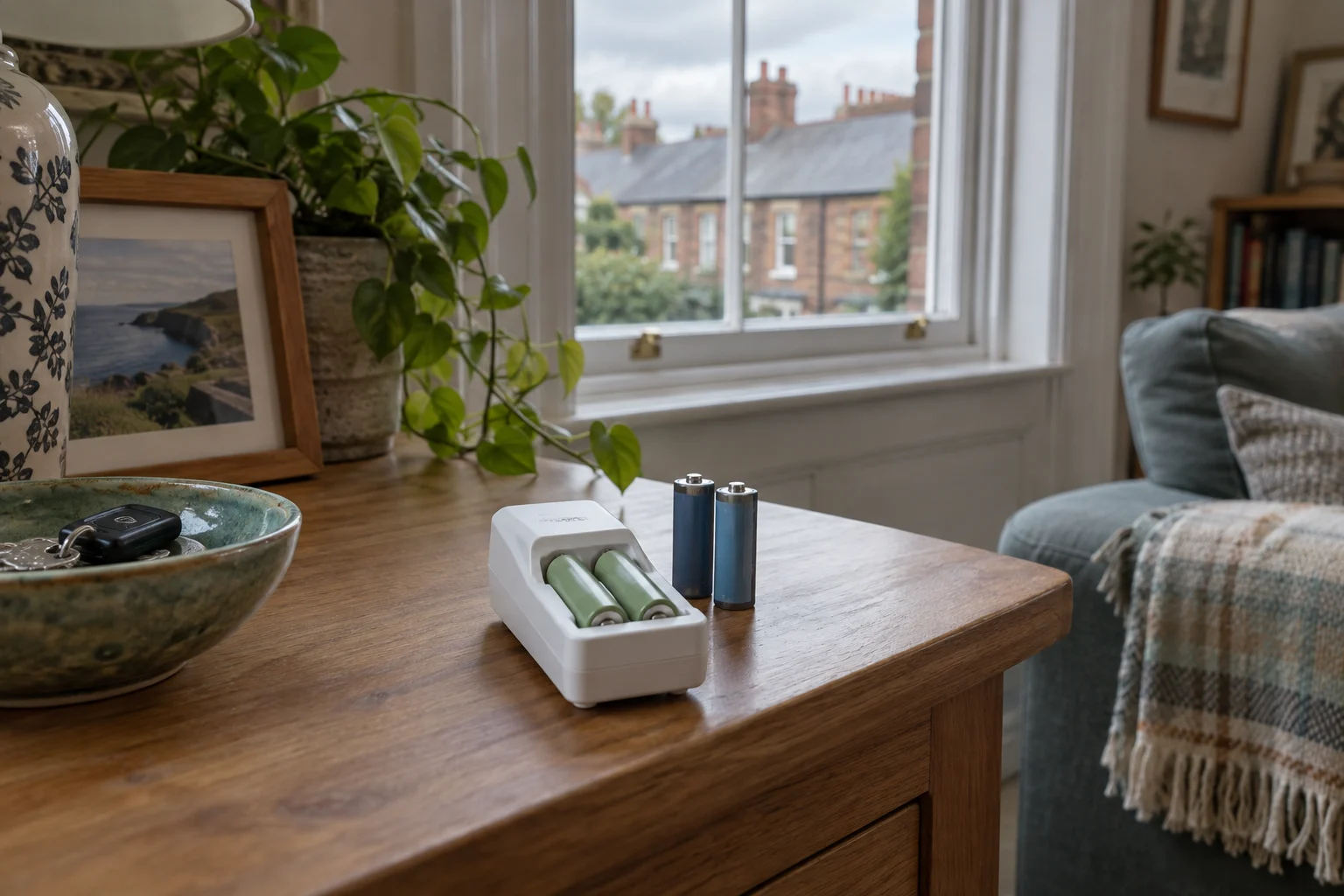
Rechargeable and disposable AA or AAA batteries can occupy the same space in a household shopping list, but matching the device comes before comparing price. The label, equipment instructions and charging requirements decide which options are suitable.
This comparison concerns ordinary replaceable household cells. It is not a guide to opening battery packs, repairing rechargeable equipment or improvising a charger.
Read the device instructions first
Battery manufacturer Duracell advises following the equipment maker's specified size and type. Its safety guidance warns against charging batteries that are not marked rechargeable, and against mixing old and new cells or different types or brands. [1]
Do not assume that every device accepting the same physical size accepts every battery chemistry. Check the device's stated requirements, particularly for equipment whose reliable operation matters. If the instructions are missing, obtain them from the manufacturer before changing the specified type.
Compare a pattern of use
Rechargeables are designed for repeated charging with a suitable charger. Disposable cells are replaced when used up. [1] A device used frequently creates a different comparison from one used only occasionally.
For a frequently used compatible device, note how often you replace its batteries and compare that pattern with the cost of a suitable rechargeable set and charger. For an occasional device, include the manufacturer's storage and maintenance instructions. Avoid a claimed universal saving or cycle count: products, use and purchase prices differ.
Make the comparison per complete set required by the device. Counting the price of one cell on one side and a multi-pack plus charger on the other hides the actual starting cost.
Charging adds a routine
WEEE Ireland advises using compatible charging equipment and following manufacturer instructions for charging and storage. [2] Check the permitted cell type, number and orientation in the charger instructions. If a battery or charger appears damaged, stop using it and seek the manufacturer's guidance rather than testing a repair.
Keep charged and used sets clearly organised so a mixed set is not assembled by accident. This is a household-management suggestion; it does not change the equipment's charging rules.
Both choices need a proper end point
WEEE Ireland says batteries should not go in household bins and points consumers to free recycling arrangements. [3] Set aside an appropriate collection route instead of leaving used cells mixed among new ones.
The practical choice is a compatible type supported by a routine the household can maintain: purchasing replacements, or charging and managing reusable sets safely. Neither option removes the need to follow instructions and recycle batteries when they reach the end of their useful life.
Sources were checked on 13 October 2026.


Join the conversation
Keep it kind, relevant and constructive. Comments are reviewed before they appear.
Be the first to share a thought.