

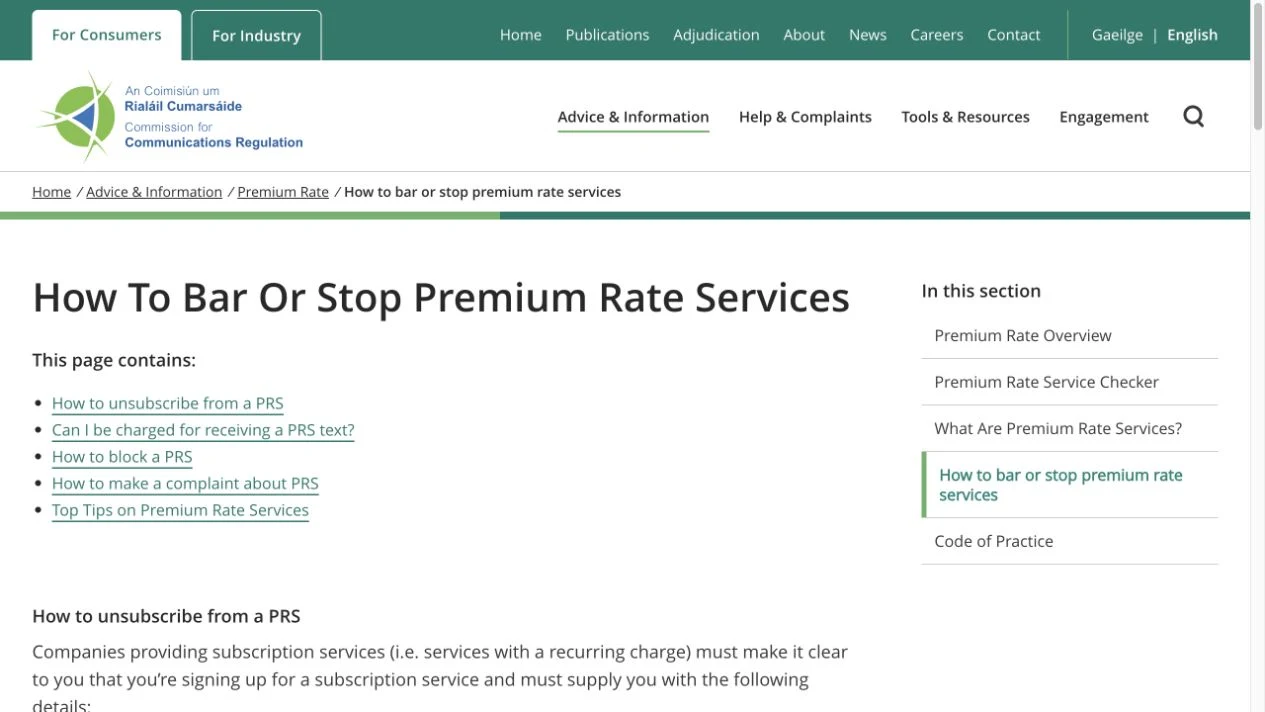
Deleting a paid text does not cancel the subscription that generated it. Blocking a sender on a handset may hide messages without addressing the service or its billing. To stop recurring premium-rate charges, identify the actual service first.
This guide turns the regulator’s instructions into a three-action record: cancel the current subscription, ask about network barring, and separately challenge disputed charges. The steps serve different purposes and should not be marked complete by one phone setting.
Identify the service and retain the evidence
ComReg’s premium-rate guidance explains that receiving a premium text can itself incur a charge. Keep the five-digit service short code, message content and the bill entry. If the message was deleted, ask the mobile operator to help identify the number and associated provider.
A saved display name is not always the information needed to trace the charge. Record the service reference exactly and avoid posting your mobile number or a full bill publicly. Redact unrelated calls and account information when sharing evidence with an adviser.
Action one: unsubscribe from the recurring service
For a premium-rate subscription, ComReg instructs users to send STOP, with no extra words, to the service’s short code. A standard network text charge may apply. The regulator says unsubscription should take effect within 24 to 48 hours and can assist where the STOP request has not worked.
Retain the outgoing request and confirmation. This instruction concerns identified premium subscriptions; it is not an instruction to reply to an unrelated suspicious message or open its link.
Action two: ask the network about barring
Barring is a provider-level measure against future premium services, distinct from ending one subscription. ComReg describes free barring for specified premium-text number ranges from eir, Three and Vodafone. Ask your own provider what it covers and when it will take effect.
Do not assume that a parental-control app, a handset block and network premium-service barring are the same protection. Note the operator’s answer and any confirmation reference rather than relying on the label of a setting.
Action three: reconcile the disputed amount
Create one row for each charge with date, short code, amount and whether it occurred before or after the cancellation request. For an illustrative bill containing four disputed €2.50 charges, the total is €10. Keep that calculation separate from the question of whether consent was valid.
ComReg says to complain to the premium-service provider and contact its Consumer Care team if unresolved after ten days. Its guidance recommends acting within six months because of data-retention requirements. A complaint reference and the short-code record help distinguish a cancellation failure from an earlier disputed sign-up.
Check the next bill or credit history after resolution. A cancellation can stop future charges while leaving a refund dispute open; a refund can settle an old charge without proving future barring is active.
Join the conversation
Keep it kind, relevant and constructive. Comments are reviewed before they appear.
Be the first to share a thought.