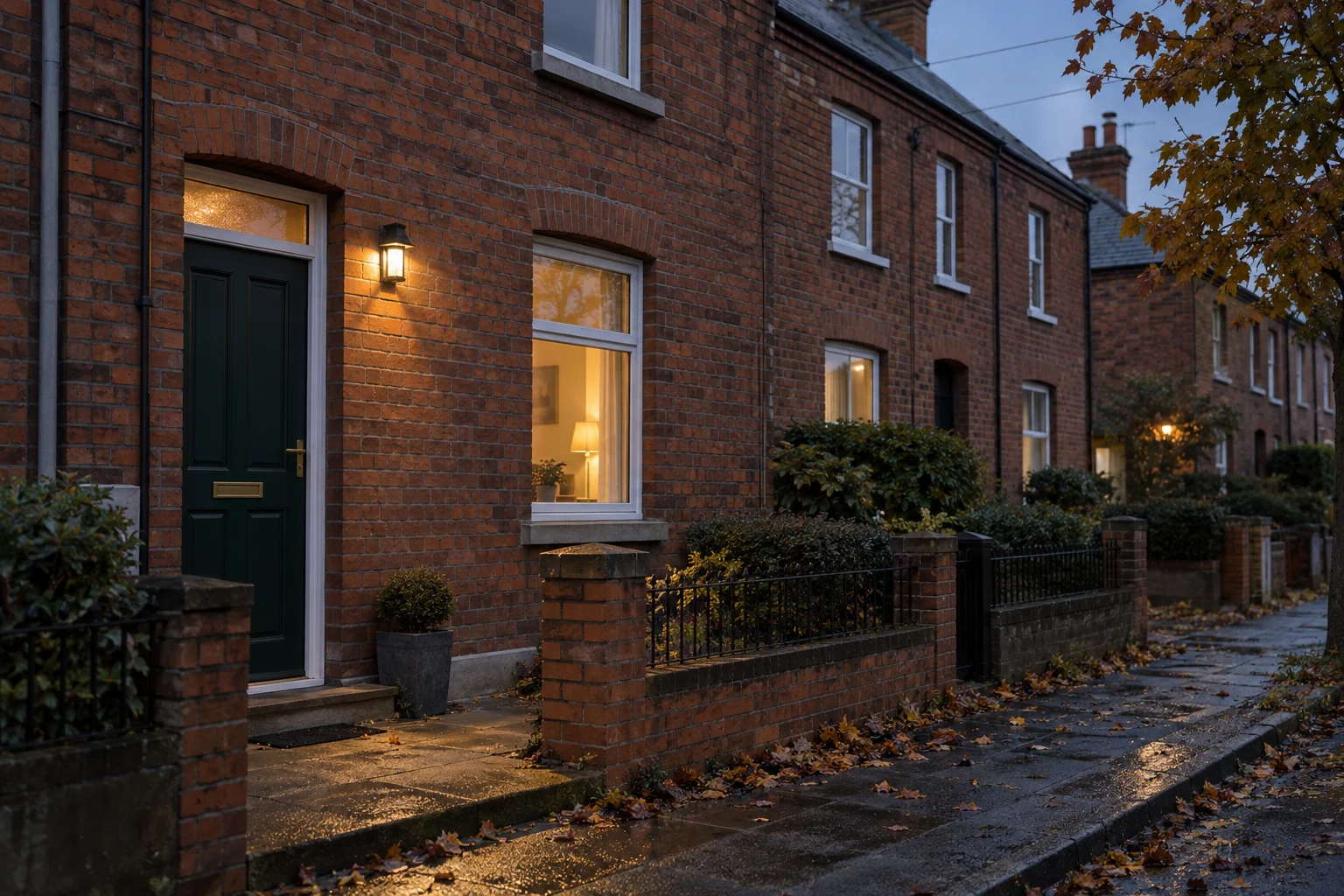
Darker Irish evenings are a useful prompt to review how the household secures the home. A routine that people understand is more practical than a collection of gadgets whose settings nobody can explain.
An Garda Síochána's Lock Up Light Up guidance recommends securing doors and windows, using the alarm, keeping keys away from windows and letterboxes, and using lighting to help a home appear occupied. [1] These are general prevention measures, not a guarantee against burglary or an announcement of a new local incident.
Start with the ordinary departure
Walk through what happens when the last person leaves. Identify the front and rear doors, side access, and any shed or garage that needs securing. Garda advice specifically includes outbuildings, which may contain both valuables and tools. It warns against hiding a spare key outside. [1]
Agree who checks each part of the routine. A simple verbal handover can prevent one person assuming another has dealt with the back door. Keep the routine short enough to use on an ordinary school or work morning, rather than only before a holiday.
Check the settings, not only the equipment
If you use a light timer, look at its actual schedule after the household's routine changes. Ask whether it still reflects when people normally use the rooms. Garda guidance cautions that lights left on constantly can also signal an empty home. [1]
For external lighting, observe from a safe ground-level position whether it creates glare or leaves dark areas. The Garda guidance asks homeowners to consider neighbours and light pollution. [1] Discuss installation or adjustments requiring electrical work with an appropriate professional; this is not a wiring guide.
Make the alarm understandable
Ask the installer to explain operation to the people who use the house, including how to report a fault. Garda advice treats an alarm as support for physical security, and points to licensed alarm installers. [1]
Do not put alarm codes in a visible household checklist. The checklist can name the maintenance contact and explain where authorised users can obtain help without exposing access details.
Prepare separately for time away
Garda guidance recommends asking a trusted person to check a vacant property and avoiding social-media posts that reveal an absence. [1] Agree the contact and arrangements privately rather than publishing the home's routine.
Record unresolved issues, such as a lock that does not engage or an alarm fault, and arrange qualified help. The outcome should be a reliable departure routine and a clear follow-up list, rather than an assumption that buying another device completes the job.
Sources were checked on 13 October 2026.


Join the conversation
Keep it kind, relevant and constructive. Comments are reviewed before they appear.
Be the first to share a thought.