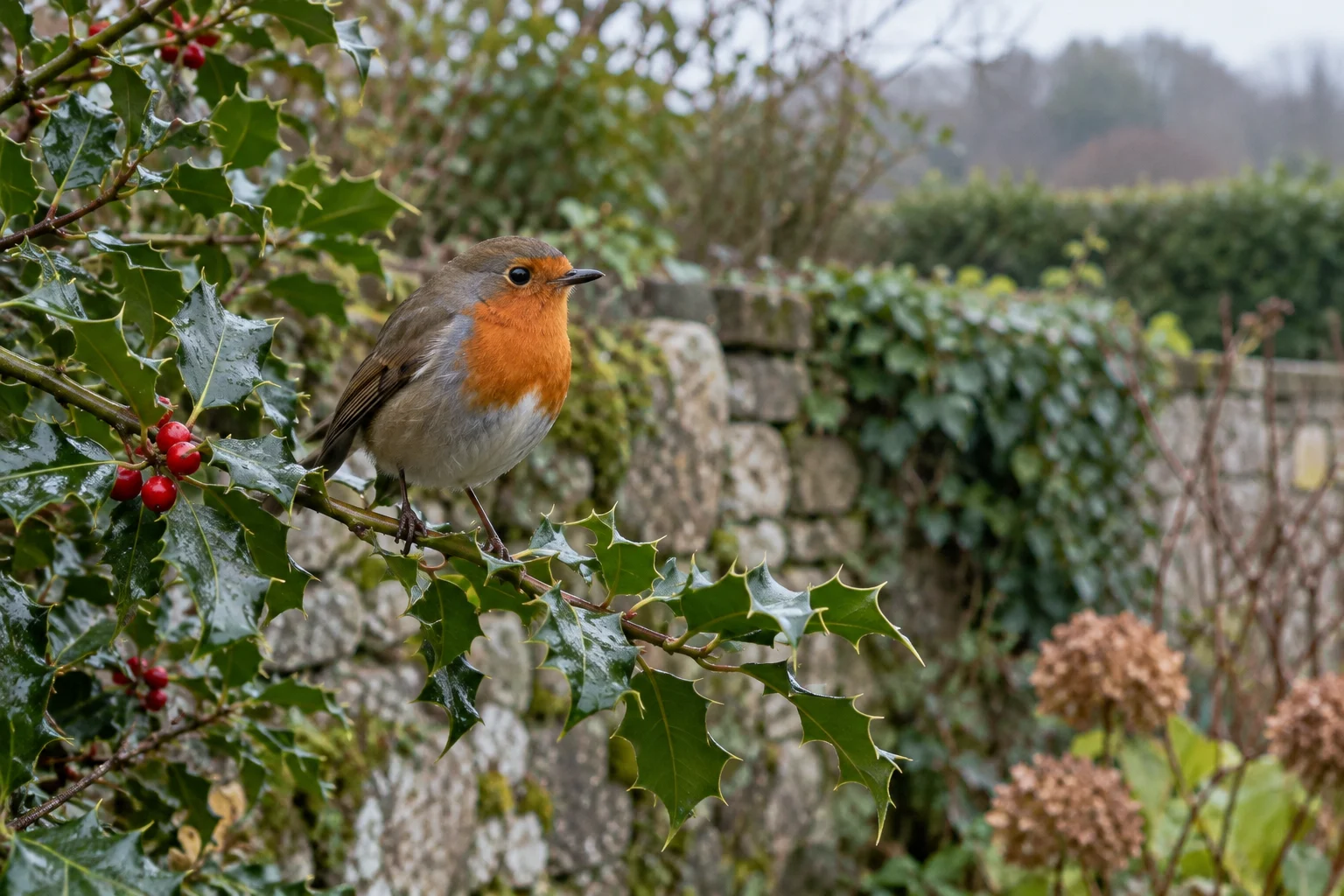
Before restarting a familiar bird-feeding routine this winter, check whether it matches the current Irish advice. In guidance published on 26 May 2026, BirdWatch Ireland urges people to avoid garden feeders from 1 May to 31 October to reduce disease transmission. It supports winter feeding with stricter hygiene. [1]
That makes October a useful preparation month. You can decide whether you can maintain a feeder properly, organise its cleaning and improve the garden's natural food and shelter. An old photograph of a busy feeding table is not a reliable guide to the current recommendations.
Decide on the maintenance before the equipment
BirdWatch Ireland's winter protocol calls for weekly feeder cleaning and disinfection, filling feeders only halfway, avoiding flat-surface feeders and moving feeders regularly. If you provide a birdbath, it says to change the water daily. [1]
Before buying or reinstalling anything, choose who will do those jobs and where the cleaning supplies will be kept. Put the cleaning day in the calendar. If more than one person feeds the birds, make the routine visible to both so an apparently empty feeder is not repeatedly topped up without cleaning.
Start with a setup you can maintain. Having several feeding points is not automatically useful if their care becomes hard to manage. During the October pause, use the time to examine existing equipment and replace anything that cannot be cleaned properly. Check the organisation's current guidance again before resuming feeding for winter.
Make water a deliberate daily task
BirdWatch Ireland says birdbaths can also spread contamination. It advises against providing one unless you can change the water every day, and identifies freezing winter conditions as the most beneficial time to offer water. [1]
If you choose to provide water, add it to a daily task you already remember, with a named person responsible when you are away. If that commitment is unrealistic, choose another way to support the garden rather than setting out a dish and forgetting it. The preparation question is whether the care will continue after the initial enthusiasm.
Look at the habitat as well as the feeder
The organisation recommends native trees and shrubs that provide natural food and shelter, including holly, hawthorn and blackthorn. It also highlights leaving some seed-producing plants and reducing mowing in parts of the garden. [1]
Sketch a small plan of what is already there before shopping. Mark existing berry-bearing shrubs, shelter and a patch that could be left less tidy. For a new plant, ask a local nursery about a native option suited to the available space and conditions. A modest change you can look after is easier to sustain than redesigning the whole garden at once.
You can also make a short observation notebook: date, birds seen, where they spent time and which natural features they used. Keep observations separate from guesses about a bird's health. Watching from a window can make the garden a winter activity without concentrating every visitor around food.
The current BirdWatch Ireland guidance was checked on 11 October 2026. This is a seasonal planning guide based on its updated advice, not a report of a new local disease outbreak.


Join the conversation
Keep it kind, relevant and constructive. Comments are reviewed before they appear.
Be the first to share a thought.