Ordering winter firewood involves more than choosing a bag size or arranging delivery. For an Irish household using logs, the useful questions are whether the fuel suits the appliance, what information supports its condition and where it will be kept after it arrives.
Check the current moisture requirement
The EPA's current solid-fuel guidance specifies moisture below 20% for 100% biomass products, including wood logs, with an exception for wood supplied in units of two cubic metres or more. [1] For an ordinary small-unit purchase, ask the supplier about the product's moisture information rather than treating a word such as seasoned as a complete answer.
Do not transfer that statement unchanged to a bulk order. Ask the supplier to explain the requirements and any drying instructions applying to the actual product and quantity. This guide does not certify a delivery or determine its condition from a photograph.
Before ordering, check the appliance instructions for the permitted fuel and suitable log dimensions. If the instructions are missing or unclear, ask the manufacturer or competent servicing professional. A fuel sold for heating is not automatically the right fuel for every appliance.
Identify the producer as well as the seller
The EPA explains that solid-fuel producers register annually. Its register page for the current heating season covers 1 September 2026 to 31 August 2027. [1][2]
Ask who produced the fuel and keep that information with the product description and receipt. Producer and retailer are different roles; do not assume a shop name alone answers the producer question. Use the current-season register rather than an older list saved from last winter.
Plan the store before the delivery
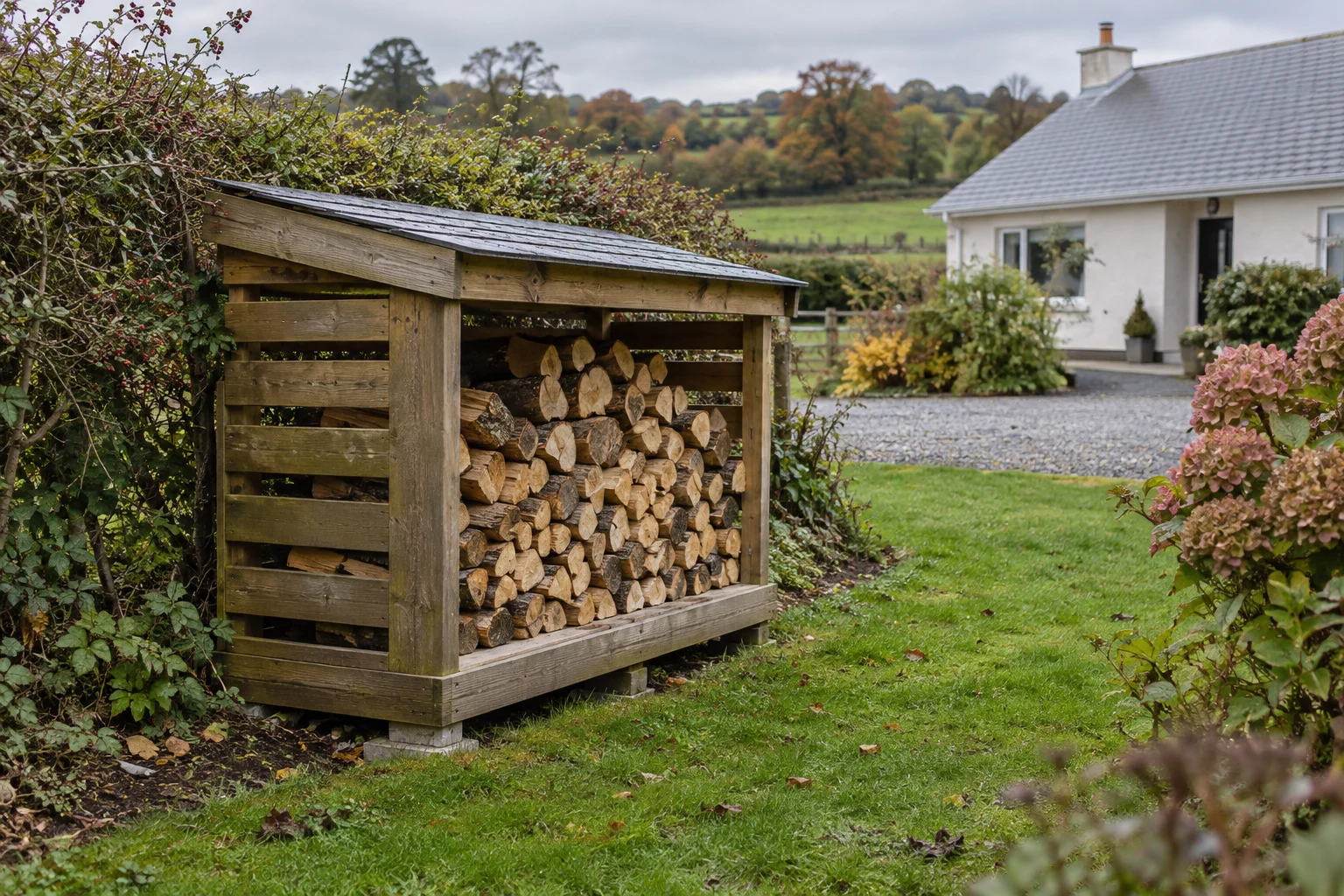
Teagasc's wood-energy guide describes keeping logs raised from the ground so air can circulate, and protecting stacks from rainfall with a cover that allows moisture to escape. [3] Those storage principles are useful when considering a household store; the guide's large drying-yard arrangements are not a DIY construction plan for a garden.
Assess the available space and ask the supplier how the delivered product should be stored. Avoid turning a carefully chosen dry delivery into an exposed pile on wet ground. Arrange safe access for deliveries and ordinary retrieval without creating an unstable stack or obstructing a route.
Keep one record for each purchase
Note the supplier, producer, delivery date, quantity, product description and storage advice. Keep unresolved questions beside that record rather than guessing how many weeks an unfamiliar batch needs to dry.
Fuel preparation is separate from chimney, appliance and alarm maintenance. Arrange those checks through the appropriate professionals. The immediate outcome is a suitable, documented purchase and a practical storage arrangement before winter use.
Sources were checked on 13 October 2026.


Join the conversation
Keep it kind, relevant and constructive. Comments are reviewed before they appear.
Be the first to share a thought.