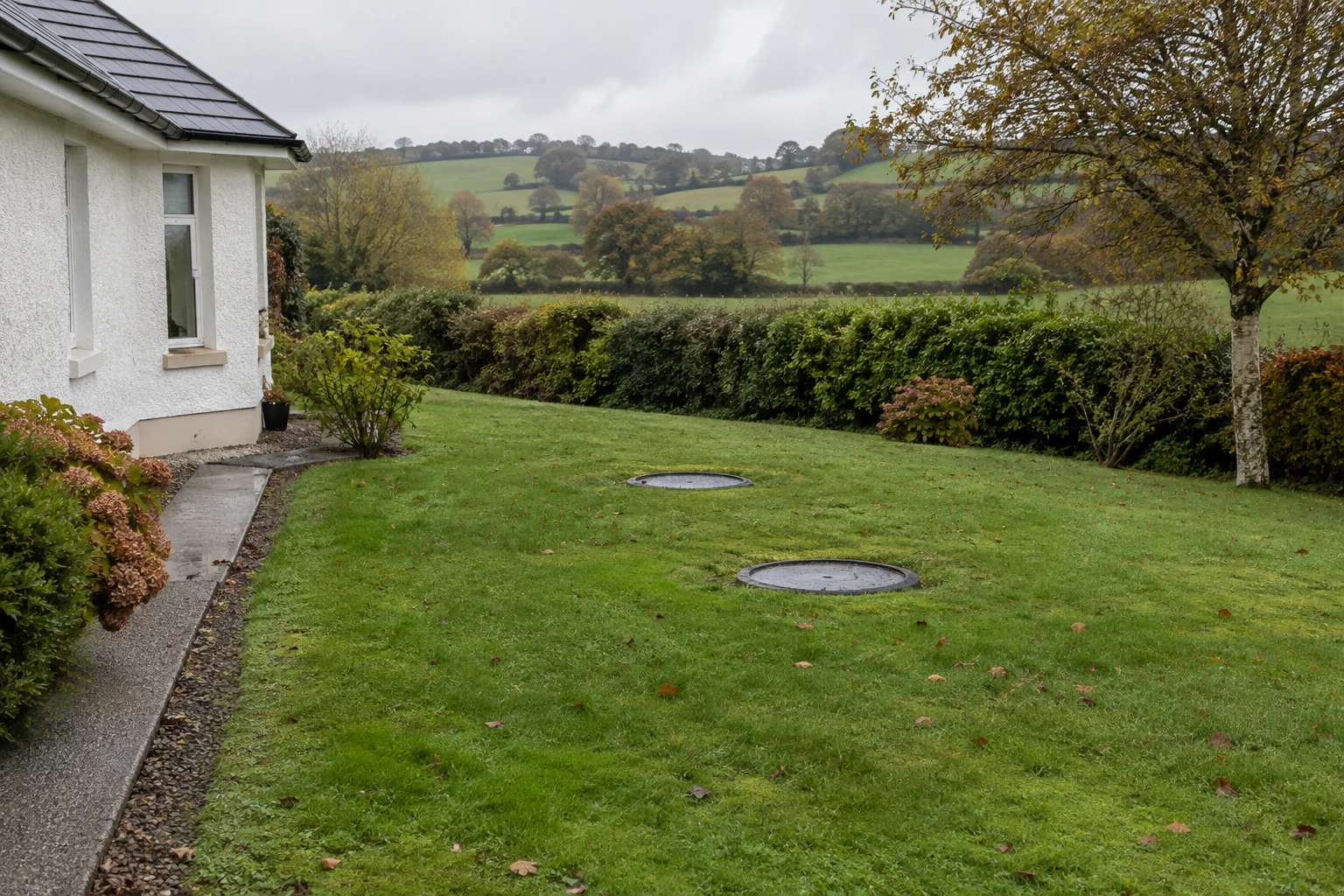
For a rural Irish home with its own wastewater system, winter preparation is a maintenance and drainage question. It is not a reason to open the tank, enter it or attempt a repair. Start with the system's records and arrange appropriate professional help where information or maintenance is missing.
Find out what system you have
Locate the registration details, manufacturer's instructions where applicable, and the last maintenance and emptying receipts. Record the system type, the service contact and any unresolved recommendations. If you have recently bought the property, a missing file is a prompt to ask for information rather than assume everything was recently checked.
Keep these documents in one place. A useful entry gives the date, what was done, the contractor and any next action. Distinguish a service inspection from emptying: one receipt does not necessarily describe both jobs.
Keep rainwater separate
The EPA says roof and yard runoff should not enter a septic tank because it can overload the system. [1] Before wetter weather, ask a competent professional about drainage concerns or unexplained connections. Do not disconnect pipes or reroute water on the basis of this guide.
Normal household wastewater from kitchens, baths, showers and washing machines belongs in the wastewater system, rather than a storm drain. [1] Understanding that distinction helps frame the question when somebody proposes changing a connection.
Book emptying around the actual system
The EPA explains that the required desludging interval depends on tank capacity and household occupancy; for mechanical treatment systems, consult the manufacturer's guidance. It recommends an authorised collector and keeping emptying receipts for five years. Its page explains how to search the collection-permit register for septic-tank desludging in your county. [1]
Ask the collector what information and safe access they need before the appointment. A neighbour's interval or a generic online timetable is not enough to set yours.
Reduce avoidable inputs and keep a follow-up list
The EPA advises keeping wipes and other unsuitable items out of toilets, and warns that excessive fats, oils and grease can cause problems. Major system issues require qualified help rather than DIY repair. [1]
Make those disposal habits clear to everyone using the house. At the end of the maintenance review, leave a short action list: missing records to obtain, the appointment to arrange and questions about drainage or system operation. The aim is a traceable maintenance plan and the right professional response, not a homeowner diagnosis of underground equipment.
Sources were checked on 13 October 2026.


Join the conversation
Keep it kind, relevant and constructive. Comments are reviewed before they appear.
Be the first to share a thought.