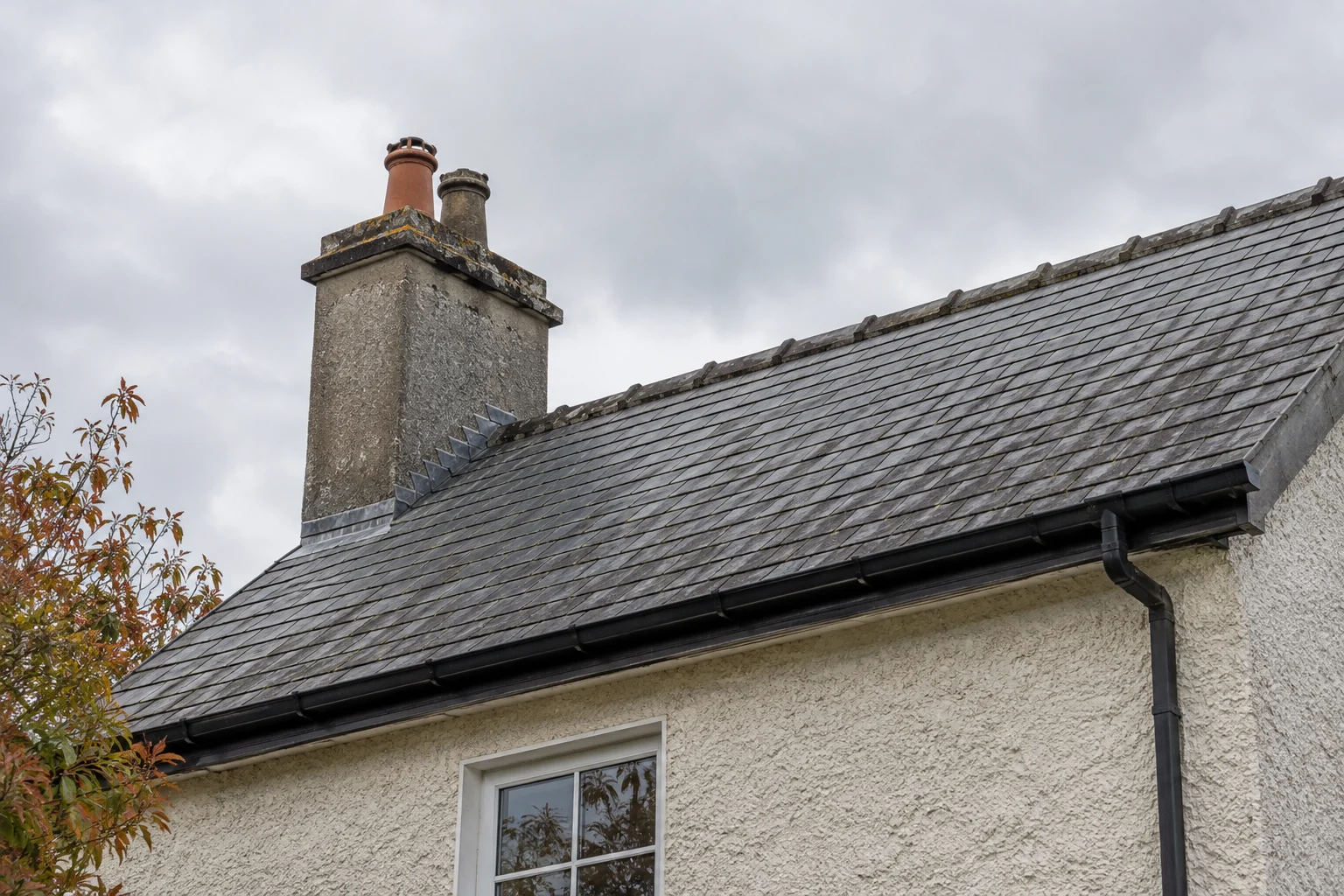
A useful roof check before winter in Ireland begins with a notebook and a view from the ground. The aim is to spot questions that need a competent roofer's attention, organise a proper assessment and agree repairs before a small concern becomes a hurried decision in bad weather.
A householder's visual check is not a roof survey. Stay on firm ground in a safe location; do not climb onto a roof, lean out of an upstairs window or use a ladder to investigate something you have noticed. The Health and Safety Authority emphasises that work at height needs planning, appropriate equipment and competent people. [1]
Write down what you can actually see
In daylight and suitable conditions, look from safe ground-level positions at visible roof slopes, the ridge, chimneys, gutters and downpipes. Note anything that appears displaced, a gutter that seems detached, or debris that has fallen below. Photograph a concern using zoom only if you can do so safely without entering a hazardous area.
Describe the observation rather than making a diagnosis: where it is, when you first noticed it and whether it appears to have changed. Inside ordinary occupied rooms, record the location and date of a new ceiling stain or sign of water. Do not step onto an unsafe loft surface or disturb electrical fittings to trace a leak.
A stain does not identify the source of water by itself. Give the observations to a competent professional and let them assess the roof and other possible causes. A picture of a missing-looking slate is useful evidence for a conversation, not a complete repair specification.
Put safe access into the first conversation
When contacting roofers, ask how they will inspect the roof and provide safe access for the proposed work. The HSA's approach to work at height includes assessing risks, planning the task and prioritising measures that prevent falls. It also identifies fragile surfaces as risks requiring control. [1]
Do not offer to help by holding a ladder, walking on a garage roof or accessing a rooflight. If materials may contain asbestos, leave them undisturbed and raise the question with the contractor. The HSA's homeowner guidance lists asbestos work and some restricted-access roofwork among particular construction risks. [2]
Ask whether the proposed project triggers homeowner duties concerning project supervisors. The HSA explains that more than one contractor, particular risks or the project's duration can make such appointments necessary. [2] The scale of the visible defect alone is not a reliable way to decide what duties apply.
Compare the work proposed, not just the total
The Competition and Consumer Protection Commission recommends researching a contractor, checking genuine contact details and recent references, and obtaining written quotes from several providers. Before paying a deposit or allowing work to start, it advises getting clear written details of the agreed work, price, payment structure and estimated completion date. [3]
Give each roofer the same observations and ask what their assessment supports. A useful quote should make it possible to understand the repair area, materials, access arrangements and any exclusions. Ask what happens if an inspection reveals additional work, who must approve it and how the price will be recorded.
Also ask about clearing waste, protecting the area below and the evidence of completed work you will receive. Clarify any promised guarantee in writing: its duration, what it covers and whom to contact. These questions help you compare actual proposals rather than two totals for different jobs.
Keep a repair record for the winter ahead
Keep the original observations, assessment, accepted quote, invoice and any contractor photographs together. Record what was repaired and which concerns remain open. If a new stain appears later, the earlier record gives the professional a clearer starting point.
For a rented home or a shared roof, report concerns promptly to the landlord or relevant building manager rather than arranging work on someone else's behalf. If material is falling or the area appears dangerous, keep people away and seek urgent professional assistance; do not attempt to make the roof safe yourself.
Official guidance was checked on 11 October 2026. This is a preparation and contractor-selection guide, not instructions for carrying out roofwork or an assessment of any particular property.


Join the conversation
Keep it kind, relevant and constructive. Comments are reviewed before they appear.
Be the first to share a thought.