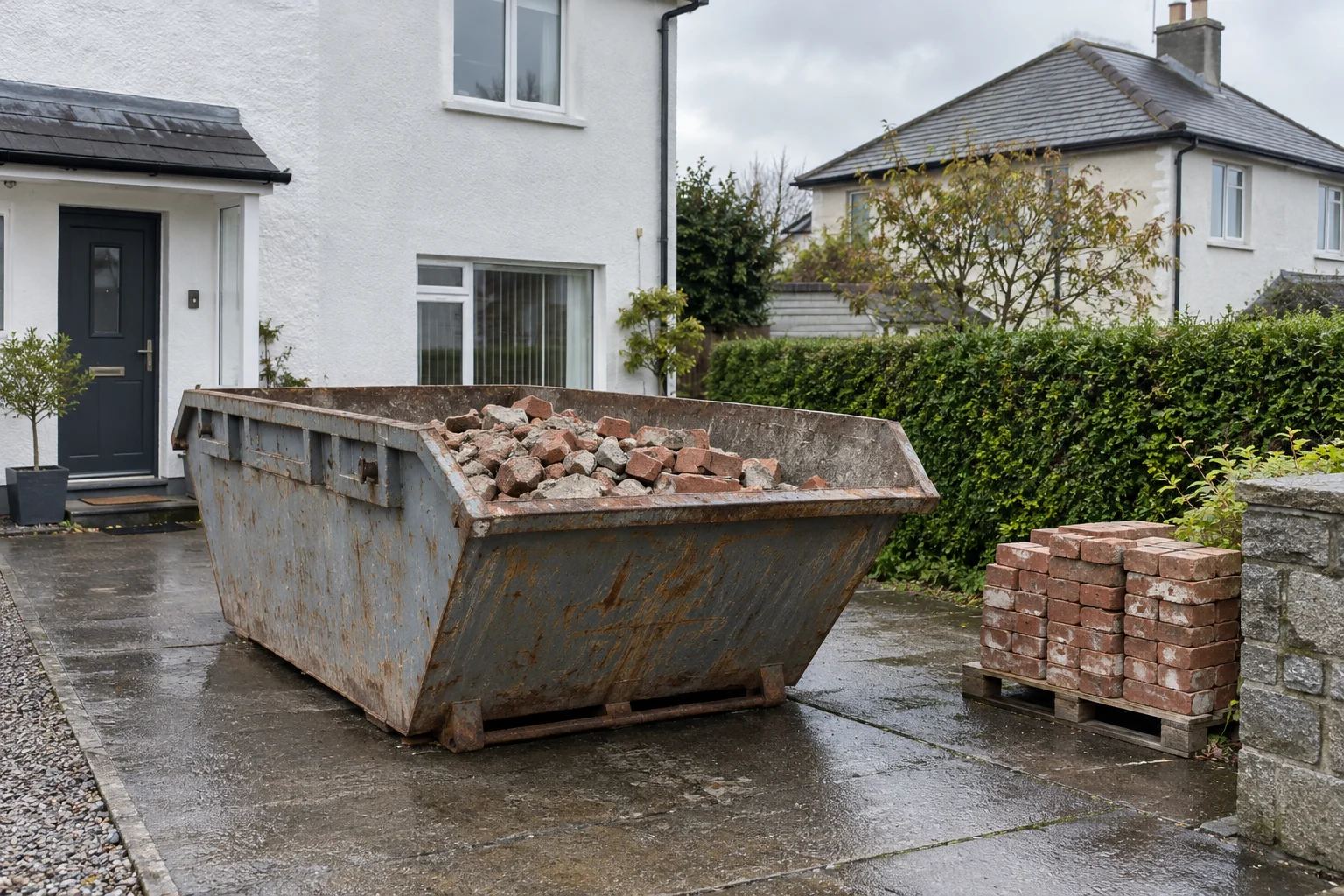
A household renovation creates a second project alongside the new kitchen, room or finish: deciding where the removed materials will go. Make that arrangement before work begins, so waste collection is part of the agreed scope rather than an unanswered question at handover.
Ireland's My Waste guidance describes construction and demolition waste as materials such as rubble, bricks, soil, stone, tiles and old sanitary ware. It says these should not go in household bins, and directs people towards a skip or a civic amenity site that accepts the materials. [1]
Describe the materials before asking for a price
Ask the contractor for an outline of what the work is likely to remove. A quote for a general clear-out may not answer questions about building rubble or materials requiring a separate route.
Give the collection provider that description and ask which items are accepted, what must remain separate and how loading should be arranged. Record the response. A container's size is only one part of the comparison; accepted materials and collection conditions matter too.
If taking suitable items to a civic amenity site, check that particular site's acceptance rules and charges before travelling. My Waste provides a locator to help find services. [1] Nearby does not automatically mean the facility accepts the proposed load.
Agree who makes the booking
Put the collection responsibility in the contractor's scope: who books it, who pays and who retains the documents. If another collection business is used, identify it rather than leaving the arrangement described only as disposal included.
The National Waste Collection Permit Office provides a permit-search route and a separate local-authority waste-facility register. [2] Use those resources when checking the proposed arrangement, and ask the provider to explain any uncertainty about the materials or destination. An application notice should not be mistaken for a granted permit.
Keep the quotation, collector details and collection receipt with the project file. Ask for a clear account of what was taken and where it was being sent.
Suspected asbestos changes the plan
Older materials should not be broken up or mixed into a load simply to make them fit. The HSA's current asbestos guidance addresses identification before work, competent assessment and authorised collection and disposal. [3]
If asbestos is suspected, stop the activity that could disturb it and obtain competent specialist advice. This guide does not identify materials from appearance or give removal instructions.
Close out the collection as well as the construction
At handover, check whether the agreed waste has actually been collected and whether anything remains awaiting a different route. Keep outstanding items visible in the record. The practical finish is a documented collection arrangement, not merely a tidier photograph of the driveway.
Sources were checked on 13 October 2026.


Join the conversation
Keep it kind, relevant and constructive. Comments are reviewed before they appear.
Be the first to share a thought.