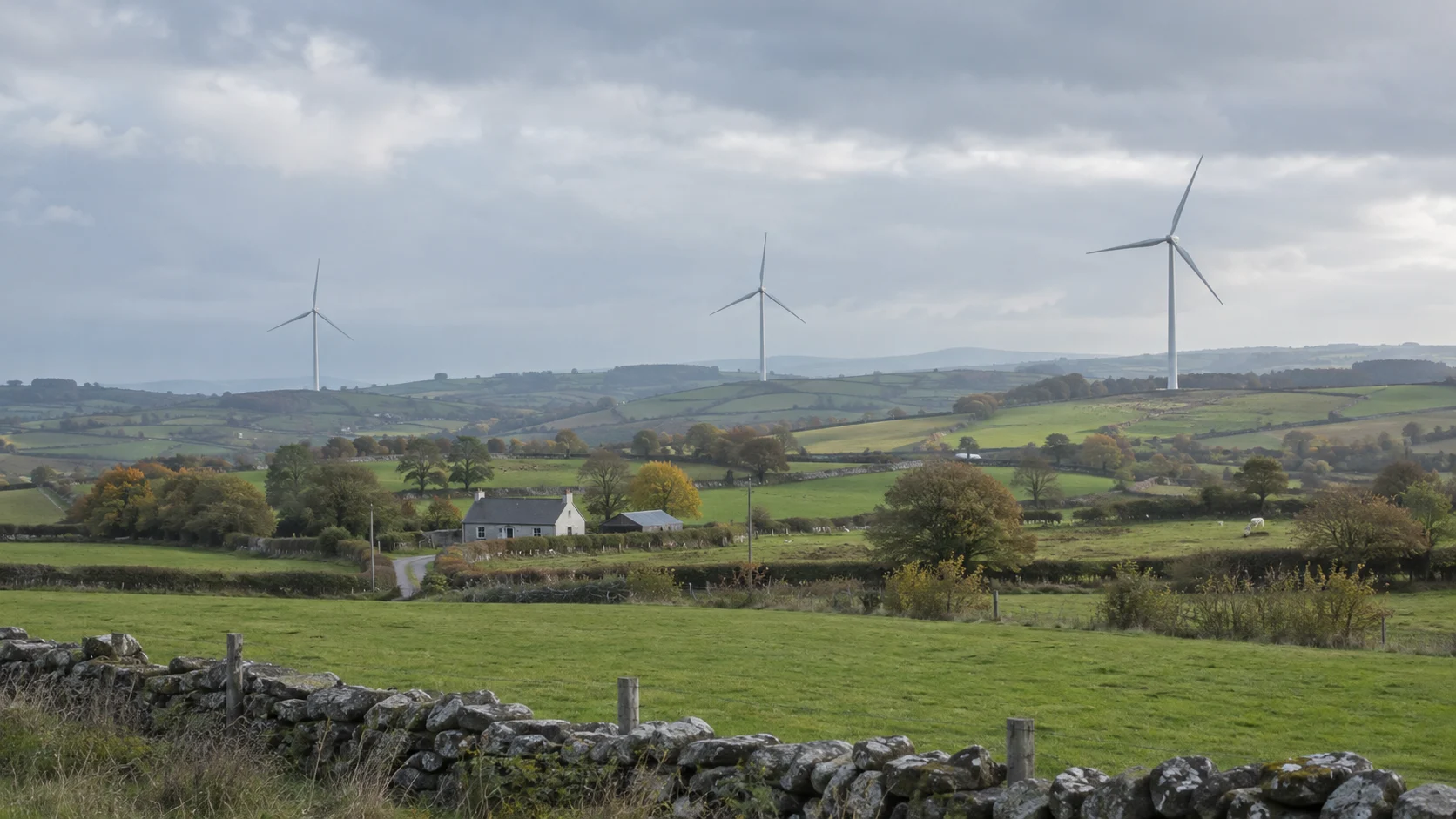
Renewables accounted for 43% of Ireland’s electricity mix in September, compared with 29% in August, according to provisional EirGrid data published on 8 October. Wind supplied the largest renewable contribution, at 36%. [1]
The change is useful evidence about the national electricity system. It does not mean a household’s bill has fallen by the same proportion, or that a particular address used only electricity from one source.
Compare the same measurement
The move from 29% to 43% is an increase of 14 percentage points. That is different from calling it a 14% increase. A share describes a portion of a total; the unit matters when comparing headlines.
EirGrid’s figures are Ireland-only, provisional and based on real-time, unmetered readings. Its fuel-mix measure includes net imports, while the renewable category covers wind, solar, hydro and biomass and excludes some generation that is not centrally monitored. The separately reported grid-scale solar figure excludes rooftop solar. [1]
Those boundaries matter. A national grid statistic cannot be used as a reading of a household’s rooftop panels, and a monthly average cannot tell you the mix at every moment. Keep the reporting period and the scope beside the percentage when sharing it.
Your bill answers a different question
The Commission for Regulation of Utilities describes bill information including the billing period, usage calculations, standing charges, other charges, the PSO levy and VAT. Its guide also distinguishes actual, estimated and customer meter readings. [2]
To understand a bill that has changed, begin with the period it covers and the consumption charged. Compare the tariff and charges with the previous bill, and check whether the reading basis changed. A larger total can involve more than one difference, so separate the items before looking for an explanation.
If something is unclear, identify the precise entry when contacting the supplier. For example, ask which dates a charge covers or which reading was used. Keep account details private rather than posting a complete bill online for strangers to interpret.
Use the grid update without making a household forecast
The September release is a reason to follow how Ireland’s electricity mix develops over time. For household planning, use the actual tariff, recorded consumption and supplier information. The renewable share alone does not establish a future price, saving or outage risk.
Sources were checked on 12 October 2026. The generation figures remain provisional; this article does not forecast winter weather or promise lower bills.


Join the conversation
Keep it kind, relevant and constructive. Comments are reviewed before they appear.
Be the first to share a thought.