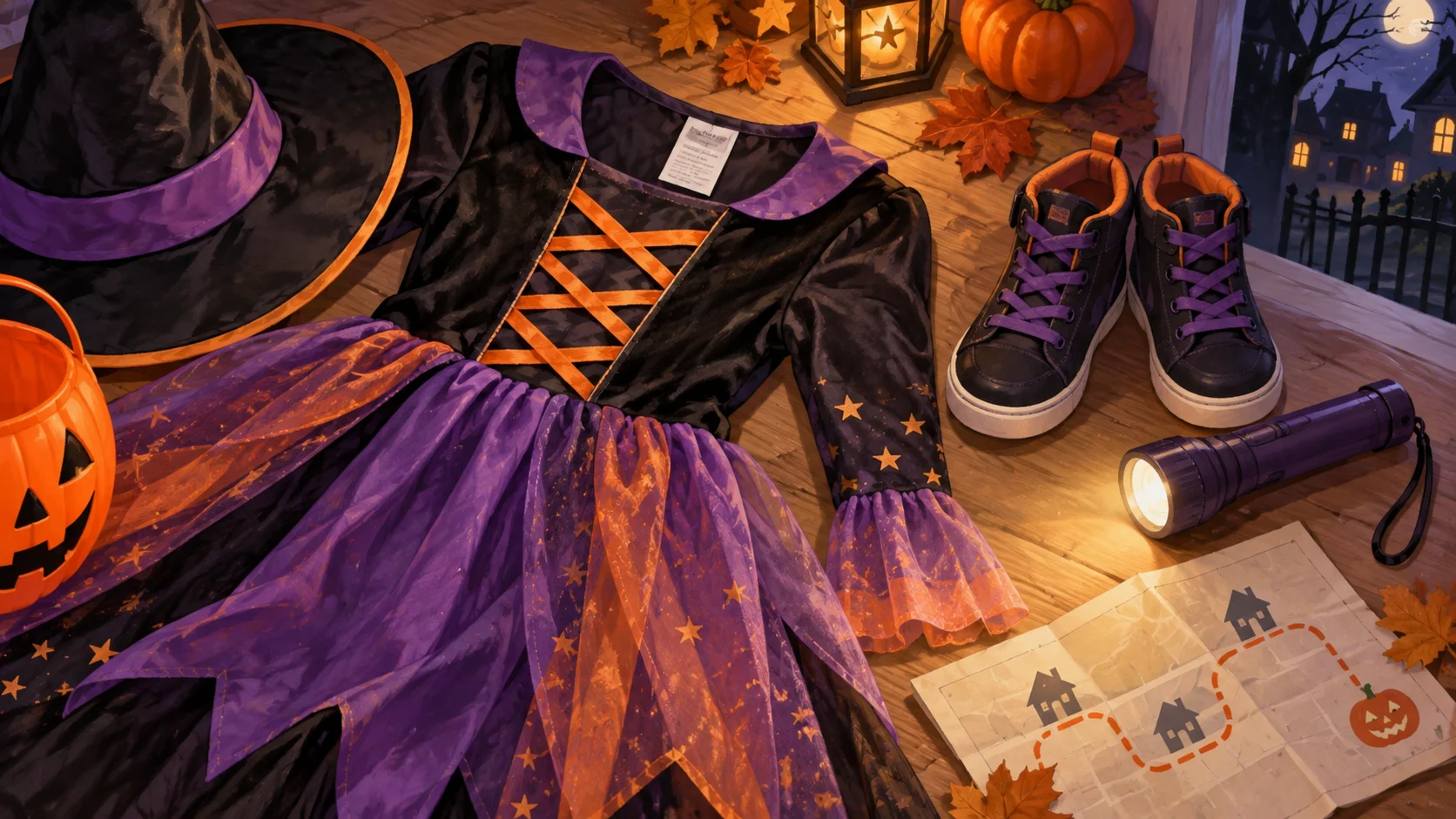
Choosing a child’s Halloween costume involves more than appearance. The Competition and Consumer Protection Commission’s seasonal guidance, published on 30 September 2025 and checked again for this guide on 10 October 2026, says children’s masks, costumes and costume props fall within toy-safety requirements, including a CE mark. This is a current seasonal checklist, not a new recall announcement. [1]
The CCPC’s wider toy advice also directs buyers to check manufacturer and importer details, age warnings and understandable safety instructions. A visible mark does not remove the need to consider whether a product is suitable for the particular age group or whether parts have become damaged. [2]
Check the whole outfit together
Read the label before removing packaging and keep the instructions. Inspect props for detachable pieces and check the age warning; the CCPC highlights the danger of small parts for younger children. For used items, check the actual condition rather than assuming a costume that was worn previously is automatically suitable now. [1][2]
Have the child try the outfit with the shoes and outer layer they will wear. The CCPC warns about oversized outfits and long capes, and advises avoiding fixed cords around the head, neck and chest. A rehearsal gives you a chance to identify trailing fabric or awkward movement before leaving home. [1]
Do not improvise an alteration that creates a new cord or attachment hazard. If the outfit cannot be made suitable while following its instructions, choose a different one.
Plan lighting and visibility
The commission recommends battery-operated candles instead of open flames around costumes and adding bright or reflective clothing so drivers can see children. These are useful choices to settle when preparing decorations and the outfit, rather than after everyone has left. [1]
Use the rehearsal to check the full walking plan with the accompanying adult: crossings, meeting points and what happens if the group becomes separated. If you identify a product-safety concern, stop using the item and contact the retailer or the CCPC. This guide does not certify any product or replace its instructions. [1]


Join the conversation
Keep it kind, relevant and constructive. Comments are reviewed before they appear.
Be the first to share a thought.