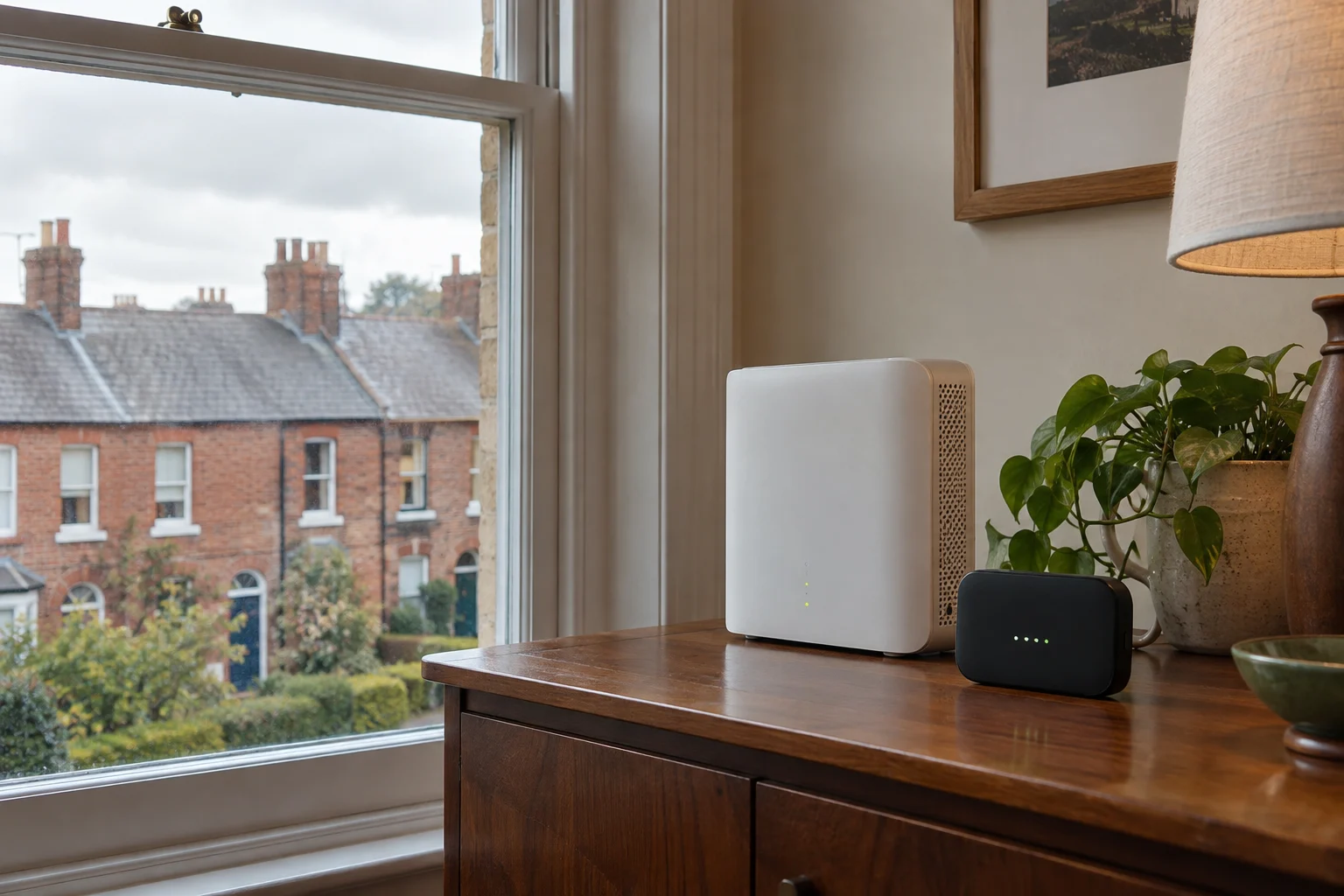
Fibre and mobile broadband can both connect an Irish household, but they solve different practical problems. Compare what is available at the actual address, what installation involves and how the household uses the connection before comparing advertised speeds.
What reaches the home?
ComReg distinguishes full fibre, where fibre reaches the premises, from part-fibre services that use copper or cable for the final connection. A package described with the word fibre therefore needs a more precise question: is it FTTH or FTTP, or another access technology? [1]
Mobile broadband uses a mobile network through a SIM-equipped router or similar device. It can offer flexibility, but reception and performance depend on coverage and the building, including materials that affect the signal. [1] A good result at a nearby address does not establish the result inside your own home.
Compare a routine, not just a download
Write down two or three ordinary uses: a video meeting while somebody streams, uploading work files, or several people studying online. Include upload needs as well as downloads. Ask providers how their service description relates to those uses, without assuming an advertised maximum will be continuously available.
ComReg explains that fixed and mobile services use different contractual speed descriptions. Fixed-service information includes minimum, normally available, maximum and advertised speeds; mobile information includes estimated maximum and advertised speeds. [1] Put the actual contract wording beside each offer rather than treating two large numbers as equivalent promises.
For mobile service, ask how you can establish reception at the proposed router location and what the provider's trial, cancellation or return terms permit. For fibre, confirm that the service can actually be ordered and installed at the address.
Installation can decide the timing
A new connection can involve equipment, appointments and changes to the home-phone service. ComReg recommends discussing the installation with the provider, including what work is needed. Households using personal alarms should check compatibility and arrangements during a power cut. [2]
Record equipment charges, installation charges, the introductory period and the price afterwards. Add the minimum term and any data restrictions. Do this for both offers on the same page.
A household needing a temporary connection may put flexibility first; one planning a long-term connection may prioritise a confirmed installation and the stated service conditions. Those are decision questions, not a universal winner. The better comparison is the service that can meet this household's routine at this address on terms it understands.
Sources were checked on 13 October 2026.


Join the conversation
Keep it kind, relevant and constructive. Comments are reviewed before they appear.
Be the first to share a thought.