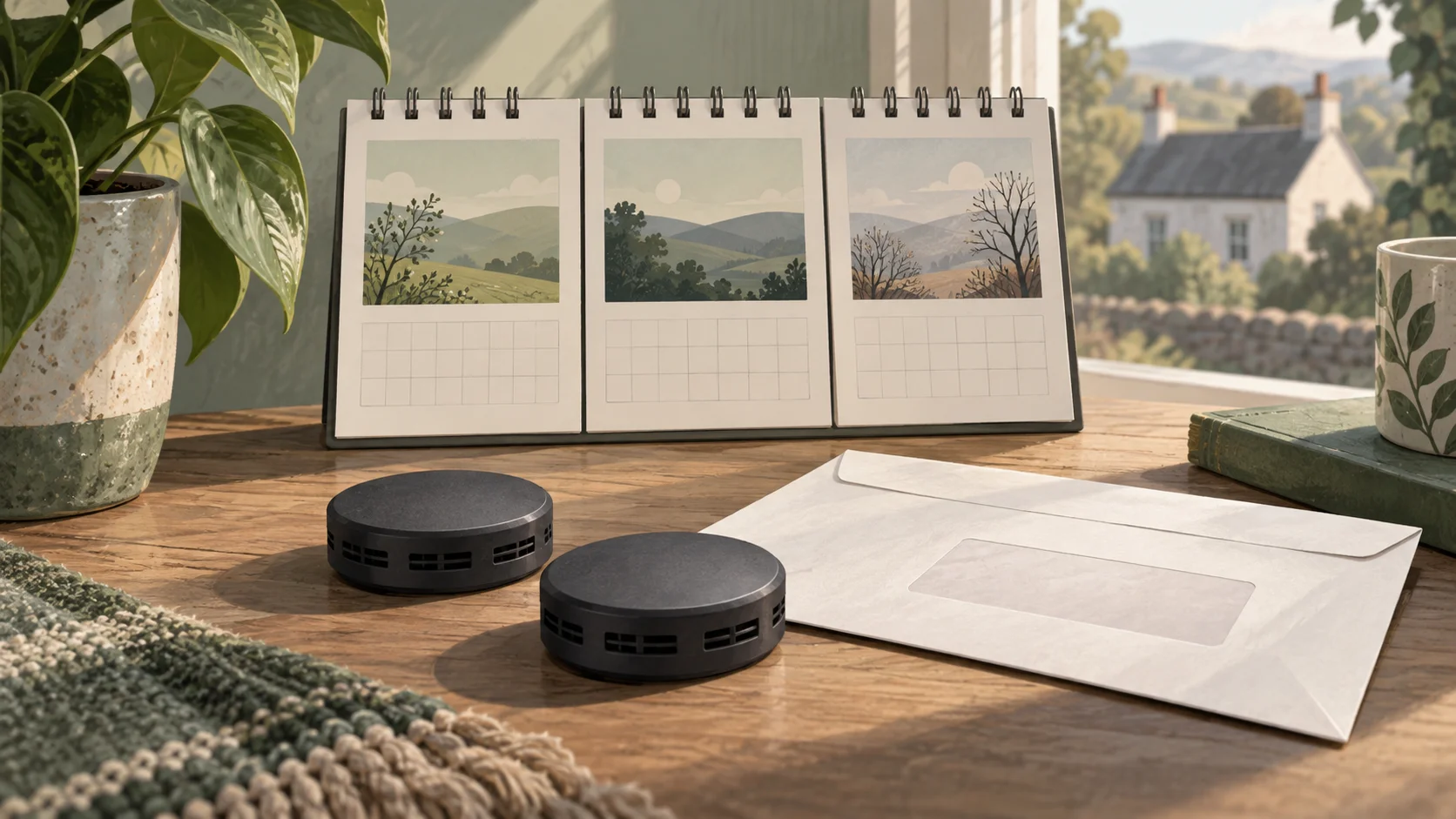
A household radon test is a task to plan across several months rather than another quick autumn inspection. The Environmental Protection Agency describes a home test using two passive detectors, one in the main bedroom and one in the living room, left in place for three months before being returned for analysis. [1]
The EPA says a digital monitor may indicate radon levels but does not replace that three-month test. A neighbour’s result is also not a result for your own home. These distinctions matter when deciding what information you already have and what remains to be measured. [1]
Arrange the test and its return together
Use the EPA’s published list of registered testing services to understand the process, then confirm the provider’s current instructions and charge. The agency gives an indicative home-test range of €40–€60; a provider’s actual quote is the relevant price for an order. Inclusion on the EPA list is not a warranty of the service. [1]
Before placing detectors, follow the supplied placement instructions. Record where they were put and the start date, keep the paperwork and set a reminder for the return. Assign the return task to someone in the household so the kit does not simply remain on a shelf beyond the test period.
Do not move detectors casually between rooms to compare short readings. If your circumstances change during the test, ask the testing service what to do rather than assuming the measurement remains comparable.
Keep follow-up attached to the result
The EPA’s home reference level is 200 becquerels per cubic metre. Its advice directs households with higher results towards remediation followed by retesting, and describes a free post-remediation test through the agency. Use the laboratory report and EPA guidance to discuss next steps with an appropriate specialist. [1][2]
This guide does not recommend drilling, installing a sump or altering ventilation yourself. A contractor’s assessment and a follow-up test have different jobs: one plans the work, the other checks what happened after it. Save both with the original result. The article explains the official household testing process; it does not assess any reader’s home or give an individual health diagnosis.


Join the conversation
Keep it kind, relevant and constructive. Comments are reviewed before they appear.
Be the first to share a thought.