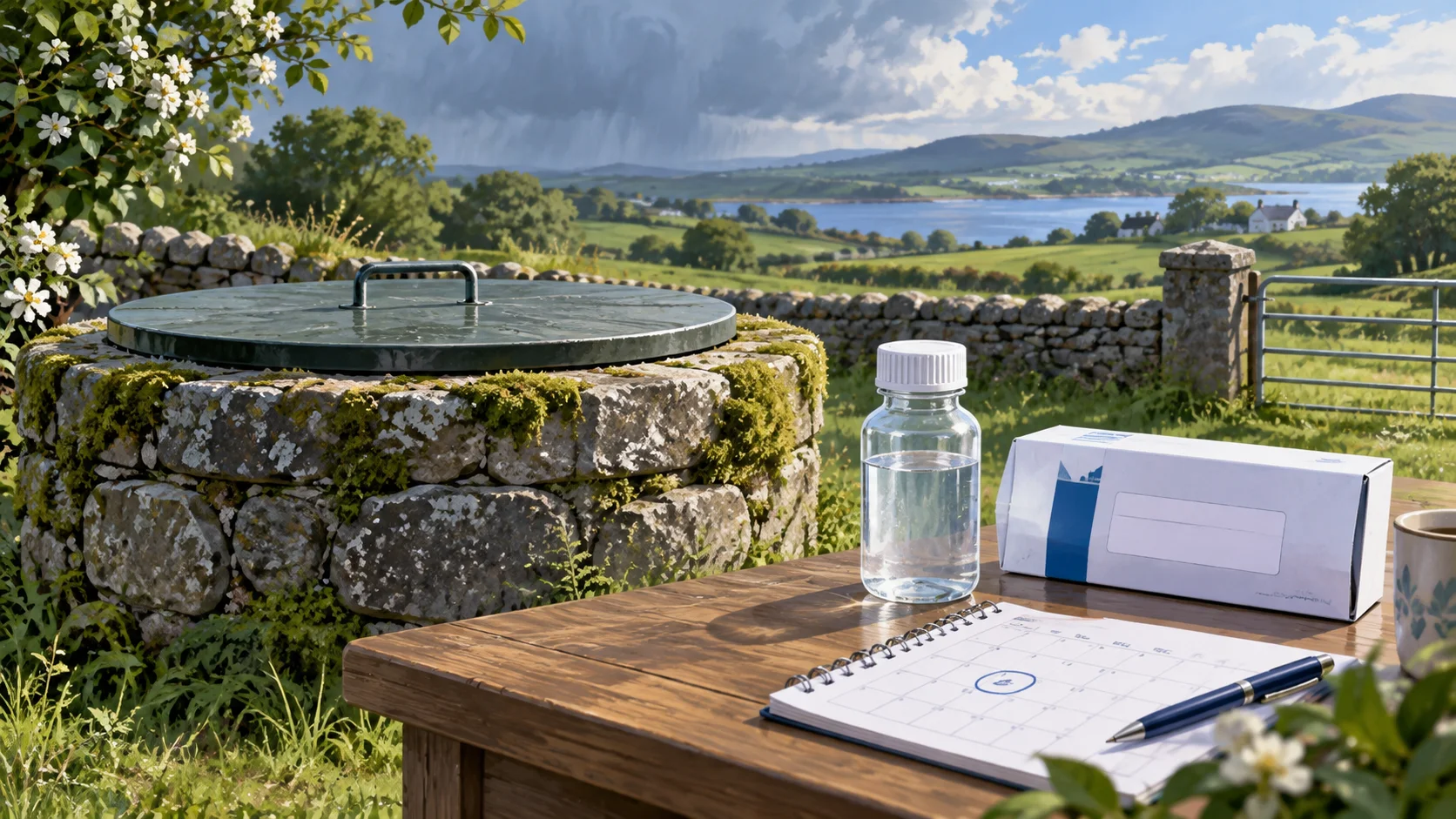
If your home uses an individual private well, autumn planning should include the next water-quality test. The Environmental Protection Agency recommends at least annual testing for microbiological contamination and chemical testing every three years. Its household advice identifies the period after heavy rainfall as a useful time to test, when contamination may be more likely to show up. This is current guidance, not a claim that a particular well has failed. [1]
The EPA also warns against assuming that water from a well or spring is necessarily safe. A protection assessment and a laboratory analysis have different purposes: one looks at possible risks around the supply, while the other checks the sampled water. Neither should be replaced by a casual visual inspection. [2][3]
Arrange the sample before collecting it
Contact a suitable laboratory and explain the supply and any concerns. The EPA says a local authority’s environment section or an HSE Environmental Health Officer can advise on a laboratory. Follow that laboratory’s instructions for the sample container, collection and delivery, rather than using an improvised household bottle. [1]
The agency identifies E. coli and coliform bacteria as important tests, with other testing depending on the well’s location and the concerns described. Let the laboratory advise on the appropriate test list; this guide does not prescribe one package for every household. [1]
Keep the test and follow-up together
Save the analysis certificate with the sampling date, laboratory contact and any follow-up instructions. A dated record makes it easier to explain what has already been checked if you later seek help.
The EPA’s online protection tool can help identify contamination risks, and its guidance directs households with contaminated supplies or health concerns to an Environmental Health Officer. Assessment of treatment, repairs or disinfection should follow competent advice; do not improvise chemical doses or enter a well to inspect it. [1][2][3]
A practical household note can contain the next test date, the person arranging it and the contact for interpreting a failed result. It keeps responsibility visible without pretending a calendar reminder makes water safe. This guide does not diagnose illness, certify drinking water or assess any reader’s own supply.


Join the conversation
Keep it kind, relevant and constructive. Comments are reviewed before they appear.
Be the first to share a thought.