

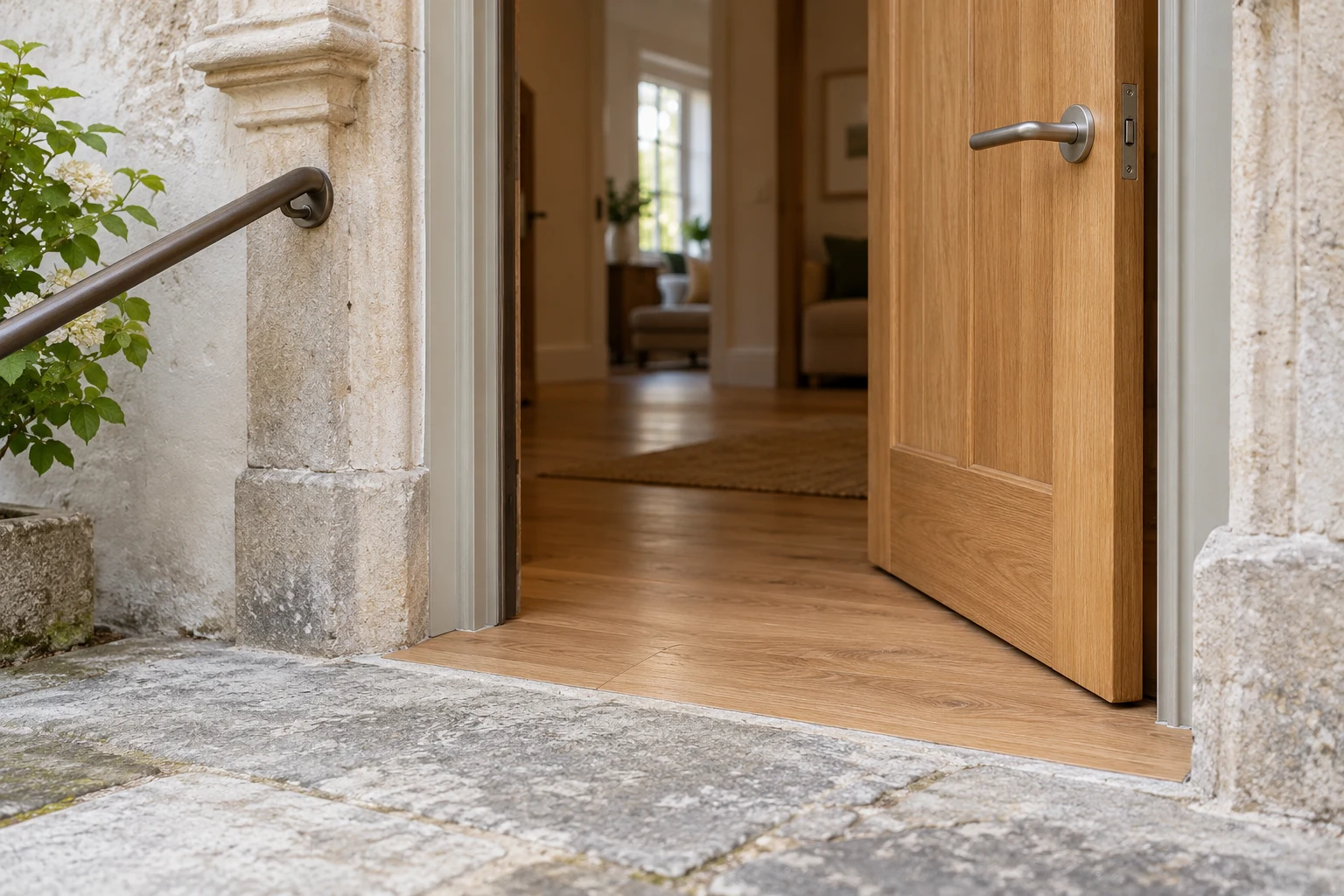
Work is under way to convert Mount Saint Mary's Convent on Altamont Street in Westport into 18 age-friendly social homes, according to Tuath Housing. The housing body says OCC Construction has begun the conversion and currently anticipates completion in late 2028.
The development will reuse the former Convent of Mercy building for housing, alongside the wider regeneration of the convent lands. It is a construction milestone rather than an announcement that homes are ready for occupation. People interested in the accommodation should follow the social-housing route through the local authority; the commencement notice is not an invitation to reserve an apartment.
Tuath's project statement is dated 29 October 2026. Regional reports had already covered the commencement on 28 October. Midwest Radio returned to the development on 31 October, including an interview with Westport-Belmullet Municipal District cathaoirleach Brendan Mulroy. That reporting date should not be confused with the day construction began.
What the 18-home scheme will provide
The published mix is 16 one-bedroom homes and two two-bedroom homes, intended for older people and smaller households. The former chapel is to become communal space for residents. The project is being delivered with Mayo County Council and financed through the Department of Housing's Capital Assistance Scheme, usually shortened to CAS.
The Mayo News's report of 28 October describes an accessible lift and stair core as part of the refurbishment and says the apartments will be allocated through the council's social-housing list. It also reports an expected project cost of approximately €8.66 million including VAT. That is a reported development cost, rather than a sale price for any of the apartments.
The small-home mix matters because the accommodation is being designed for a particular household need. It should not be interpreted as 18 interchangeable offers to any household on the housing list. The suitability of a home, the applicant's circumstances and the allocation arrangements still have to be assessed.
Late 2028 is the current provider estimate
Tuath's latest statement gives late 2028 as its anticipated completion period. It does not provide a confirmed moving-in date or a letting timetable.
Earlier expectations were different. In its account of a council meeting published on 31 March 2026, The Mayo News reported a proposed May start and substantial completion in August 2027. Those dates were expectations reported at that stage, rather than evidence that the housing conversion was finished or occupied.
The newspaper's October report also refers to July 2028, while reproducing the later-2028 expectation. The precise reconciliation of those dates has not been established in the material checked for this article. The clearest current position to attribute to the provider is therefore Tuath's late-2028 estimate. The available statements do not establish why the programme changed.
That distinction is useful for anyone planning a move. Construction completion, preparation for letting and an individual tenancy offer are separate steps. An estimated construction period cannot tell a particular person when they will receive an offer, or whether they will be offered a home in this scheme.
Housing and the wider civic project are different parts of the site
The convent lands also accommodate a broader civic regeneration project. An official government announcement published on 20 October 2025 recorded a sod-turning for that redevelopment, supported by €13.5 million from the Rural Regeneration and Development Fund.
That announcement described restoration and extension of the former school for a new public library, restoration of laundry buildings for community facilities, new landscaped public space and council offices on the site. It provides historical context for the wider complex; it is not a new funding announcement made this week.
The housing body's CAS-funded conversion and the RRDF-supported civic works should therefore be identified separately. They share a location and regeneration purpose, but a milestone or budget for one component does not establish the completion date or final cost of every other component.
For residents following the project, the useful questions are consequently specific: which building is being discussed, which part is funded, what work has begun, and which facility is actually ready to use? Treating the entire convent site as a single opening can obscure progress on an individual part, including these 18 homes.
Keeping historic fabric while changing the building's use
Tuath describes the convent as a Protected Structure and says the conversion will retain and restore significant historic fabric. Its statement identifies the exterior, roofscape, stained glass, decorative plasterwork, timber joinery and staircases, alongside protection of the gates, graveyard, trees and landscape setting.
The aim is to bring a vacant building back into use while keeping important parts of its character. That does not mean every existing room will retain its former function: the planned communal use of the chapel is one example of how the purpose of a space can change while the building is conserved.
An age-friendly home also needs to work for its eventual resident in ordinary daily use. A description of the overall scheme cannot answer every individual access question. When detailed letting information becomes available, prospective tenants can ask about the route to the apartment, lift access, doorways, bathroom arrangements and the management of shared areas. Those are questions about the eventual home, rather than features this article can certify from an announcement.
The proposed shared chapel also deserves a clear explanation at letting stage. Residents can ask how it will be accessed, who will manage bookings and maintenance, and whether any use extends beyond the resident community. A promise of communal space is easier to assess when the operating arrangements are known; the commencement statement does not settle those details.
How someone interested should approach the housing route
Tuath's own application guidance says it does not maintain a housing waiting list and directs people to their local authority. Its guidance asks applicants to ensure they are considered for voluntary or co-operative housing as well as rented local-authority accommodation. When a Tuath home becomes available, the housing body receives suitable nominations from the authority.
For this Westport project, the relevant starting point is Mayo County Council's housing service. Someone already approved for social-housing support can ask how their current application records their accommodation needs and areas of choice. Someone who has not applied can ask for the current application pack and an explanation of the assessment process.
The Housing Agency's guidance on eligibility and need explains that an authority considers both whether a household qualifies and whether it needs social housing. The factors include income, long-term residence rights, access to other suitable property, household size and the suitability of existing accommodation. Disability-related accommodation needs and temporary or institutional living arrangements can also be relevant to the assessment.
Those factors require an individual assessment. Being an older person, having a particular housing difficulty or reading about a new scheme does not by itself establish entitlement to one of its homes. This report does not determine anyone's eligibility or place on the list.
Approval and allocation answer different questions
Being accepted for social-housing support is not the same as being allocated a particular property. The Housing Agency's explanation of waiting lists and allocations describes a further check when suitable accommodation becomes available, including continued eligibility, need, connection to the area and area of choice.
For accommodation provided by an approved housing body, the authority nominates a person from its housing list and the housing body considers the tenancy. The general guidance also explains that some authorities operate choice-based letting. It does not establish that these Westport apartments are currently advertised through that system.
An applicant should therefore ask which procedure will apply to this development when it approaches letting. If their circumstances change in the meantime, they can ask the housing service how to update the existing application. Starting a second informal list with a contractor or treating a construction announcement as an application window would not clarify their official position.
Keep any correspondence about the application and the scheme's future letting arrangements together. A record of what the housing service has actually confirmed is more useful for planning than assuming that a projected completion year amounts to an offer.
Rent and support arrangements still need scheme-specific answers
The funding description should not be used to predict a tenant's exact rent. On its tenant information page, Tuath says most tenants' rents are calculated by reference to income, but identifies CAS tenants as an exception with a set rent. Any support depends on the applicable arrangements and the person's circumstances.
No specific weekly rent, service charge or support entitlement for these 18 homes has been verified for this article. Before accepting any eventual offer, an applicant should obtain the actual tenancy terms and ask which costs are included, which are separate and how shared facilities are managed.
Likewise, a description of independent living does not establish that a particular care or support service comes with a tenancy. Someone who needs assistance should clarify that separately with the relevant providers. The immediate verified change is that the housing conversion is under way; the details that will govern an individual move must come from the eventual allocation and tenancy process.

Join the conversation
Keep it kind, relevant and constructive. Comments are reviewed before they appear.
Be the first to share a thought.