

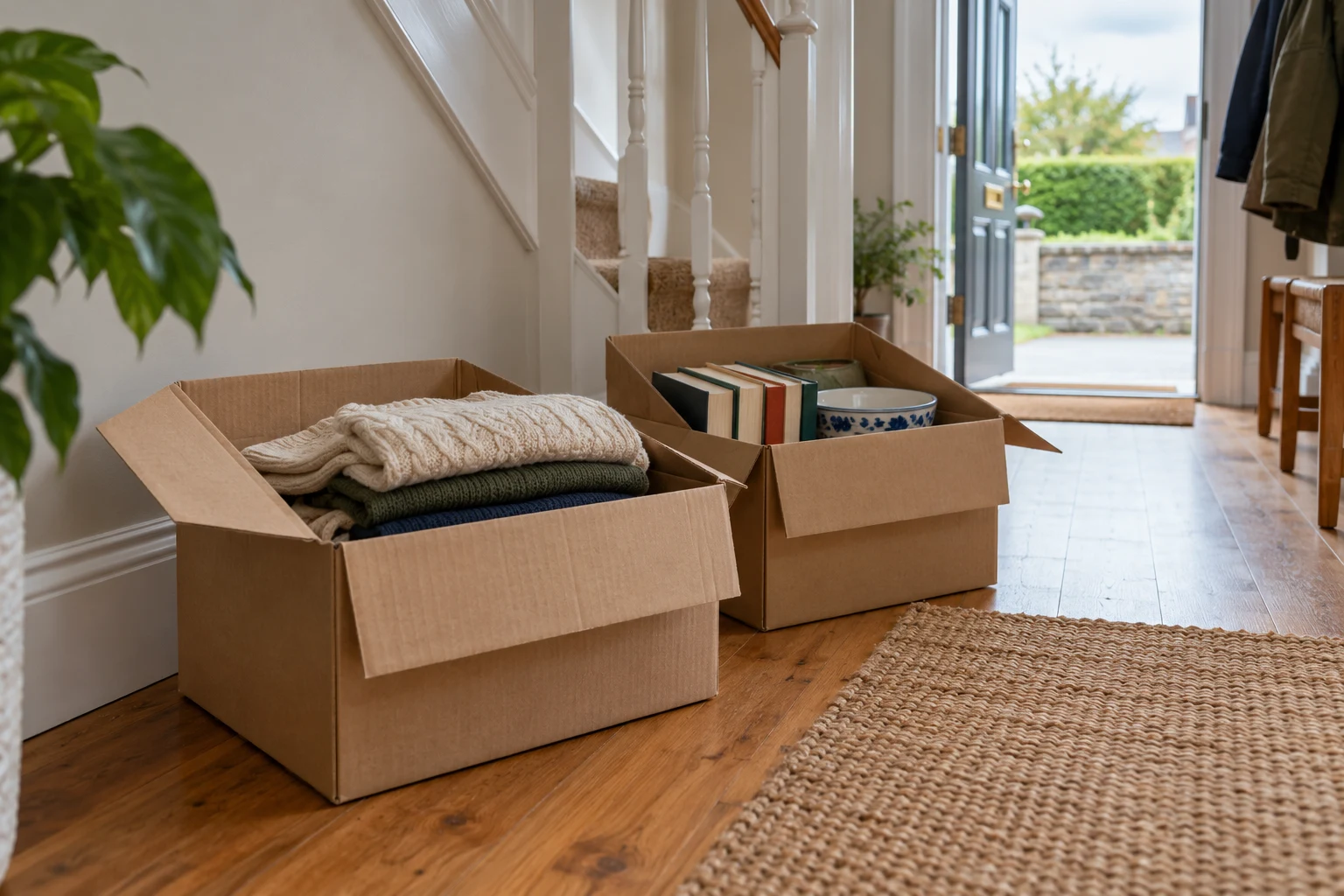
A useful pre-Christmas clear-out is less about filling bags quickly than finding an appropriate destination for each item. Clean clothes a charity can sell, a broken electrical appliance and a phone containing personal information need different routes.
This guide uses charity, recycling and manufacturer information checked on 25 October 2026. Acceptance can vary by shop, condition and available space. Confirm the destination before making a journey or leaving a large item, rather than assuming every donation point accepts the same things.
Where should I start if the whole house feels too much?
Choose a manageable area: one shelf, one wardrobe section or the cupboard containing unused devices. Finish the decisions for that area before opening several more. A hallway full of mixed bags can turn a small task into an obstacle without creating a usable donation.
Separate items you use and want to keep, items suitable for another person, items needing a specialist check and items that belong in an appropriate recycling or waste route. Do not let “donate” become the label for everything you no longer want.
For each item, ask whether it is clean, complete and usable. Then ask whether the intended recipient actually accepts it. Those are separate tests. A sound piece of furniture can still be unsuitable for a shop without space or a collection arrangement.
What can Vincent's charity shops accept?
The Society of St Vincent de Paul's shop information lists good-quality clean clothes and shoes, accessories, books, homewares and other categories. It says furniture is accepted in selected stores and provides a shop locator and furniture information.
Use that local route for a specific question rather than treating a national category list as a promise to accept every item. Condition, size and local capacity can matter. Ask about a large donation before loading a car, particularly if it includes furniture.
Pack items so that their condition is preserved. Clean dry clothes should remain dry, books should not be crushed under heavy objects, and fragile pieces need protection. Pair shoes and keep the components of an accepted item together so it is straightforward to assess.
Is donating by post an option?
Oxfam Ireland's Postback FAQ describes its postal donation route in the Republic of Ireland and a limit of under 10kg per bag. It lists accepted categories and exclusions, including dirty, damaged or incomplete items and identifiable work or school uniforms.
Read that service's current instructions before ordering or filling a bag. A postal scheme has packaging and weight conditions that differ from taking items to a shop. The scheme described is for the Republic; readers in Northern Ireland are directed to a different service.
A postal route can help where reaching a shop is difficult, but it is not a reason to send unsuitable goods. Decide what is genuinely accepted first, then pack within the service's limit. Do not guess a full bag's weight if it contains books or other dense objects.
How should I sort books, clothes and toys?
For books, look for damp, mould, missing pages or damage that makes reading difficult. Keep an old item with possible specialist interest separate and ask the intended charity rather than treating all old books as either valuable or unusable.
For clothing, check pockets and remove personal items before packing. Consider missing fastenings, stains and condition honestly. A donation is more useful when the next owner can wear it rather than being handed an unfinished repair you have not disclosed.
For toys and games, verify the receiving charity's policy, which may distinguish new packaged toys from used items. Check completeness and condition, and do not assume every shop accepts every product category. A toy with a battery or plug also raises an electrical-recycling question if it is not suitable for reuse.
What about furniture and large household items?
Measure the item and identify its condition before contacting a shop that says it handles furniture. Ask whether it accepts that type, whether collection is available, what access is required and whether there are any charges or restrictions. Do not assume a collection service operates nationwide.
Photographs may be useful if the charity requests them through its own contact route. Keep personal paperwork, household identifiers and people out of an image where they are not needed. An enquiry or preliminary agreement is not a guarantee that an item will be accepted regardless of its condition on arrival.
Avoid moving a heavy or connected appliance just to meet an assumed collection date. Agree the practical arrangements first and use appropriate help where needed. A clear-out should not depend on unsafe lifting or dismantling work.
Where do broken electrical goods go?
WEEE Ireland's take-back guidance explains free like-for-like retailer take-back when a similar new appliance is purchased, and describes household electrical recycling routes. It also distinguishes retailer obligations, no-purchase options at some stores and recycling centres.
Check the receiving point and its current conditions before travelling. Do not infer that every retailer must accept every size of electrical item without a purchase. If a new appliance is being delivered, arrange the old appliance's collection through the retailer and follow its preparation instructions.
Keep electrical waste separate from a bag of ordinary charity goods. A device being unsuitable for a particular charity does not establish that it belongs in general waste. Batteries also need an appropriate collection route; check the instructions for the type and condition involved rather than placing them loose among donated objects.
How do I protect information on an old phone or tablet?
Removing a few visible photographs is not the same as preparing a device for another owner. Backups, account links, stored payment information, SIMs and memory cards all deserve attention, with the exact steps depending on the device.
Apple's preparation guidance for an iPhone or iPad explains backing up, transferring information, signing out and erasing the device. It warns that manually deleting information while signed into iCloud can delete it from the cloud and connected devices too. Use the instructions for the software version and device concerned.
For another manufacturer, use its own current reset and transfer guidance. First confirm that information you need is safely retained elsewhere and that you can access important accounts from another device. Then follow the appropriate removal process. If you cannot complete it, seek suitable technical help rather than giving away a device whose data status is uncertain.
Should I sell an item instead of donating it?
That is a practical choice involving likely proceeds, time and effort. A working item with clear condition information may be worth selling, but an optimistic asking price is not money received. Set a reasonable period for trying rather than allowing an unsold pile to become permanent storage.
Keep the decision separate from buying a replacement. If you decide to purchase something new because you expect an old item to sell, consider what happens if the sale does not occur. The clear-out and the new spending have different outcomes.
Describe an item honestly and follow the platform's current guidance if selling. Do not reuse a charity's name or imply that proceeds support it unless that is actually arranged and accurately disclosed. A private sale and a charitable donation should remain clear to the buyer.
How can I make sure the clear-out is actually finished?
Assign each sorted group a destination and a next action. One box may need a shop-policy check, another a device reset and another a recycling-centre trip. A bag marked “later” without a decision is still an unfinished task.
Keep exits, stairs and shared spaces clear while items wait. Do not leave goods outside a closed charity shop or donation point on the assumption that somebody will collect them. Agree a suitable handover during the destination's stated arrangements.
Finally, note what repeatedly became unused. It may help shape Christmas gift conversations, reduce duplicate purchases or identify something the household would rather borrow. The lasting benefit is usable space and better decisions, not the largest possible number of bags.


Join the conversation
Keep it kind, relevant and constructive. Comments are reviewed before they appear.
Be the first to share a thought.