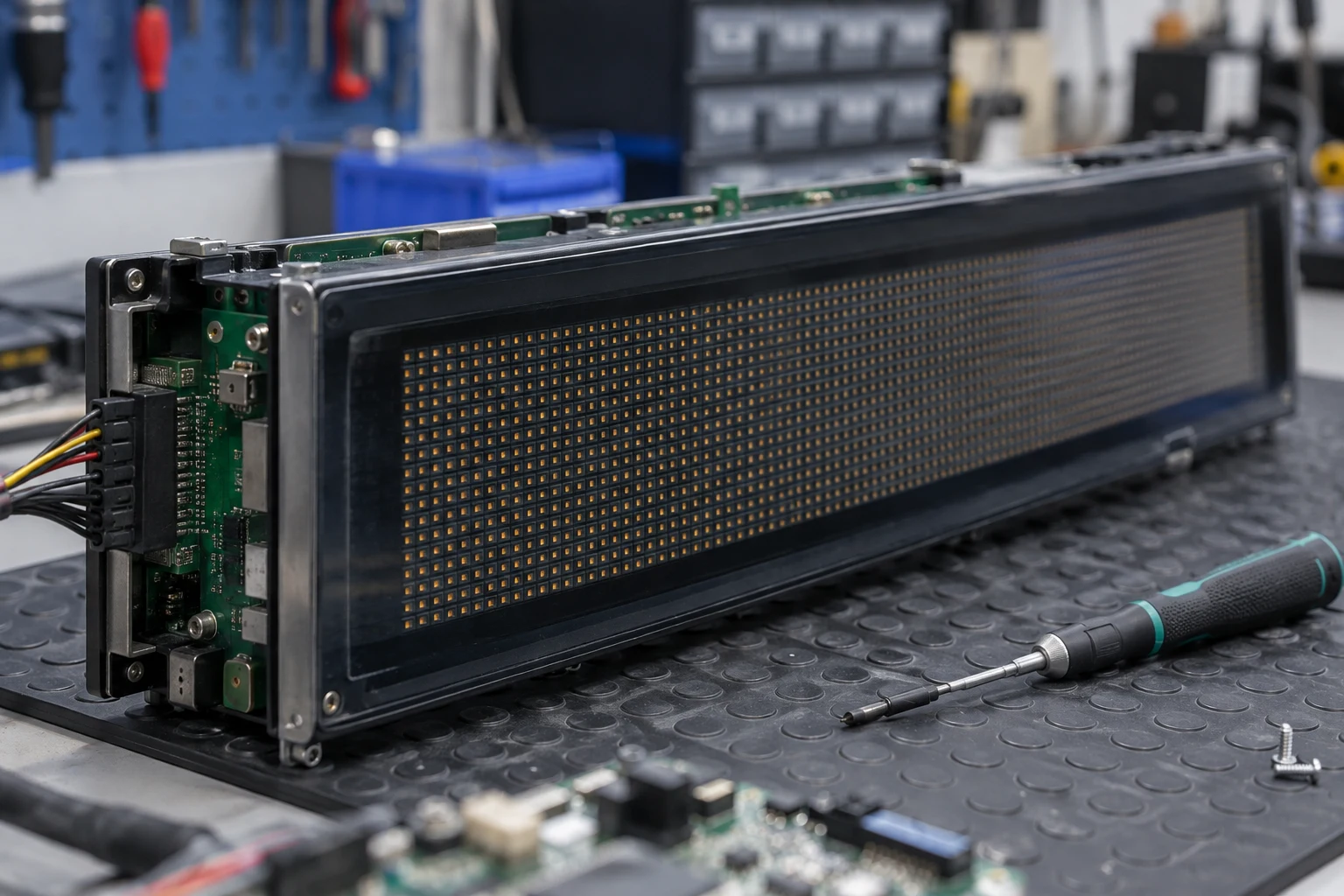
Daktronics has confirmed a phased exit from manufacturing in Ennistymon, County Clare, affecting approximately 100 employees. The announcement on Wednesday, 14 October, moves the story beyond the earlier warning that roles were at risk, although it does not mean every job ends on the same date. [1][2]
The US digital-display business says it is leaving the highly customised part of its international transportation operation. RTÉ reports that the Ennistymon plant primarily served that business and that the company said it had not identified a sustainable alternative for keeping the facility open. [2]
What the company has announced
In its investor announcement, Daktronics describes an Irish manufacturing wind-down alongside changes to production elsewhere in its global network. It expects the Irish closure to be substantially complete by the middle of its fiscal 2028 year. That is a company financial-year reference, not a statement that the factory will remain open until the middle of calendar 2028. [1]
RTÉ’s local reporting describes the exit as taking place over the coming 12 months. For affected households, individual employment dates will therefore matter more than trying to turn a corporate fiscal label into a personal deadline. [2]
The company estimates $13.5 million in cumulative pre-tax costs for the Irish exit, including employee-related costs, wind-down, equipment transfers and possible asset impairments. It forecasts annualised pre-tax savings of $7.7 million once the Irish measure is fully implemented. These are company forecasts, not amounts available for individual redundancy payments. [1]
A regional manufacturing story
RTÉ traces the Ennistymon operation to Data Display, acquired by Daktronics in 2014. Its report says the business makes digital-display and control technology used in transport systems. The local significance is the loss of an established specialist manufacturing operation, rather than evidence that every Irish technology employer faces the same conditions. [2]
The company says it is planning production and spare-parts inventory with existing customers to meet outstanding orders and service obligations during the exit. That is its stated transition plan; this article has not independently assessed customer arrangements. [1]
Where workers can check the process
The Workplace Relations Commission’s general guidance says a proposed collective redundancy requires consultation with employee representatives for at least 30 days and notification to the relevant Minister. It also explains the information representatives should receive, including the proposed period of redundancies and selection criteria. [3]
Those general rules do not establish what any particular employee is owed or when their employment ends. Workers should use their own written communications and representative arrangements, and seek individual advice where needed. Further reporting should distinguish confirmed departure dates and support measures from speculation about replacement investment in the area.


Join the conversation
Keep it kind, relevant and constructive. Comments are reviewed before they appear.
Be the first to share a thought.